Blog

  • LogisticsLeadersNews.com: The €30,000 Domain That’s Too Long for a Newsletter No One Asked For

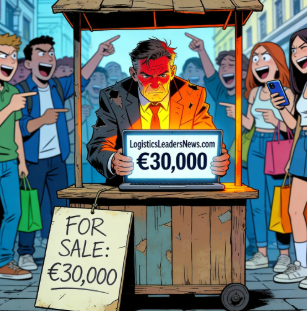
    LogisticsLeadersNews.com: The €30,000 Domain That’s Too Long for a Newsletter No One Asked For

    The Contender

    MetricDetails
    DomainLogisticsLeadersNews.com
    Registration Date2022
    Domain Age~4 years
    Seller Sedo Since2021
    PlatformSedo
    Asking Price€30,000 (Buy It Now)
    The PitchNone provided—just the listing
    The Problem21 characters. Niche concept. No clear buyer. Zero sales data for similar domains.

    Introduction: The Domain That’s Trying Too Hard

    Some domains are short, punchy, and immediately valuable. This is not one of them.

    LogisticsLeadersNews.com is a 21‑character domain (including the .com) that describes a concept so niche it makes “magnet trends” sound mainstream. It’s trying to be three things at once:

    • Logistics – a massive industry
    • Leaders – implying authority and exclusivity
    • News – suggesting a publication or media angle

    Put them together, and you get a domain that’s too long, too niche, and too confused to be worth €30,000.

    The seller has been on Sedo since 2021. That’s five years of experience. They’re not a newbie making rookie mistakes. They’ve had time to learn what sells and what doesn’t. Yet here they are, listing a 21‑character domain for €30,000, with no sales pitch, no explanation, and no obvious buyer.

    Let’s break down why this domain is worth a fraction of that price—and why the seller should know better.


    The Length Problem: 21 Characters Is a Mouthful

    Let’s start with the basics.

    LogisticsLeadersNews.com is 21 characters long (not counting the .com). That’s:

    • L‑O‑G‑I‑S‑T‑I‑C‑S‑L‑E‑A‑D‑E‑R‑S‑N‑E‑W‑S
    • Try saying that five times fast. Actually, try saying it once.

    In domain investing, length matters. Short domains are valuable because they’re:

    • Easy to remember
    • Easy to type
    • Easy to communicate verbally

    Long domains are the opposite. They’re:

    • Hard to remember (did it have an “s” at the end of Leaders? Is it News or News.com?)
    • Hard to type (21 characters invites typos)
    • Impossible to communicate verbally (try telling someone this domain over the phone)

    The “radio test”: If you heard “Logistics Leaders News dot com” on a podcast, would you be able to type it correctly on the first try? Almost certainly not. You’d be guessing about the plural, the word order, and the spelling.

    A domain that fails the radio test is a domain that kills word‑of‑mouth marketing. And a niche publication like “Logistics Leaders News” would rely entirely on word‑of‑mouth and referrals. It’s a self‑contradiction.


    The Niche Problem: Who Is This For?

    Let’s imagine the potential buyers for LogisticsLeadersNews.com.

    Potential BuyerWhy It Won’t Happen
    A logistics industry publicationThey’d use something shorter, like LogisticsNews.com or a brand name.
    A logistics leadership organizationThey’d use their own brand name, not a generic description.
    A media company launching a newsletterThey’d choose a shorter, more brandable name.
    A domain investorNot at €30,000. Maybe at $500 as a speculative play.

    The domain tries to cover too much ground. “Logistics” is broad. “Leaders” is vague. “News” is generic. Together, they describe a concept that doesn’t exist as a established category.

    If someone wanted to start a logistics news site, they wouldn’t choose this domain. They’d choose:

    • LogisticsNews.com (taken, but that’s the point)
    • SupplyChainNews.com (taken)
    • FreightWaves.com (a successful brand in the space—short, memorable)

    They wouldn’t choose a 21‑character domain that sounds like a conference agenda item.


    The Age Problem: 2022 Registration, Zero History

    The domain was registered in 2022. That’s four years ago. That’s not ancient, but it’s not fresh either.

    But here’s the problem: age alone doesn’t create value. What matters is what happened during those years. Did the domain:

    • Have a developed website with traffic?
    • Accumulate backlinks from reputable sites?
    • Get mentioned in industry publications?
    • Build any kind of authority?

    Almost certainly not. The domain has been sitting, undeveloped, for four years. The seller hasn’t built anything on it. They’ve just held it, hoping someone else will see value.

    Four years of renewals at $10/year is $40. The seller is asking €30,000. That’s a 750x markup on a domain that’s done nothing for four years.


    The Seller’s Experience: Been on Sedo Since 2021

    This is the part that makes the listing more surprising. The seller isn’t new. They’ve been on Sedo since 2021. That’s five years of exposure to the domain market. They’ve seen what sells, what doesn’t, and how to price assets realistically.

    Yet here they are, listing a 21‑character, niche domain for €30,000.

    Logistics-Leaders-News

    Maybe they’ve had success with other domains and are now testing the waters with a speculative listing. Maybe they genuinely believe this domain is worth that much. Either way, it’s a reminder that even experienced sellers can fall into the trap of overvaluing their own inventory.

    The listing has no pitch, no description, no attempt to justify the price. It’s just the domain name and the price tag. That’s either supreme confidence or a lack of effort. Given the domain, it’s probably the latter.


    The Defequer Analysis: Why LogisticsLeadersNews.com Isn’t Worth €30,000

    Factor 1: Length – Too Long to Be Memorable

    21 characters is a deal‑breaker. In an era of short, punchy brand names, a domain that takes up half a tweet is not going to attract serious buyers.

    Even if we ignore the .com, “LogisticsLeadersNews” is 18 characters. That’s longer than:

    • “SupplyChain” (11)
    • “Logistics” (9)
    • “FreightWaves” (11)

    Long domains are harder to remember, harder to type, and harder to market. A publication called “Logistics Leaders News” would constantly have to remind people of its URL. That’s not a premium asset—it’s a marketing burden.

    Factor 2: Niche Confusion – Who Is the Audience?

    The domain tries to target three different audiences:

    • Logistics professionals (broad)
    • Industry leaders (exclusive)
    • News readers (general)

    The result is a domain that doesn’t clearly appeal to any of them. A logistics professional looking for news would go to an established publication. An industry leader doesn’t need a domain to signal their status. A news reader doesn’t search for “leaders news.”

    The domain is trying to be everything to everyone, which means it’s nothing to anyone.

    Factor 3: Comparables – What Do Similar Domains Sell For?

    We promised not to cite unverified comps, but we can talk about general market dynamics.

    Domains that describe specific niche publications rarely sell for significant money. Why? Because the publication itself is the value, not the domain. A successful newsletter can make money regardless of its domain name. A domain without a publication is just a string of words.

    NameBio shows that domains in the “news” category sell for modest amounts unless they’re extremely short or have existing traffic. “LogisticsLeadersNews.com” is neither.

    Factor 4: The Price – €30,000 for a Niche, Long Domain

    Let’s put €30,000 in perspective.

    €30,000 buys:

    • A very strong two‑word .com
    • A portfolio of 30‑50 quality domains
    • A developed website with actual traffic
    • A year of marketing for a startup

    What it doesn’t buy is a 21‑character domain that describes a newsletter concept no one asked for.

    Even if we were being generous, a realistic price for this domain would be in the $500–$1,500 range. That’s the kind of money someone might pay for a niche domain they want to develop into a passion project. €30,000 is not in the same universe.

    Factor 5: The No‑Pitch Problem

    The listing has no description, no pitch, no attempt to sell. The seller is just dropping the domain on Sedo with a price tag and hoping.

    This is a common strategy among sellers who don’t have a real argument for why their domain is valuable. They’re hoping a buyer will see the name and instantly recognize its supposed value. But when the name itself is weak, the silence is deafening.


    The Delusion Index: 7/10

    FactorRatingExplanation
    Domain Length2/1021 characters is a deal‑breaker.
    Niche Appeal3/10The concept is too broad and too vague.
    Domain Age5/102022 registration, but no development.
    Seller Experience4/10Been on Sedo since 2021—should know better.
    Price Sanity2/10€30,000 is 20‑60x the actual value.
    Listing Effort2/10No pitch, no description, no attempt to sell.

    Overall Delusion Index: 7/10

    This is a mid‑high score because the seller has enough experience to know better. A newbie making this mistake is one thing. Someone who’s been on Sedo since 2021 should have a better sense of market realities.


    What LogisticsLeadersNews.com Is Actually Worth

    Let’s do the math the seller should have done.

    Factors to consider:

    • 21 characters (too long)
    • Niche concept with limited appeal
    • Registered in 2022 (four years old, but undeveloped)
    • No traffic, no backlinks, no history of use
    • No comparable sales to anchor value

    Realistic price range: $200 – $1,000

    At the high end, to a logistics enthusiast who wants to start a newsletter as a passion project. At the low end, to a domain investor who sees potential in the “leaders news” angle and wants to take a flyer.

    €30,000 is not just optimistic—it’s 30‑150 times the actual value.


    The Defequer Verdict

    CategoryRating
    Length⭐⭐☆☆☆ (2/5)
    Niche Appeal⭐⭐☆☆☆ (2/5)
    Domain Age⭐⭐☆☆☆ (2/5 – aged but undeveloped)
    Price Sanity⭐☆☆☆☆ (1/5)
    Seller Experience⭐⭐☆☆☆ (2/5 – should know better)

    Final Word:

    “LogisticsLeadersNews.com is a 21‑character domain that describes a newsletter concept no one asked for. The seller, who has been on Sedo since 2021, wants €30,000 for it. The domain is too long to remember, too niche to have broad appeal, and too undeveloped to have any inherent value. The listing has no pitch, no explanation, and no attempt to justify the price—because there’s no justification to give. The seller has been in the game long enough to know better. And yet, here we are.”


    What Should Actually Happen

    If the seller is reading this (and he should be):

    1. Drop the price to $1,000. See if there’s interest from logistics enthusiasts. If not, drop again.
    2. Add a pitch. The listing has no description. Tell potential buyers why this domain could be valuable. (It’s not, but at least try.)
    3. Develop the domain. If you believe in “Logistics Leaders News,” build it. Start a newsletter. Add content. Build traffic. Then you’ll have something to sell.
    4. Learn from five years of experience. You’ve been on Sedo since 2021. You’ve seen what sells. Apply that knowledge to your own listings.
    5. Let it go if it doesn’t sell. Four years of holding is enough. The renewal fees add up. Cut your losses.

    For buyers: If you’re genuinely interested in starting a logistics newsletter, make an offer at $200–$500. The seller might be ready to deal after five years of waiting.


    The Bottom Line

    LogisticsLeadersNews.com joins the Defequer Hall of Shame as a case study in experienced seller delusion.

    A domain that’s too long, too niche, and too undeveloped to be worth €30,000. A seller who’s been on Sedo since 2021 and should know better. A listing with no pitch, no justification, and no hope of selling.

    Defequer Rating: 💩💩💩💩 (4/5 shits – the seller’s experience makes this delusion more disappointing.)

    Have a domain you’ve been holding for years with no buyers? Discuss with us. We’ll tell you if it’s time to let go.

    Defequer.com – because someone had to flush.
  • The Atom Sapphire Collection: Four Country‑Code Delusions, One Common Fantasy

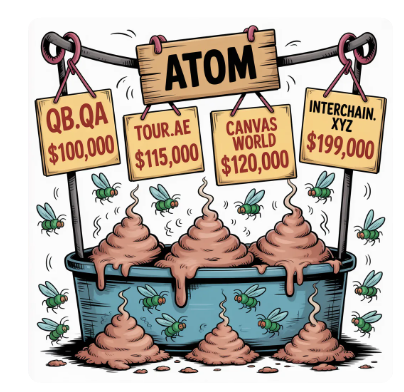
    The Atom Sapphire Collection: Four Country‑Code Delusions, One Common Fantasy

    The Contenders

    DomainTLD TypePriceRenewal (Est.)The Problem
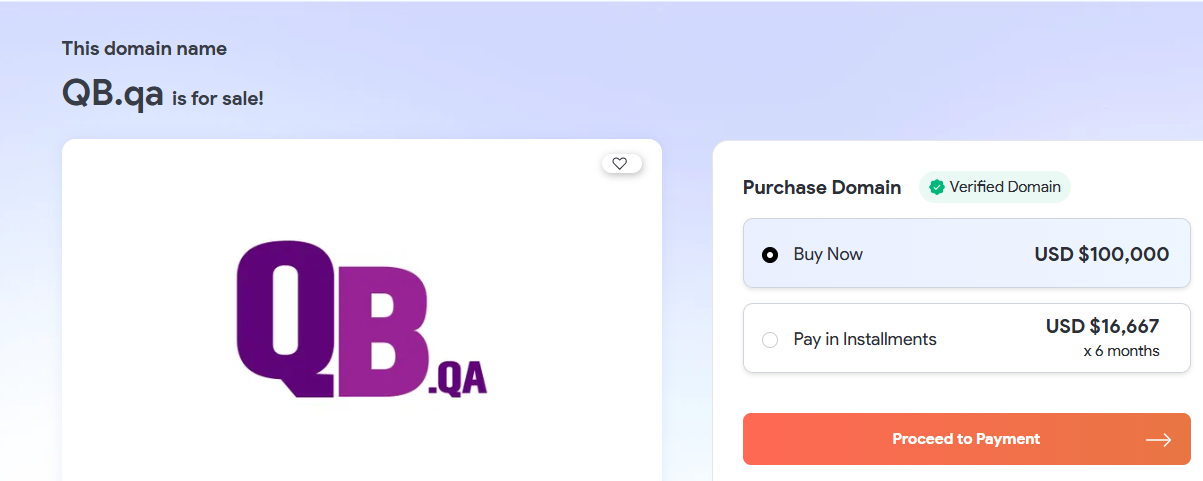
    QB.qaccTLD (Qatar)$100,000~$50–$90/yearWho outside Qatar wants this? Who inside Qatar would pay $100k?
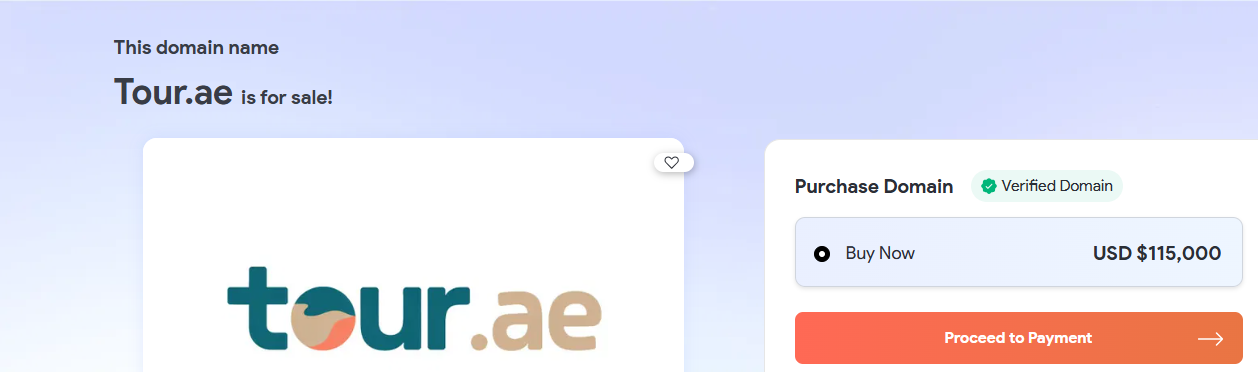
    Tour.aeccTLD (UAE)$115,000~$60–$85/yearGreat word. Wrong TLD for this price. Local presence required for registration.
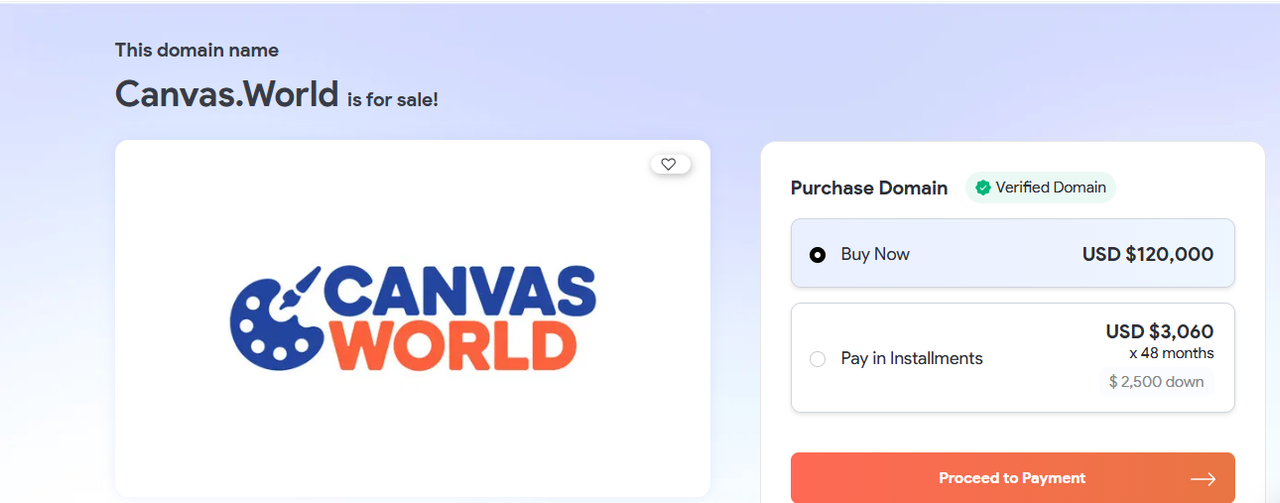
    Canvas.WorldNew gTLD$120,000~$35–$45/yearA decent word on a gTLD with zero sales history at this level.
    Interchain.xyzNew gTLD$199,000~$18–$40/yearThe .xyz hype is dead. This is a $200 domain at best.
    TOTAL$534,000Four domains, half a million dollars, zero chance of sale.

    Introduction: The Sapphire Collection’s Shiny Delusions

    Atom.com’s Sapphire collection is supposed to represent premium domains—names with high perceived value, listed at prices that signal exclusivity. In theory, it’s a curated marketplace for serious buyers with serious budgets.

    In practice, it’s a showcase of misplaced optimism.

    We’ve picked four domains from the collection—QB.qa ($100,000), Tour.ae ($115,000), Canvas.World ($120,000), and Interchain.xyz ($199,000)—that perfectly illustrate why high prices don’t equal high value.

    Each has a fundamental flaw:

    • A country‑code TLD with no international market
    • A domain that requires local presence to register (good luck selling that to a global buyer)
    • A new gTLD that never gained traction
    • A .xyz domain priced like it’s still 2021

    Let’s roast them one by one—and then look at what they’re actually worth.


    1. QB.qa – $100,000 for a Qatari Initialism

    The Domain

    MetricDetails
    DomainQB.qa
    TLD.qa (Qatar ccTLD)
    Price$100,000
    Renewal~$50–$90/year
    Registration RulesMust have Qatari ID or residence permit; businesses need Qatari commercial registration
    The NameTwo letters: Q and B

    The Problem

    QB.qa is short. Two‑letter .qa domains are rare. On paper, that sounds promising.

    But here’s the reality: who wants a Qatari ccTLD for $100,000?

    The buyer pool:

    • Qatari businesses or individuals with a connection to the country (required by registry rules)
    • International companies targeting the Qatari market
    • Domain investors hoping to flip it

    Why it won’t sell:

    1. The local‑presence problem. To register a .qa domain, you need a valid Qatari ID or a business registered in Qatar. The seller presumably has one—but the buyer will need one too. That’s a massive barrier for anyone outside Qatar. The domain isn’t a simple asset; it comes with compliance baggage.

    2. The “QB” problem. What does “QB” stand for? Qatar Business? Quarterback? Queen’s Bench? It’s ambiguous. Two‑letter domains have value when they’re obvious abbreviations for something valuable (NY.com, LA.com). QB isn’t obvious.

    3. The Qatari market problem. Qatar has a population of about 3 million. It’s a wealthy country, but the local domain market is tiny. A Qatari business paying $100,000 for a domain would need a very compelling reason. What reason does QB.qa provide? Nothing obvious.

    4. The renewal cost. At $50–$90/year, it’s not outrageous, but it’s higher than .com. A buyer already paying $100,000 doesn’t care about the renewal, but the ongoing cost adds to the question: why not just use a .com for less money and no local‑presence hassle?

    Realistic Value: $500 – $2,000

    Two‑letter .qa domains are rare, but the market for them is microscopic. A Qatari business might pay a few thousand dollars for the right initials. $100,000 is a fantasy.


    2. Tour.ae – $115,000 for a UAE Travel Word

    The Domain

    MetricDetails
    DomainTour.ae
    TLD.ae (UAE ccTLD)
    Price$115,000
    Renewal~$60–$85/year
    Registration RulesLocal presence required (UAE business or residency)
    The Name“Tour” – a clear, valuable word in travel

    The Problem

    Now this one looks promising at first. “Tour” is a great word. The UAE is a major travel destination. Dubai, Abu Dhabi, the whole region—tourism is huge. Tour.ae could be a natural fit.

    So why is it in a roast?

    1. The local‑presence requirement kills international buyers. Just like .qa, .ae requires a local presence. A travel company outside the UAE can’t just buy this domain—they’d need to establish a UAE entity. That’s a significant barrier that dramatically reduces the buyer pool.

    2. The .com is available? Tour.com is obviously taken, but TourUAE.com or similar alternatives exist. A travel company with a $115,000 budget could buy a very strong .com instead of dealing with the .ae restrictions.

    3. The UAE market is wealthy but small. Yes, there’s money in the UAE. But how many travel companies are willing to pay six figures for a domain? A handful at most. And they’d have to be convinced that Tour.ae is worth more than TourDubai.com or a premium .com.

    4. The renewal cost. $60–$85/year isn’t huge, but it’s more than .com. Again, not a deal‑breaker, but it adds to the “why this instead of .com?” question.

    Realistic Value: $5,000 – $15,000

    “Tour” is a strong word. In the right TLD, it could be worth serious money. But .ae isn’t the right TLD for a global audience. The local‑presence requirement and the limited buyer pool mean a realistic price is in the low five figures—not $115,000.


    3. Canvas.World – $120,000 for a New gTLD Experiment

    The Domain

    MetricDetails
    DomainCanvas.World
    TLD.world (new gTLD)
    Price$120,000
    Renewal~$35–$45/year
    Registration RulesNo restrictions
    The Name“Canvas” – a strong, visual word

    The Problem

    “Canvas” is a good word. It evokes art, creativity, blank slates, potential. In .com, it would be a six‑figure domain easily. But it’s not .com. It’s .world.

    The new gTLD problem: .world was launched in 2015 as part of ICANN’s massive expansion. It sounded promising—a global, universal TLD. But like most new gTLDs, it never gained traction.

    What does .world actually sell for? NameBio shows almost no significant .world sales. A handful in the low hundreds, maybe a few in the low thousands. Zero six‑figure sales. Zero five‑figure sales, for that matter.

    The .world trust problem: When people see .world, they don’t instinctively trust it. They’re used to .com, .org, country codes. .world feels like a cheap alternative—because it usually is.

    Canvas.World specifically: It’s two words. It’s memorable. But it’s not “Canvas.com.” A buyer with $120,000 could buy a very strong .com instead, or a portfolio of good names. Why would they choose a .world?

    Realistic Value: $500 – $2,500

    Canvas.World is a decent name on a weak TLD. A creative agency or a digital art platform might pay a few thousand dollars for it. $120,000 is not in the realm of possibility.


    4. Interchain.xyz – $199,000 for a Crypto Relic

    The Domain

    MetricDetails
    DomainInterchain.xyz
    TLD.xyz (new gTLD)
    Price$199,000
    Renewal~$18–$40/year
    Registration RulesNo restrictions
    The Name“Interchain” – a blockchain/crypto term

    The Problem

    Ah, .xyz. The TLD that briefly became a crypto darling, then faded back into obscurity.

    The .xyz hype cycle:

    • 2014: Launched as a “universal” TLD
    • 2015-2020: Slow growth
    • 2021: Crypto boom—.xyz became trendy (Alphabet’s abc.xyz helped)
    • 2022-2023: Crypto crash, .xyz hype dies
    • 2026: Still here, but nobody’s paying six figures anymore

    What .xyz sells for today: NameBio shows .xyz sales in the low hundreds to low thousands. A handful of premium one‑word .xyz names have sold for five figures, but those are exceptions—and they’re actual words, not compounds.

    Interchain.xyz is a crypto term. “Interchain” refers to blockchain interoperability. In 2021, a crypto startup might have paid $5,000–$10,000 for this. In 2026? The market has cooled. Startups are using .com, .io, or .ai—not .xyz.

    The bigger problem: “Interchain” is a niche term. It’s not “Blockchain.xyz.” It’s not “Crypto.xyz.” It’s a technical word that appeals to a tiny audience. Even in the crypto heyday, this would have been a stretch at $199,000.

    Realistic Value: $200 – $800

    Interchain.xyz is a domain that made sense in 2021. In 2026, it’s a reminder of a hype cycle that’s long over. A crypto project might pay a few hundred dollars for it—if they’re feeling nostalgic.


    The Sapphire Collection: What’s Really Happening Here

    Atom’s Sapphire collection is a curated marketplace. In theory, that means the domains have been vetted for quality. In practice, it means someone at Atom decided these names were worth listing at these prices.

    But curation doesn’t create value. Value comes from end‑user demand, market comparables, and TLD credibility.

    Let’s look at what’s missing from these listings:

    DomainMissing Element
    QB.qaNo natural buyer pool; local‑presence barrier
    Tour.aeStrong word, wrong TLD for global buyers; local‑presence barrier
    Canvas.World.world TLD has no six‑figure sales history
    Interchain.xyz.xyz hype is dead; niche term; no market at this price

    The seller is betting that rarity (short .qa, meaningful word in .ae, decent word in .world, crypto term in .xyz) will overcome TLD weakness and market indifference. It won’t.


    The Defequer Analysis: The Four Flaws

    Flaw 1: Country‑Code TLDs Aren’t Global Assets

    QB.qa and Tour.ae share the same problem: they’re ccTLDs with local‑presence requirements. That means the buyer pool is limited to entities already established in Qatar or the UAE. A domain that can only be bought by people in one country—and a small country at that—is not a $100,000+ asset.

    Even if you ignore the local‑presence rule, who’s the buyer? A Qatari business would need a very specific reason to pay six figures for QB.qa. A UAE travel company would need to believe Tour.ae is worth more than a premium .com. Those buyers are vanishingly rare.

    Flaw 2: New gTLDs Don’t Command Premium Prices

    Canvas.World and Interchain.xyz are both on new gTLDs (.world and .xyz). These TLDs were launched in the mid‑2010s with high hopes. A decade later, the results are in: they have minimal resale markets, limited trust, and almost no six‑figure sales.

    A domain is only as valuable as the market for its TLD. And the market for .world and .xyz is measured in hundreds and low thousands, not hundreds of thousands.

    Flaw 3: The “Cool Word” Fallacy

    All four domains have words that sound good in isolation:

    • QB is short
    • Tour is a great travel term
    • Canvas is creative
    • Interchain is technical

    But a good word doesn’t rescue a weak TLD. “Tour.ae” is not “Tour.com.” “Canvas.World” is not “Canvas.com.” The TLD is part of the domain, not an afterthought.

    Flaw 4: The Pricing Is Pure Fantasy

    Let’s put these prices in perspective:

    DomainPriceWhat It Actually Buys in Domains
    QB.qa$100,000A strong two‑word .com, or a portfolio of 20 good names
    Tour.ae$115,000A premium one‑word .com in a secondary market
    Canvas.World$120,000A very strong .com or a developed business
    Interchain.xyz$199,000A genuine premium .com, or several
    TOTAL$534,000A house, a business, or a lifetime of .com renewals

    Each of these domains is priced at 10–100 times what it would actually sell for in a realistic market. The Sapphire collection isn’t sapphire—it’s cubic zirconia.


    The Delusion Index

    DomainTLD QualityWord QualityMarket RealityPrice SanityOverall
    QB.qa3/10 (rare but restrictive)4/10 (ambiguous)2/10 (tiny buyer pool)1/105/10
    Tour.ae3/10 (good word, restrictive TLD)8/10 (excellent word)3/10 (local‑presence barrier)1/106/10
    Canvas.World2/10 (weak TLD)7/10 (good word)2/10 (no .world market)1/105/10
    Interchain.xyz2/10 (dead hype)5/10 (niche term)1/10 (no market at this price)0/104/10

    The Sapphire Collection Average: 5/10 – mid‑tier delusion across the board.


    The Defequer Verdict

    CategoryQB.qaTour.aeCanvas.WorldInterchain.xyz
    Name Quality⭐⭐☆☆☆⭐⭐⭐⭐☆⭐⭐⭐☆☆⭐⭐☆☆☆
    TLD Quality⭐⭐☆☆☆⭐⭐☆☆☆⭐⭐☆☆☆⭐⭐☆☆☆
    Market Demand⭐☆☆☆☆⭐⭐☆☆☆⭐☆☆☆☆⭐☆☆☆☆
    Price Sanity⭐☆☆☆☆⭐☆☆☆☆⭐☆☆☆☆⭐☆☆☆☆

    Final Word:

    “The Atom Sapphire collection promises premium domains for serious buyers. What it delivers is a case study in misplaced optimism. QB.qa at $100,000—a Qatari ccTLD that requires local presence to register, with a buyer pool smaller than most suburban neighborhoods. Tour.ae at $115,000—a great word trapped in a TLD that demands UAE residency, priced like a global asset it will never be. Canvas.World at $120,000—a decent name on a new gTLD that has never produced a six‑figure sale. Interchain.xyz at $199,000—a crypto relic from 2021, now priced like it’s still the boom. Four domains, half a million dollars, and not a single realistic price among them. The sapphires aren’t sapphires. They’re glass, polished to shine under the right light—but scratch the surface, and there’s nothing there.”


    What Should Actually Happen

    If the sellers (or Atom as curator) are reading this:

    1. QB.qa – Drop to $2,000. Market it to Qatari businesses with the initials QB. Accept that the buyer pool is tiny.
    2. Tour.ae – Drop to $10,000. It’s a great word, but the local‑presence requirement kills global interest. Target UAE travel companies exclusively.
    3. Canvas.World – Drop to $1,500. It’s a decent .world name, but .world has no high‑end market. Price it like what it is: a creative alternative for a small project.
    4. Interchain.xyz – Drop to $500. The crypto hype is over. .xyz is not coming back. Accept the loss and move on.

    For buyers: If you see a domain in the Sapphire collection, don’t assume “premium” means “fairly priced.” Do your own research. Look at comparable sales. Understand the TLD’s market. And never pay six figures for a domain that requires local presence in a country you don’t live in.


    The Bottom Line

    QB.qa, Tour.ae, Canvas.World, and Interchain.xyz join the Defequer Hall of Shame as a bundled case study in curated delusion.

    Four domains. Two restrictive ccTLDs. Two new gTLDs with no markets. A combined price of over half a million dollars. And a total realistic value of maybe $15,000.

    The Sapphire collection isn’t sapphire—it’s a collection of domains that look shiny from a distance, but up close, they’re just overpriced glass.

    Defequer Rating: 💩💩💩💩 (4/5 shits for the collection as a whole—each individual domain is a 4–6, but bundling them at these prices in a “premium” collection earns extra points for audacity.)


    Have a domain in a “premium” collection that’s overpriced? Send it to us. We’ll tell you why it doesn’t belong.

    Defequer.com – because someone had to flush.
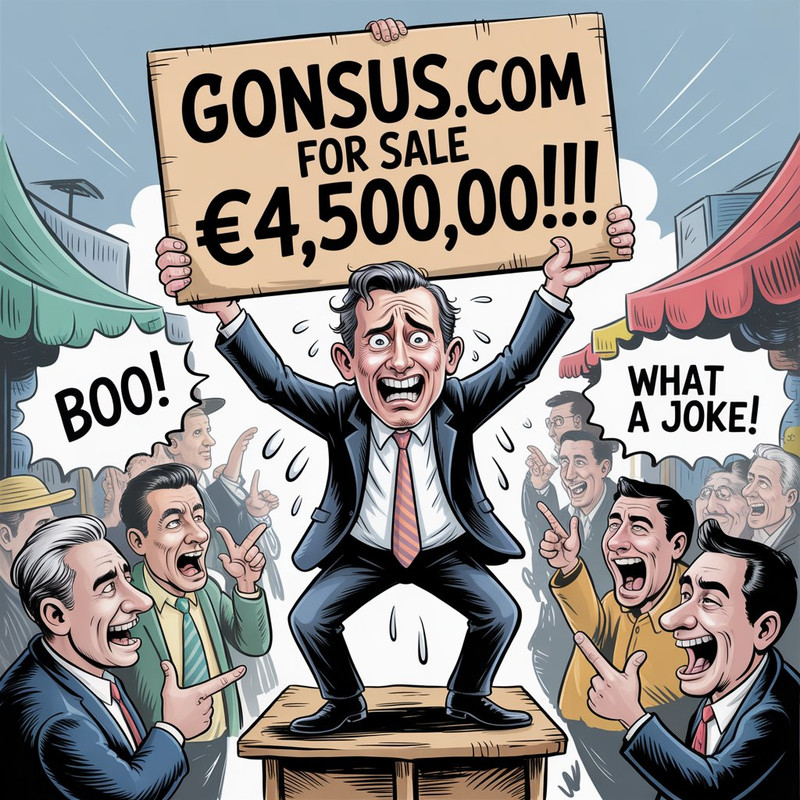
  • Gonsus.com: The €4.5 Million Made‑Up Word That’s Going Nowhere

    Gonsus.com: The €4.5 Million Made‑Up Word That’s Going Nowhere

    The Contender

    MetricDetails
    Domaingonsus.com
    PlatformSedo Showcase (paid promotion)
    Buy It Now Price€4,500,000
    Express Transfer Fee (3%)€135,000
    Total to Buyer€4,635,000
    Showcase Fee Paid$39 (Sedo.com) or $69 (international package)
    The Domain6 letters, no meaning, unpronounceable
    The PitchNone provided—just the price and the showcase
    gonsus

    Introduction: A Random String With a Nine‑Figure Fantasy

    Every so often, a domain listing appears that’s so audacious it makes you wonder if the seller is pranking us.

    Gonsus.com is that listing.

    It’s a six‑letter .com with no meaning in any language. It doesn’t sound like anything. It doesn’t spell anything. It’s not a clever portmanteau, a dictionary word, or a recognizable abbreviation. It’s just six random letters that someone decided should cost €4.5 million.

    Not content with that fantasy, the seller also paid Sedo for a Showcase—a 30‑day promotional spot that costs $39 for the US site or $69 for international exposure. They want to make sure everyone sees their random string with a nine‑figure price tag.

    And just to sweeten the deal, if you’re foolish enough to click “Buy Now,” Sedo will add a 3% express transfer fee—€135,000—bringing the total to €4,635,000.

    For gonsus.com.

    Let’s break down why this is one of the most baffling listings we’ve ever seen—and why the seller’s $39 Showcase fee is the only money they’ll ever spend on this domain.


    The Name: What Is “Gonsus”?

    Let’s start with the most basic question: what does “gonsus” mean?

    The short answer: Nothing.

    • It’s not in any dictionary.
    • It’s not a known brand.
    • It’s not a place name.
    • It’s not a person’s name.
    • It’s not an abbreviation for anything.
    • It’s not a clever blend of two words.

    The longer answer: It sounds like:

    • A typo of “consensus” (missing the “en”)
    • A typo of “genius” (if you type with your hands on the wrong keys)
    • A typo of “gonads” (which is not a selling point)
    • A medication you’d see in a TV commercial (ask your doctor if Gonsus is right for you)

    The pronunciation is equally ambiguous. Is it “gon‑sus”? “gone‑suss”? “gon‑soose”? Nobody knows. And a domain that can’t be pronounced is a domain that can’t be marketed.

    The seller is asking €4.5 million for a string of letters that has no meaning, no memorability, and no inherent value. That’s not domain investing—it’s performance art.


    The Price: €4.5 Million for a Random String

    Let’s put that number in perspective.

    €4.5 million is the kind of money that buys:

    • A genuine one‑word .com like Voice.com ($30M is higher, but €4.5M gets you into the conversation for lesser words)
    • A portfolio of 100+ quality .com domains
    • A developed business with actual revenue
    • A house in most countries (a very nice house)

    What it does not buy is gonsus.com.

    Even the minimum offer (if the seller accepts offers—the listing shows a BIN, so they’re not expecting negotiation) would need to be in the seven‑figure range. For a random string.

    The audacity is almost admirable. Almost.


    The Showcase: $39 to Promote a Fantasy

    The seller paid Sedo for a Showcase—$39 for the US site or $69 for the international package. For 30 days, their domain appears in premium spots on Sedo’s homepage and search results.

    This is a legitimate marketing tool, but it’s meant for domains that have a chance of selling. You don’t pay to promote a lemon. You pay to promote a Ferrari.

    Gonsus.com is not a Ferrari. It’s a random string of letters that the seller has convinced themselves is worth millions. The Showcase fee is a sunk cost that will generate exactly zero serious inquiries.

    What the seller gets for their $39:

    • 30 days of domain investors looking at “gonsus.com” and laughing
    • 30 days of experienced domainers shaking their heads
    • 30 days of zero bids, zero offers, and zero sales
    • A non‑refundable fee down the drain

    The Showcase is the only money this domain will ever generate for Sedo. The sale itself? Never going to happen.


    The Express Transfer Fee: €135,000 for the Privilege

    If—by some miracle—a buyer actually clicked “Buy Now” on gonsus.com, Sedo would add a 3% express transfer fee to the total.

    That’s €135,000 for the privilege of transferring a domain that’s worth maybe $200.

    The express transfer fee is designed for high‑value transactions where speed and security matter. It’s not meant to be a rounding error on a domain that will never sell. But here it is, tacked onto a fantasy price like a cherry on top of a cake made of cardboard.

    The seller is so confident in their random string that they’ve not only set a €4.5 million BIN, but they’ve also ensured the buyer will pay an extra six‑figure fee just to complete the transaction. It’s the domain equivalent of putting a gold frame around a doodle.


    The Defequer Analysis: Why Gonsus.com Is Worth Nothing

    Factor 1: The Name – Random String, Zero Value

    This is the fundamental problem. Gonsus.com has:

    • No meaning
    • No pronunciation
    • No memorability
    • No brand potential
    • No commercial keywords
    • No history or traffic

    Domain names have value when they are:

    • Actual words with commercial intent
    • Short, memorable, and pronounceable
    • Established brands with traffic
    • Recognizable abbreviations or acronyms

    Gonsus.com is none of these. It’s a random string that looks like someone’s cat walked across the keyboard.

    Factor 2: The Price – €4.5 Million for a 6‑Letter Hand‑Reg

    Even if we ignore the name itself, the price is astronomically disconnected from reality.

    What does €4.5 million buy in the domain world? Ultra‑premium one‑word .coms, category‑defining keywords, and established businesses. Not a six‑letter random string with no history, no traffic, and no meaning.

    The seller has taken a domain that cost them $12 to register and decided it’s worth 375,000 times that. That’s not investing. That’s a lottery ticket with a listing fee.

    Factor 3: The Showcase – Paying to Prove You Don’t Get It

    The Showcase fee itself is small—$39 or $69. But it’s the principle that matters. The seller is so convinced their random string is valuable that they’re willing to pay extra to promote it.

    This is the domain equivalent of a struggling musician paying to open for a major act, then playing a kazoo solo. The stage doesn’t make the act better. It just makes the failure more visible.

    Factor 4: The Express Transfer Fee – Adding Insult to Injury

    The 3% express transfer fee is standard for high‑value transactions. But including it in the listing—highlighting that a buyer would pay an extra €135,000—is either delusional optimism or a weird flex.

    It’s like selling a bicycle for $1 million and mentioning that the shipping insurance is an extra $30,000. The fee isn’t the problem. The asking price is.

    Factor 5: The Seller – Anonymous, Optimistic, Unrealistic

    We don’t know much about the seller, but we know they:

    • Own a random six‑letter .com with no meaning
    • Listed it at €4.5 million
    • Paid for a Showcase
    • Believe this is a rational pricing strategy

    This is a classic “new seller” move—except we don’t know if they’re new. They could have been holding this name for years, waiting for the right moment. But no amount of patience turns “gonsus” into “Voice.com.”


    The Delusion Index: 9.5/10

    FactorRatingExplanation
    Name Quality1/10Random string, no meaning, no pronunciation.
    Price Sanity0/10€4.5M for a 6‑letter random string is pure fantasy.
    Seller Strategy1/10Paying for Showcase on a domain with no value.
    Express Transfer Fee2/10A meaningless detail on a meaningless listing.
    Likelihood of Sale0/10Zero. None. Never.

    Overall Delusion Index: 9.5/10

    This is among the highest we’ve given. The only thing keeping it from a 10 is that the domain technically exists. But in every meaningful sense—commercial, linguistic, practical—it’s a zero.


    What Gonsus.com Is Actually Worth

    Let’s do the math the seller should have done.

    Factors to consider:

    • Random string, no meaning
    • Unpronounceable
    • No history, no traffic, no backlinks
    • No natural buyers
    • 6 letters (short, but that’s the only positive)

    Realistic price range: $0 – $100

    That’s not a typo. In the aftermarket, a random string like “gonsus” might attract a $50 offer from someone who collects weird names for a project. More likely, it expires in a few years and someone else registers it for $12 to try the same thing.

    €4.5 million is not just optimistic. It’s 450,000 times the actual value.


    The Defequer Verdict

    CategoryRating
    Name Quality⭐☆☆☆☆ (1/5)
    Price Sanity⭐☆☆☆☆ (1/5)
    Seller Strategy⭐☆☆☆☆ (1/5)
    Showcase Investment⭐☆☆☆☆ (1/5)
    Likelihood of Sale⭐☆☆☆☆ (1/5)

    Final Word:

    “Gonsus.com is a six‑letter random string that a seller has decided is worth €4.5 million. They’ve paid for a Sedo Showcase—$39 to make sure everyone sees their fantasy listing. They’ve highlighted the 3% express transfer fee, just in case anyone was worried about an extra €135,000 on top of the €4.5 million. The domain has no meaning, no pronunciation, no brand potential, no history, and no buyers. The only thing ‘premium’ about this listing is the gap between the seller’s expectations and reality.”


    What Should Actually Happen

    If the seller is reading this (and they probably will, given the Showcase):

    1. Delete the listing. You’re not selling gonsus.com for €4.5 million. You’re not selling it for €4,500. You’re not selling it for €450.
    2. Stop paying for Showcase. $39 is $39 too much for this domain.
    3. Let it expire. The renewal fee is more than the domain is worth. Cut your losses.
    4. Learn what makes a domain valuable. It’s not “short.” It’s not “.com.” It’s meaning, pronounceability, commercial intent, and market demand.
    5. Start over. Register actual words, not random strings. Research what sells. Price realistically.

    For buyers: If you see gonsus.com, run. There’s nothing here.


    The Bottom Line

    Gonsus.com joins the Defequer Hall of Shame as a case study in random‑string delusion.

    A six‑letter .com with no meaning, no pronunciation, and no value. A €4.5 million asking price. A $39 Showcase fee to promote the fantasy. A 3% express transfer fee adding another €135,000. And a seller who genuinely believes this is a reasonable listing.

    This isn’t domain investing. It’s performance art with a registration fee and a Showcase.

    Defequer Rating: 💩💩💩💩💩 (5/5 shits – the combination of a random string, a €4.5M price, a paid Showcase, and a highlighted transfer fee makes this a perfect storm of delusion.)


    Have a random string priced like a premium word? Share with us. We’ll tell you why it’s worth nothing.

    Defequer.com – because someone had to flush.
  • BitcoinSelection.com & BitcoinQuestion.com: The $275,000 Crypto Portfolio That’s Still Waiting for 2021

    BitcoinSelection.com & BitcoinQuestion.com: The $275,000 Crypto Portfolio That’s Still Waiting for 2021

    The Contenders

    MetricBitcoinSelection.comBitcoinQuestion.com
    SellerSame as FlyDiscount.com (John Nguyen portfolio)Same seller
    PlatformAfternicAfternic
    Asking Price$175,000$99,995
    Combined Price$274,995!!Sorry What!?
    CategoryCrypto/FinanceCrypto/Finance
    The PatternBitcoin + generic nounBitcoin + generic noun

    Introduction: The Return of a Familiar Face

    Regular readers of Defequer may remember a certain portfolio we roasted not long ago—a collection of seven domains from a seller named John Nguyen, with combined fantasy pricing of $213,450.

    That roast covered:

    • 2mesothelioma.com at $12,500
    • 360crypto.xyz at $9,950
    • AccountingDigest.com at $49,500
    • AdoptMyChild.com at $19,500
    • Airjet.xyz at $17,500
    • BakeForFun.com at $29,500
    • BestDealCar.com at $75,000

    Our conclusion then: a portfolio of generic keywords, questionable TLDs, and prices 10-100x market value, with zero chance of any sale.

    Well, John is back. And he’s brought friends.

    BitcoinSelection.com at $175,000.
    BitcoinQuestion.com at $99,995.

    Two domains, $274,995 combined asking price, and the same fundamental problems as the last batch: generic constructions, no brand value, and prices that exist in a vacuum.

    Let’s dive in.


    The Defequer Analysis: Why Bitcoin + Generic Noun Doesn’t Equal Millions

    Factor 1: The “Bitcoin” Gold Rush – Three Years Too Late

    Bitcoin peaked in late 2021 at nearly $69,000 per coin. The crypto mania that accompanied that run created a feeding frenzy for Bitcoin-related domains. Every combination imaginable was registered:

    • BitcoinThis.com
    • BitcoinThat.com
    • BitcoinEveryPossibleWord.com

    That was 2021. This is 2026.

    The crypto market has matured (or crashed, depending on your perspective). The frenzy has cooled. And the domains that were registered during that period are now mostly sitting in portfolios, waiting for buyers who never came.

    BitcoinSelection.com was registered when? 2020 – It’s now competing with thousands of similar domains, all trying to attract the same vanishingly small pool of buyers.

    The problem with trend-chasing: You have to be ahead of the trend, not behind it. Registering them late and pricing them at six figures in 2026 is not investing—it’s wishful thinking.

    Factor 2: The “Generic Noun” Problem

    Both domains follow the same formula: Bitcoin + Generic Noun.

    Let’s look at each:

    BitcoinSelection.com

    • What is a “Bitcoin selection”? A curated list of Bitcoin investments? A selection of Bitcoin-related products? A portfolio of different Bitcoins? (There’s only one Bitcoin.)
    • The phrase doesn’t clearly communicate anything. It’s two words that happen to be next to each other, not a coherent concept.

    BitcoinQuestion.com

    • Slightly better. A site for Bitcoin questions—like a FAQ, a forum, or an educational resource. That has some conceptual coherence.
    • But is that a $100,000 concept? Absolutely not.

    The problem: Generic nouns attached to “Bitcoin” create domains that are descriptive but not distinctive. They describe a category, not a brand. And categories have limited commercial value because they can’t be trademarked, can’t be owned exclusively, and don’t build emotional connection with users.

    Factor 3: The End-User Question – Who Would Buy These?

    Let’s imagine the potential buyers for these domains.

    For BitcoinSelection.com:

    Potential BuyerWhy It Won’t Happen
    A crypto exchangeThey already have a brand (Coinbase, Binance, Kraken). They don’t need “Bitcoin Selection.”
    An investment platformThey’d want something more authoritative, like “BitcoinInvesting.com” or a brandable name.
    A news siteThey’d want something broader, like “BitcoinNews.com” or “CryptoDaily.com.”
    A review sitePossible, but they’d build on a cheaper domain or a .io. $175,000 is not in their budget.
    A domain investorNot at this price. They’d wait for the seller to come to their senses.

    For BitcoinQuestion.com:

    Potential BuyerWhy It Won’t Happen
    A Q&A siteLike Stack Exchange for Bitcoin. Possible in theory, but they’d start small and cheap.
    A forumSimilar story—forums are built, not bought at six figures.
    An educational platformMaybe, but again, $100,000 is an insane budget for a domain when you could build on a $12 name.
    A chatbot/AI companyPossibly, but they’d want something shorter and more brandable.

    The brutal truth: there is no natural buyer for either of these domains at these prices. The companies that could afford $175,000 already have brands. The companies that need a domain can’t afford $175,000. This is the classic “no man’s land” of domain pricing.

    Factor 4: The Search Volume Reality

    Bitcoin-related search terms still have volume. People search for:

    • “Bitcoin price”
    • “Bitcoin news”
    • “Bitcoin investing”
    • “How to buy Bitcoin”

    But do they search for “Bitcoin selection”? No. Do they search for “Bitcoin question”? Occasionally, but those searches lead to forums and Q&A sites, not to domains for sale.

    The search intent mismatch:

    • BitcoinSelection.com suggests commercial intent (choosing Bitcoin products or investments)
    • BitcoinQuestion.com suggests informational intent (getting questions answered)

    Neither has strong commercial buyer intent. People searching for these terms are not looking to spend money—they’re looking for information. That makes the domains less valuable to businesses, because the traffic doesn’t convert to sales.

    Factor 5: The Portfolio Pattern – Quantity Over Quality

    John Nguyen’s portfolio strategy is becoming clear:

    1. Register or acquire large numbers of generic keyword domains
    2. Focus on trending topics (crypto, AI, health)
    3. Price them all at fantasy levels (mid-five to low-six figures)
    4. List them everywhere (Afternic, Atom, etc.)
    5. Wait for a miracle

    This is the “spray and pray” approach to domain investing. It works approximately never.

    The math doesn’t work:

    • If you have 100 domains at $10 renewal each, that’s $1,000/year in costs
    • If you sell one domain per year at $100,000, you’re profitable (barely)
    • But you won’t sell one per year, because fantasy pricing doesn’t attract buyers
    • So you lose money every year on renewals
    • Eventually, you let domains expire
    • The cycle repeats

    John Nguyen appears to be deep in this cycle. The FlyDiscount.com roast was just the beginning. Now we have Bitcoin domains to add to the collection.


    The Delusion Index: Two-Domain Edition

    BitcoinSelection.com

    FactorRatingExplanation
    Brandability2/10Generic construction, no distinctiveness.
    Commercial Relevance3/10Bitcoin has value, but “Selection” doesn’t add much.
    Search Volume3/10Bitcoin searches exist, but not for this phrase.
    Timing2/10Three years too late for crypto mania.
    Price Sanity1/10$175,000 for a generic Bitcoin domain is pure fantasy.

    Delusion Index: 8.5/10

    BitcoinQuestion.com

    FactorRatingExplanation
    Brandability3/10Slightly better concept, still generic.
    Commercial Relevance3/10Q&A sites exist, but they don’t pay $100k for domains.
    Search Volume3/10People have Bitcoin questions, but they ask Google, not a domain.
    Timing2/10Same timing problem.
    Price Sanity2/10$99,995 is still 50x the actual value.

    Delusion Index: 8/10

    Combined Portfolio Delusion: 8.3/10


    The “Bitcoin” Premium Fallacy

    There’s a persistent belief among certain domainers that any domain containing “Bitcoin” is automatically valuable. This belief is rooted in the 2021 boom, when crypto-related domains did sell for significant prices.

    But that was then. The market has changed.

    What actually makes a Bitcoin domain valuable?

    • Short and brandable: Bitcoin.com is valuable (sold for millions). BTC.com is valuable.
    • High-commercial keywords: BitcoinInvesting.com might have value. BitcoinWallet.com might have value.
    • Established traffic and history: A domain with backlinks and age has inherent value.

    What doesn’t make a Bitcoin domain valuable:

    • Adding a generic noun to “Bitcoin” and hoping for the best
    • Registering it in 2020s and pricing it at six figures in 2026
    • Assuming that because Bitcoin exists, every combination must be worth money

    BitcoinSelection.com and BitcoinQuestion.com fall firmly into the “doesn’t” category.


    The Familiar Seller Pattern

    We’re starting to recognize John Nguyen’s Modus Operandi:

    DomainPriceProblem
    FlyDiscount.com$495,000Generic two-word .com, fantasy price
    2mesothelioma.com$12,500Medical term with a confusing “2”
    360crypto.xyz$9,950Trend-chasing on a bad TLD
    AccountingDigest.com$49,500Decent domain, 10x too high
    AdoptMyChild.com$19,500Ethically problematic
    Airjet.xyz$17,500Good word, wrong TLD
    BakeForFun.com$29,500Casual phrase, commercial pricing
    BestDealCar.com$75,000The “best” trap at scale
    BitcoinSelection.com$175,000Crypto trend-chasing, generic construction
    BitcoinQuestion.com$99,995Same problem, slightly lower price

    Total from these 10 domains: $1,003,445 in fantasy pricing.

    If John Nguyen sold all these domains at asking price, he’d be a millionaire. But he won’t, because fantasy pricing doesn’t attract buyers. It just attracts attention from people like us.


    What These Domains Are Actually Worth

    Let’s do the math that John Nguyen should have done.

    Let’s do the math that John Nguyen should have done.

    BitcoinSelection.com:

    • Generic two-word .com with “Bitcoin” and a weak noun
    • No history, no traffic, no brand value
    • Registered during or after the crypto boom
    • Competing with thousands of similar domains

    Realistic price range: $500 – $2,000

    BitcoinQuestion.com:

    • Slightly better concept, still generic
    • Potential for a Q&A site or educational platform
    • But those buyers don’t have $100,000 budgets

    Realistic price range: $800 – $3,000

    Combined realistic value: $1,300 – $5,000

    Combined asking price: $274,995

    That’s a 55x to 210x markup. At this ratio, John would need to find buyers willing to pay 50-200 times what the market says these domains are worth.

    Those buyers don’t exist.


    The Defequer Verdict

    CategoryBitcoinSelection.comBitcoinQuestion.com
    Brandability⭐⭐☆☆☆ (2/5)⭐⭐☆☆☆ (2/5)
    Commercial Relevance⭐⭐☆☆☆ (2/5)⭐⭐⭐☆☆ (3/5)
    Timing⭐☆☆☆☆ (1/5)⭐☆☆☆☆ (1/5)
    Price Sanity⭐☆☆☆☆ (1/5)⭐☆☆☆☆ (1/5)
    Seller Pattern⭐☆☆☆☆ (1/5)⭐☆☆☆☆ (1/5)

    Final Word:

    “John Nguyen is back with more inventory from the ‘register everything with Bitcoin in it’ school of domain investing. BitcoinSelection.com at $175,000 and BitcoinQuestion.com at $99,995 are two more entries in a portfolio already overflowing with fantasy pricing. The crypto boom is over. The domains are generic. The prices are delusional. And the seller seems determined to keep adding to the collection, hoping that volume will eventually substitute for value. It won’t. These domains aren’t worth $275,000 combined. They’re worth maybe $5,000 on the absolute best day, to the absolute right buyer. And that buyer isn’t coming.”


    What Should Actually Happen

    If John Nguyen is reading this (and we hope he is):

    1. Stop registering generic Bitcoin domains. The opportunity, if it ever existed, is long gone.
    2. Drop both prices by 95%. List them at $8,750 and $5,000 respectively. Even those might be optimistic, but at least they’re in the conversation.
    3. Consider a portfolio-wide reality check. Ten domains, $1 million in fantasy pricing, zero sales. The data is telling you something.
    4. Research actual crypto domain sales. Look at NameBio. See what Bitcoin domains actually sell for. Hint: it’s not six figures for generic constructions.
    5. Focus on quality over quantity. One good domain at $20,000 is worth more than 100 bad ones at $500,000.

    For buyers: If you see a Bitcoin domain you like from this seller, make an offer at 1-2% of asking. The seller might be ready to deal after reading this roast. And if they’re not, wait. They’re not selling at these prices.


    The Bottom Line

    BitcoinSelection.com and BitcoinQuestion.com join the Defequer Hall of Shame as the latest entries in the John Nguyen portfolio of fantasy pricing.

    Two domains. $274,995 combined asking price. Maybe $5,000 in actual value. A seller who keeps adding inventory, hoping that volume will eventually create value.

    It won’t.

    Defequer Rating: 💩💩💩💩💩 (5/5 shits – the persistence of the fantasy pricing pattern across multiple domains earns top marks in the delusion Olympics.)

  • Sponsor.soccer: The €16 Million .soccer Domain That Redirects to a Pipe Dream

    Sponsor.soccer: The €16 Million .soccer Domain That Redirects to a Pipe Dream

    The Contender

    MetricDetails
    Domainsponsor.soccer
    Registration Date2015
    Renewal Fee~$29/year (vs. ~$10–12 for .com)
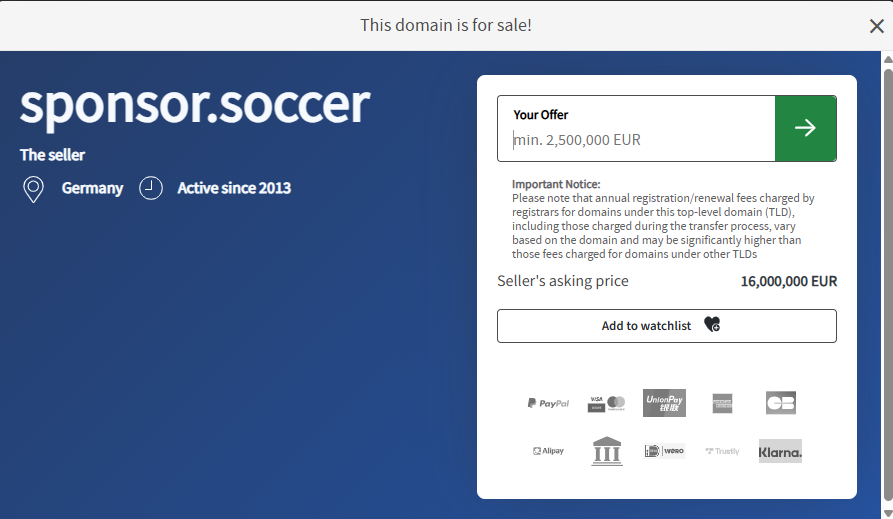
    Seller LocationGermany
    Sedo Member Since2013
    Sedo Listing Price€16,000,000
    Minimum Offer€2,500,000
    Showcase Fee Paid$39
    (30‑day promotion on Sedo.com)
    Current Landing Pagetop-100.domains/soccer (seller’s portfolio hub)
    The Pitch“Wenn Du Im Stadion gesehen werden willst, brauchst Du eine Premiumdomain, die nur das ausspricht, was Du haben willst, den – Sponsor Soccer, eben Sponsor.soccer. Das macht diese Premiumdomain so wertvoll.”

    Introduction: When a Showcase Becomes a Showcase of Delusion

    Sponsor.soccer is a domain that has been sitting since 2015. The seller, a Sedo member since 2013, recently decided it was time to give it a push. They paid $39 for a Sedo Showcase—a 30‑day promotional spot—and listed the domain with an asking price of €16 million and a minimum offer of €2.5 million.

    Sponsor-Soccer

    Oh, and the domain doesn’t even resolve to a landing page explaining why it’s worth that much. It redirects to the seller’s portfolio hub, top-100.domains/soccer, a long German‑language marketing page hyping the 2026 World Cup and a collection of other .soccer, .cloud, and .company domains.

    The renewal fee for .soccer domains is roughly $29 per year—nearly three times the cost of a typical .com. So while the seller dreams of a €16 million payday, the domain is quietly costing them more each year to hold.

    Let’s unpack why this isn’t a premium asset—it’s a niche domain with a fantasy price tag, wrapped in marketing copy that mistakes volume for value.


    The Price: €16 Million Asking, €2.5 Million Floor

    Let’s start with the numbers.

    The seller has set an asking price of €16,000,000 (about $17.3 million USD). The minimum offer they’ll consider is €2,500,000. That’s a seven‑figure floor for a domain in a TLD that has never produced a seven‑figure sale.

    To put this in perspective, €16 million is:

    • More than the reported sale price of Voice.com ($30M is higher, but €16M is still elite territory)
    • Enough to buy a portfolio of hundreds of quality .com domains
    • More than the GDP of some small countries

    What does it actually buy? A .soccer domain that’s been sitting for a decade, with no traffic, no history, and a renewal fee that’s triple the industry standard.

    The seller is using the Sedo Showcase to promote this fantasy. For $39, they’ve bought 30 days of visibility on the Sedo homepage. But no amount of visibility can make a .soccer domain worth eight figures.


    The Renewal Math: Why .soccer Is a Costly Hold

    Let’s look at the economics of .soccer.

    According to tld-list.com, the .soccer extension has:

    • Wholesale renewal cost: $16/year (registry to registrar)
    • Average registrar renewal: ~$29/year
    • Median registrar renewal: ~$22/year

    Compare that to a .com, which renews for $10–$12/year on most registrars.

    The seller has held this domain since 2015. That’s at least 10 years of renewals. At an average of $25/year, they’ve spent $250+ just to keep it alive. Add the Showcase fee, the development of the landing page, and the opportunity cost, and you’re looking at a significant sunk cost.

    Now they’re asking €16 million. Even if they dropped the price to the minimum offer of €2.5 million, the ROI on a $250 holding cost would be astronomical—but only if a buyer exists. The market for .soccer says they don’t.

    The irony: The domain itself is costing the seller more than most .coms, yet it’s worth far less. The high renewal fee makes it a less attractive asset for any potential buyer, who would have to pay that premium every year just to keep the lights on.


    The Showcase: $39 to Show the World a Redirect

    The seller paid Sedo $39 for a Showcase—a 30‑day promotion that puts the domain on the Sedo homepage and in search results. It’s a legitimate way to get visibility, but only if the domain itself is worth seeing.

    When a potential buyer clicks on the Showcase, they’re taken to the Sedo listing. From there, they can visit the domain. And where does sponsor.soccer go?

    It redirects to top-100.domains/soccer.

    That’s the seller’s own marketing page—a long, scrolling German‑language site that promotes sponsor.soccer alongside a dozen other domains like music.soccer, radio.soccer, shoe.soccer, and even non‑soccer names like usa1.cloud and goldcard.company.

    The redirect tells you everything:

    • The seller isn’t using the domain for anything that would build value (no site, no content, no traffic)
    • They’re using it as a billboard for their portfolio
    • They’re hoping the 2026 World Cup hype will create urgency

    But a redirect is not a development. It’s not a brand. It’s a placeholder—and a placeholder isn’t worth €16 million.


    The Landing Page: A Masterclass in Marketing Hype

    The top-100.domains/soccer page is a lot to take in. It’s a long sales pitch in German, full of bold claims and creative justifications. Let’s translate some highlights:

    “Wenn Du Im Stadion gesehen werden willst, brauchst Du eine Premiumdomain, die nur das ausspricht, was Du haben willst, den – Sponsor Soccer, eben Sponsor.soccer.”

    Translation: “If you want to be seen in the stadium, you need a premium domain that says exactly what you want—Sponsor Soccer, namely Sponsor.soccer.”

    The idea: a sponsor who wants visibility at the World Cup should buy sponsor.soccer to signal their role. It’s a cute concept. But real sponsors—the ones with the budgets to be seen at a World Cup—already have brands. They don’t need to buy a niche domain to “signal” what they do. They sponsor with money, not with domain names.

    The page also includes:

    • References to the 2026 World Cup being hosted in the USA, Mexico, and Canada
    • Claims that “the name makes the domain, not the length” (a jab at .com length critics)
    • Examples of high‑value .com sales (carinsurance.com, privatejet.com) to justify that length doesn’t matter
    • AI‑generated descriptions of what sponsor.soccer could be used for
    • A plug for other domains like usa1.cloud, aktien.cloud, goldcard.company

    The marketing effort is impressive in its scale, but it’s built on a foundation of wishful thinking. No amount of copywriting can make a .soccer domain worth €16 million.


    The World Cup Hook: Timing ≠ Value

    The seller is leaning hard on the 2026 FIFA World Cup as a reason sponsor.soccer is suddenly valuable.

    “Zum ersten Mal wird die Soccer Weltmeisterschaft in drei Ländern ausgetragen. Die USA, Mexiko und Kanada sind automatisch mit dabei…”

    Translation: “For the first time, the Soccer World Cup is being held in three countries. The USA, Mexico and Canada are automatically included…”

    The logic: because the World Cup is in North America, where “soccer” is the term used, sponsor.soccer will be in high demand.

    Reality check: The World Cup happens every four years. The 2026 edition will come and go. A domain that’s been sitting since 2015 won’t suddenly become valuable because of a three‑week tournament. If it were going to sell, it would have sold in the previous 11 years of holding.

    The seller is trying to create urgency around a calendar event. But domain buyers don’t rush to buy niche TLDs because of a tournament. They buy assets that have lasting value, not temporary relevance.


    The Defequer Analysis: Why Sponsor.soccer Isn’t Worth €16 Million

    Factor 1: The TLD – .soccer Has No High‑End Market

    .soccer was launched in 2015 as a niche TLD for the soccer community. In practice, it’s barely used. NameBio shows no significant .soccer sales in the past five years. The TLD doesn’t attract end‑users with seven‑figure budgets, and the renewal fee is higher than .com, making it less attractive for long‑term holds.

    A domain is only as valuable as the market for its TLD. And the market for .soccer is essentially nonexistent at the level the seller is targeting.

    Factor 2: The Word – “Sponsor” Is a Function, Not a Brand

    “Sponsor” is a job title. It describes what a company does, not who they are.

    • A sponsorship agency might want SponsorshipAgency.com.
    • A company looking for sponsors would use their own brand domain.
    • No business is going to brand themselves as “Sponsor.”

    The word is too generic to be distinctive and too functional to be memorable. Attaching it to .soccer doesn’t change that.

    Factor 3: The Price – €16 Million for a Domain That Redirects

    Let’s put €16 million in perspective.

    That’s the kind of money that buys:

    • A truly premium one‑word .com
    • A portfolio of hundreds of quality domains
    • A developed business with actual revenue
    • A private jet

    What it doesn’t buy is a niche .soccer domain that redirects to a marketing page full of hype. The minimum offer of €2.5 million is equally absurd—there’s no evidence that any .soccer domain has ever sold for even a fraction of that.

    Factor 4: The Showcase & Redirect – Paying to Promote a Billboard

    The seller paid $39 for a Showcase, but the domain itself doesn’t even have a proper landing page. It redirects to top-100.domains/soccer—a site that’s essentially a billboard for the seller’s portfolio.

    This tells potential buyers:

    • The seller isn’t serious about developing the domain
    • They’re using it as a marketing vehicle for other names
    • They haven’t invested in building any value around sponsor.soccer

    A $39 Showcase fee is a small expense, but it’s still an expense on a domain that hasn’t sold in 11 years. The redirect strategy suggests the seller is more focused on promoting their brand than on selling this specific domain.

    Factor 5: The 11‑Year Hold – Patience or Sunk Cost?

    The domain was registered in 2015. That’s 11 years ago.

    In that time:

    • The seller has paid annual renewals (at least $250–$300 total, given .soccer’s higher cost)
    • They’ve built a marketing page
    • They’ve paid for Showcase
    • They’ve listed it on Sedo
    • And it hasn’t sold

    At some point, holding becomes a cost, not a strategy. The seller is now trying to justify the hold by inventing a World Cup narrative. But if the domain were truly valuable, it would have sold in the past decade.


    The Delusion Index: 8/10

    FactorRatingExplanation
    TLD Quality2/10.soccer has minimal market and no significant sales.
    Word Quality4/10“Sponsor” is a real word, but it’s a function, not a brand.
    Seller Experience7/10Been on Sedo since 2013—should know better.
    Price Sanity1/10€16M asking, €2.5M floor—pure fantasy.
    Renewal Economics2/10.soccer renews at triple .com, making it less attractive.
    Showcase & Redirect2/10Paying to promote a redirect is misguided.

    Overall Delusion Index: 8/10

    This is a high‑tier delusion. The seller has been in the game long enough to know better, yet they’ve listed a .soccer domain at an eight‑figure asking price, with a seven‑figure floor, and backed it up with a marketing page full of World Cup hype—all while the domain just redirects to their portfolio hub.


    What Sponsor.soccer Is Actually Worth

    Let’s do the math the seller should have done.

    Factors in its favor:

    • Real word
    • Registered since 2015
    • Seller has experience

    Factors against it:

    • .soccer TLD with no resale market
    • Generic word with limited commercial appeal
    • No traffic, no backlinks, no history of use
    • High renewal fee relative to .com
    • Redirected to a portfolio page—no development

    Realistic price range: $200 – $300

    At the high end, to a domain investor who sees potential in the World Cup angle and wants to take a flyer. At the low end, to someone who wants a niche domain for a soccer‑related project.

    What it’s not worth: €16 million. Or €2.5 million. Or even €25,000.


    The Defequer Verdict

    CategoryRating
    TLD Quality⭐⭐☆☆☆ (2/5)
    Word Quality⭐⭐⭐☆☆ (3/5)
    Price Sanity⭐☆☆☆☆ (1/5)
    Renewal Economics⭐⭐☆☆☆ (2/5)
    Seller Strategy⭐⭐☆☆☆ (2/5)

    Final Word:

    “Sponsor.soccer is a domain that’s been waiting for its moment since 2015. The seller, a Sedo member since 2013, has decided that moment is the 2026 World Cup—and they’ve priced it at €16 million to match. They paid $39 for a Showcase, but the domain itself just redirects to a marketing page for their portfolio. The .soccer TLD has no high‑end market, the renewal costs nearly three times a .com, and the word ‘sponsor’ is a function, not a brand. The only thing that’s truly ‘premium’ about this listing is the gap between the seller’s expectations and market reality.”


    What Should Actually Happen

    If the seller is reading this (and given their marketing effort, they probably will):

    1. Drop the price by 99.9%. €16 million is not a price—it’s a fantasy. List it at €2,000 and see if anyone bites.
    2. Stop paying for Showcase. $39 here and there adds up. Put that money toward domains that actually have a market.
    3. Acknowledge the TLD problem. .soccer isn’t .com. Price accordingly, and factor in the higher renewal cost.
    4. Build something on the domain. A redirect to your portfolio isn’t development. If you want to show value, create content, traffic, or a brand.
    5. Learn from 11 years of holding. If it hasn’t sold in over a decade, it’s not a sleeping giant—it’s a sunk cost.

    For buyers: If you genuinely want sponsor.soccer, make an offer at $200. The seller might finally be ready to move on after 11 years—especially once they realize the renewal fees have been eating into their dream.


    The Bottom Line

    Sponsor.soccer joins the Defequer Hall of Shame as a case study in niche TLD delusion meets fantasy pricing.

    A seller with over a decade of experience. A domain registered in 2015. A €16 million asking price with a €2.5 million floor. A $39 Showcase. A redirect to a portfolio page. And a .soccer TLD that renews for nearly three times a .com.

    The 2026 World Cup won’t save it. The marketing page won’t sell it. And the renewal fees will keep adding up until reality sets in.

    Defequer Rating: 💩💩💩💩 (4/5 shits – the experience of the seller makes this delusion more egregious.)


    Have a niche TLD domain you’ve been holding for a decade? Talk with us. We’ll tell you if it’s time to let go.

    Defequer.com – because someone had to flush.
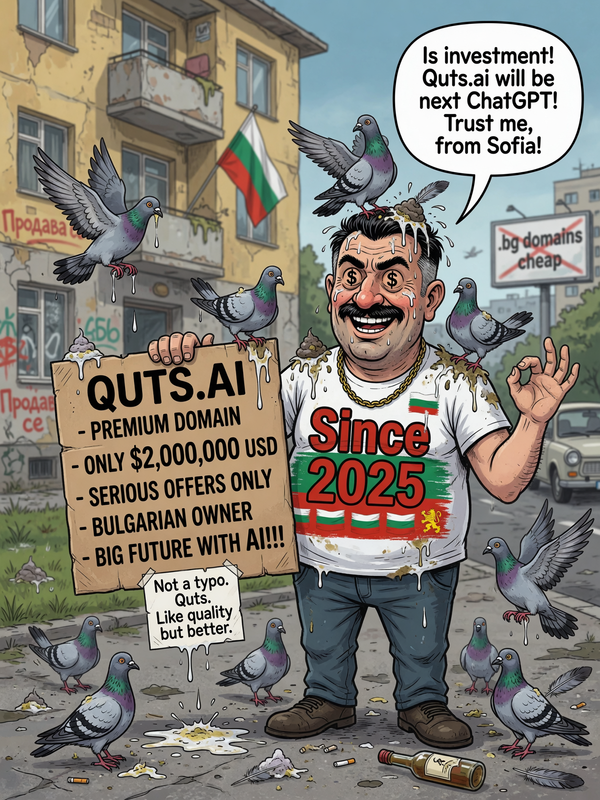
  • Quts.ai: The $2 Million Made‑Up Word With a Portfolio of Dreams

    Quts.ai: The $2 Million Made‑Up Word With a Portfolio of Dreams

    The Contender

    MetricDetails
    DomainQuts.ai
    Registration Date2025
    Seller LocationBulgaria
    Sedo Member Since2025
    PlatformSedo Showcase (paid promotion)
    Asking Price (solo)$2,097,152
    Portfolio Price (6 domains)$2,626,000
    Showcase FeePaid upfront, non‑refundable (likely hundreds of dollars)
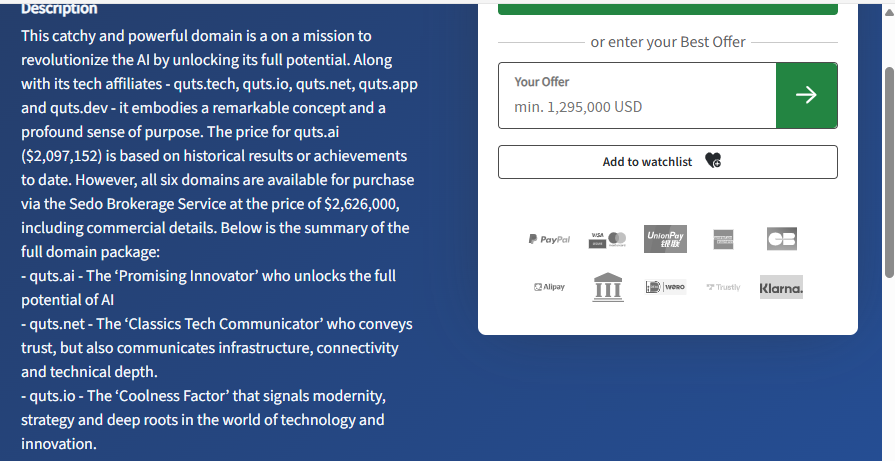
    The Pitch“This catchy and powerful domain is on a mission to revolutionize AI by unlocking its full potential. Along with its tech affiliates… it embodies a remarkable concept and a profound sense of purpose.”
    Quts Quts

    Introduction: The Random String That Wants to Change the World

    We’ve roasted a lot of delusional domains. Hand‑regs priced at $500,000. IDNs with accents no one can type. Royal names that belong to someone else. Portmanteaus that don’t blend.

    But Quts.ai is in a category of its own.

    It’s not a word. It’s not a portmanteau. It’s not a clever abbreviation. It’s a random string of letters—“Quts”—that sounds like someone tried to type “cuts” and missed.

    The seller, who joined Sedo in 2025, registered this domain in 2025. It’s a brand‑new hand‑reg. And they want $2,097,152 for it.

    That’s not a typo. Over two million dollars for a domain that didn’t exist a year ago, that has no meaning, no history, no traffic, no brand, and no obvious commercial use.

    And they didn’t stop there. They also registered Quts.tech, Quts.io, Quts.net, Quts.app, and Quts.dev. They’ve bundled these six domains into a “portfolio” priced at $2,626,000. They’ve written elaborate descriptions for each, assigning them personalities like a Marvel Cinematic Universe lineup. And they paid Sedo for a Showcase listing—a non‑refundable fee—to promote this fantasy.

    Let’s take this apart piece by piece, because there’s a lot to unpack.


    The Name: “Quts” – A Random String With No Meaning

    Let’s start with the word itself.

    Quts is not in any dictionary. It’s not a known brand. It’s not a tech term. It’s not an abbreviation. It’s five letters—Q, U, T, S—that don’t form a recognizable sound or concept.

    What does it sound like?

    • “Cuts” with a Q? (But Q doesn’t make a C sound.)
    • “Quits” without the I?
    • “Quartz” without the RZ?
    • A sneeze?

    The pronunciation is ambiguous. Is it “kuts”? “Kyoots”? “Kootz”? Nobody knows. And a domain that can’t be pronounced is a domain that can’t be marketed. You can’t put it on a billboard. You can’t say it in a podcast. You can’t tell someone your website address without spelling it out letter by letter.

    The seller calls it “catchy.” Catchy means it sticks in your head. Quts doesn’t stick—it slides off. It’s the domain equivalent of white noise.


    The Seller: New Account, Grand Ambitions

    The seller is based in Bulgaria and joined Sedo in 2025. That’s last year.

    This is a pattern we’ve seen repeatedly: new sellers with no track record, no sales history, and no market awareness register a handful of domains and price them at fantasy levels. They’ve read about million‑dollar sales but not about the 99.9% of domains that sell for nothing. They’re still in the “I know what I have” phase, convinced that their random hand‑reg is the next Voice.com.

    Quts

    But this seller has taken it a step further. They’ve not only priced Quts.ai at over $2 million—they’ve paid Sedo for a Showcase listing. That’s a non‑refundable fee to get premium placement on Sedo’s homepage and search results for 30 days.

    The result? We’re looking at it. A domain that doesn’t mean anything, priced at over $2 million, sitting in a Showcase spot that cost real money to secure. The only thing it’s showcasing is how not to spend your marketing budget.


    The Portfolio: Six Random Strings Dressed Up as a Franchise

    Let’s look at the full portfolio the seller is offering:

    DomainDescription
    Quts.ai“The ‘Promising Innovator’ who unlocks the full potential of AI”
    Quts.net“The ‘Classics Tech Communicator’ who conveys trust, but also communicates infrastructure, connectivity and technical depth.”
    Quts.io“The ‘Coolness Factor’ that signals modernity, strategy and deep roots in the world of technology and innovation.”
    Quts.tech“The ‘innovative and future-oriented tech visionary’”
    Quts.app“The ‘purpose- and solution-oriented functional expert’”
    Quts.dev“The ‘library, interface and digital showcase’ for technical expertise.”

    This is one of the most elaborate domain descriptions we’ve ever seen. The seller has assigned personalities, roles, and “vibes” to each extension as if they’re assembling a superhero team.

    The problem: The base word is meaningless. You can dress up a random string in any personality you want, but it’s still a random string. “Quts” doesn’t become valuable because you gave it a job title.

    This is like buying a rusty bicycle, giving each wheel a name, and trying to sell it as a “transportation ecosystem.” No one is fooled.


    The Price: $2,097,152 – A Number That Screams “I Made This Up”

    Let’s talk about that specific number.

    $2,097,152. It’s oddly specific. It’s not a round number. It’s not a common reserve. It looks like someone typed random digits or used a formula.

    The seller says the price is “based on historical results or achievements to date.” What historical results? The domain was registered in 2025. There are no results. There are no achievements. There’s no history.

    The only “achievement” is that the seller paid a Showcase fee. That’s not a sales comp. That’s a marketing expense.

    The portfolio price is $2,626,000 for all six domains. That’s a $528,848 discount for buying in bulk—as if anyone would want the other five after being offered the first.


    The Showcase: Paying Sedo to Show the World You’re Delusional

    Sedo’s Showcase service is a paid advertising product. You pay a fee (likely hundreds of dollars) to get your domain featured on the homepage and in search results for 30 days. It’s a legitimate way to get visibility—if you have a domain worth seeing.

    But Quts.ai is not worth seeing. It’s a random string. The Showcase fee is a sunk cost that will generate zero return. The seller paid Sedo for the privilege of demonstrating to the entire domain community that they don’t understand how valuation works.

    What the seller got for their money:

    • 30 days of people looking at Quts.ai and thinking “what is that?”
    • 30 days of experienced domainers shaking their heads
    • 30 days of zero bids, zero serious inquiries, and zero sales
    • A non‑refundable fee down the drain

    We’re not saying Showcase is a bad product. But it’s a bad product for this domain. You don’t pay to advertise a lemon. You pay to advertise a Ferrari. This is a lemon.


    The Defequer Analysis: Why Quts.ai Is Worthless

    Factor 1: The Name – Random String, Zero Meaning

    This is the fundamental problem. “Quts” is not a word. It’s not a brand. It’s not a clever abbreviation. It’s five letters that don’t form a recognizable sound or concept.

    Domain names have value when they:

    • Are actual words with commercial intent
    • Are short, memorable, and pronounceable
    • Have existing traffic or backlinks
    • Fit a specific industry or niche

    Quts.ai has none of these. It’s a blank slate—but not in a good way. A blank slate like “Uber” or “Google” had no meaning, but they were pronounceable and memorable. “Quts” is neither. It’s a typo waiting to happen.

    Factor 2: The TLD – .ai Can’t Save a Bad Name

    .ai is a strong TLD for AI‑focused companies. But it can’t rescue a name that doesn’t work. “Quts.ai” is still “Quts” no matter what extension you put behind it.

    The seller tries to justify the .ai by saying it’s “on a mission to revolutionize AI.” But there’s no connection between “Quts” and AI. It’s just a random string with .ai attached. That’s not branding—it’s wishful thinking.

    Factor 3: The Portfolio – Five More Reasons to Say No

    The seller has bundled five additional extensions into a “portfolio.” But owning Quts.net, Quts.io, etc., doesn’t make Quts.ai more valuable. It just means they paid five more registration fees for the same meaningless word.

    In fact, the portfolio is a negative signal. It suggests the seller doesn’t understand that each extension has its own market. .ai is for AI startups. .io is for tech. .net is for infrastructure. You can’t force a single random string to fit all these niches just because you registered them.

    Factor 4: The Price – $2 Million for a 2025 Hand‑Reg

    Let’s put that number in perspective.

    $2,097,152 is the kind of money that buys:

    • A truly premium one‑word .com
    • A portfolio of 100+ quality domains
    • A developed business with actual revenue
    • A house in most countries

    What it doesn’t buy is a random string that was registered last year, has no meaning, no history, and no buyers.

    Factor 5: The Seller – New, Optimistic, and Out of Touch

    The seller joined Sedo in 2025. They registered Quts.ai in 2025. They’re brand new to domaining, and they’ve already made every classic mistake:

    • Picking a random name with no meaning
    • Registering it across multiple extensions
    • Pricing it at fantasy levels
    • Paying for premium promotion
    • Writing elaborate descriptions that don’t change the underlying reality

    This is the domain equivalent of a first‑time novelist printing 10,000 copies of their self‑published book and wondering why it’s not on the bestseller list. The enthusiasm is admirable. The execution is not.


    The Delusion Index: 9.5/10

    FactorRatingExplanation
    Name Quality1/10Random string, no meaning, unpronounceable.
    TLD Fit3/10.ai is good, but it can’t rescue “Quts.”
    Portfolio Logic1/10Registering six extensions doesn’t create value.
    Price Sanity0/10$2M for a 2025 hand‑reg is pure fantasy.
    Seller Experience1/10Joined 2025, already in deep delusion.
    Showcase Strategy1/10Paid to promote a lemon.

    Overall Delusion Index: 9.5/10

    This is among the highest we’ve given. The only thing keeping it from a 10 is that the domain technically exists. But in every meaningful sense—commercial, linguistic, practical—it’s a zero.


    What Quts.ai Is Actually Worth

    Let’s do the math the seller should have done.

    Factors against it:

    • Random string, no meaning
    • Unpronounceable
    • Registered in 2025 (no history)
    • No traffic, no backlinks
    • No natural buyers

    Factors in its favor:

    • It’s short (5 letters)
    • It’s a .ai (strong TLD)

    Realistic price range: $0 – $100

    That’s not a typo. In the aftermarket, a random string like “Quts” might attract a $50 offer from someone who collects weird names. It might sell for $100 at auction if two people get into a bidding war. More likely, it expires in a few years and someone registers it for $12 to try the same thing again.

    $2,097,152 is not just optimistic—it’s 20,000x the actual value.


    The Defequer Verdict

    CategoryRating
    Name Quality⭐☆☆☆☆ (1/5)
    TLD Fit⭐⭐☆☆☆ (2/5)
    Portfolio Logic⭐☆☆☆☆ (1/5)
    Price Sanity⭐☆☆☆☆ (1/5)
    Seller Awareness⭐☆☆☆☆ (1/5)

    Final Word:

    “Quts.ai isn’t a domain—it’s a random string of letters that someone registered last year, wrapped in a six‑domain portfolio, dressed up with superhero personalities, and priced at over $2 million. The seller, who joined Sedo in 2025, paid for a Showcase listing to promote a name that sounds like a typo of ‘cuts’ and has no meaning in any language. The elaborate descriptions—‘Promising Innovator,’ ‘Classics Tech Communicator,’ ‘Coolness Factor’—are creative writing exercises, not valuation data. At the end of the day, Quts is Quts. It’s not a brand. It’s not a concept. It’s a random string that will expire in a few years, and the only thing revolutionary about it is the audacity of the price tag.”


    What Should Actually Happen

    If the seller is reading this (and we hope they are):

    1. Cancel the Showcase. It’s already paid for, but don’t renew it. You’re throwing money away.
    2. Drop the price to $495. See if anyone bites. They won’t, but at least you’ll learn something.
    3. Let the other extensions expire. Owning Quts.net, Quts.io, etc., doesn’t make Quts.ai more valuable. It just costs you renewal fees.
    4. Research what actually sells. Look at NameBio. See what .ai domains trade for. Hint: random strings are not on the list.
    5. Start over. You’re new. That’s fine. But learn from this before spending more money on registration fees and promotion.

    For buyers: If you see Quts.ai, run. There’s no there there.


    The Bottom Line

    Quts.ai joins the Defequer Hall of Shame as a case study in random‑string delusion.

    A new seller. A 2025 hand‑reg. A meaningless name. A portfolio of five more meaningless names. A $2 million price tag. A paid Showcase listing. Elaborate descriptions that don’t change the underlying reality.

    This isn’t domain investing. It’s performance art with a registration fee.

    Defequer Rating: 💩💩💩💩💩 (5/5 shits – the combination of a meaningless name, a $2M price, a paid Showcase, and superhero personality descriptions makes this a perfect storm of delusion.)


    Have a random string priced like a premium word? Send it to us. We’ll tell you why it’s worth nothing.

    Defequer.com – because someone had to flush.
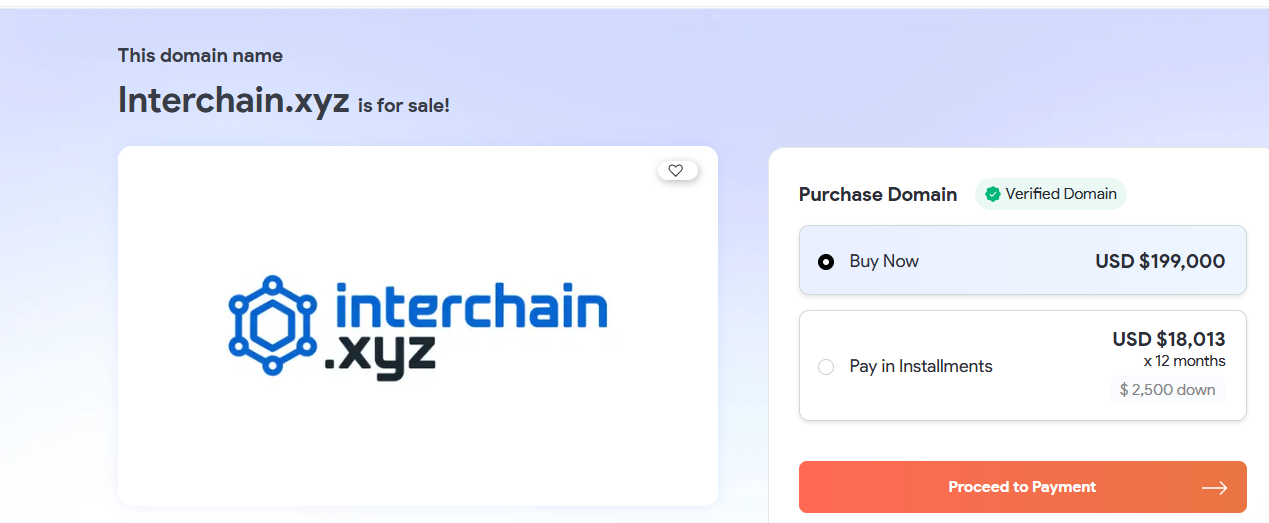
  • LetPay.com: The $250,000 Auction That Attracted One $30 Bid

    LetPay.com: The $250,000 Auction That Attracted One $30 Bid

    The Contender

    MetricDetails
    DomainLetPay.com
    Registration Date2005
    Renewal Paid Through2033 (8 years prepaid)
    Seller LocationIndia
    Sedo Member Since2025
    Auction TypeSedo auction with reserve
    Reserve Range$250,000 – $499,999
    Actual Bids1 bid at $30
    Seller’s Cost$59 auction listing fee (wasted)
    The Pitch“Premium asset… instant credibility… SEO advantage… brand authority… type‑in traffic”
    The DisclaimerA full paragraph clarifying no affiliation with any existing trademark holders (because they know it’s a risk)

    Introduction: The Auction That Told the Whole Story

    There’s a lot to unpack with LetPay.com. An aged domain (2005). A seller who just started domaining in 2025. A reserve price that would make a seasoned investor blush. And an auction result so embarrassing it’s almost poetic.

    Let’s start with the auction itself.

    The seller paid $59 to run a Sedo auction. They set a reserve between $250,000 and $499,999. They wrote a polished pitch about “instant credibility,” “SEO advantage,” and “type‑in traffic.”

    The result? One bid. $30. That’s it.

    The auction ended. The reserve wasn’t met. The domain didn’t sell. The seller wasted $59 and got nothing but a public record of how little the market values their “premium asset.”

    Sometimes the market speaks so clearly that a roast almost writes itself.


    The Seller: New to Domaining, Old to the Domain

    The seller is based in India and joined Sedo in 2025. That’s last year. They’re new to the game—which explains the fantasy pricing, the buzzword‑heavy pitch, and the lack of market awareness.

    But here’s where it gets interesting: the domain itself was registered in 2005. That’s 20 years ago. So the seller didn’t register it—they acquired it recently, probably from an expired auction or a closeout, and are now trying to flip it at a massive markup.

    The question: Did they pay a few hundred dollars for a 2005‑registered domain and decide it was worth $250,000? Or did they inherit it somehow and assume age alone equals value?

    Either way, they’ve prepaid renewals through 2033—eight years of holding costs on a domain that just attracted a single $30 bid. That’s either confidence or sunk‑cost fallacy. Given the auction result, we know which one.


    The Auction Fiasco: $30 vs. $250,000

    Let’s sit with this for a moment.

    The seller set a reserve starting at $250,000. The market responded with a single bid of $30. That’s not a lowball—that’s a signal.

    In auction theory, the opening bid reflects the highest price someone is willing to pay at that moment. The fact that only one person bid, and that bid was $30, tells you everything about the domain’s actual market value.

    The seller paid $59 for the privilege of learning that.

    Now, $30 is obviously too low for a 20‑year‑old .com with a decent word combination. But it’s also a far cry from $250,000. The real value lies somewhere in between—probably in the low four figures—but the auction result suggests even that might be optimistic without the right buyer.


    The Pitch: Buzzword Bingo With a Side of Legal Cover

    Let’s look at the seller’s pitch, because it’s a masterclass in overpromising:

    “This highly brandable, memorable domain name offers an unparalleled opportunity to establish immediate authority and trust in a competitive sector.”

    Translation: It’s a .com with two common words. Nothing more.

    “Instant Credibility: A premium, category‑defining name that positions your business as a market leader from day one.”

    What category does “LetPay” define? Letting people pay? It’s descriptive, not “category‑defining.”

    “SEO Advantage: Boosts organic search rankings for valuable keywords.”

    This is a myth. Exact‑match domains haven’t carried significant SEO weight in over a decade. Google devalued them years ago.

    “Memorable & Type‑in Traffic: Short, simple, and easy to remember, ensuring repeat visitors and direct navigation.”

    “LetPay” is short. It’s also ambiguous—does it mean “let people pay” or “let (as in lease) payment”? The type‑in traffic argument is also outdated; people don’t type random word combinations into browsers anymore.

    Then there’s the disclaimer—a full paragraph that reads like a lawyer’s CYA note:

    “The seller has no affiliation with any existing entity or trademark holders in the financial services or payment processing sectors. … Any resemblance to existing trademarks is purely coincidental…”

    This is the part that makes us raise an eyebrow. Why the elaborate disclaimer? Because the seller knows there’s a trademark risk.

    A quick search for “LetPay” reveals multiple payment‑related services using similar names. The disclaimer doesn’t protect the buyer from a UDRP. It just shifts the liability.


    The Defequer Analysis: Why LetPay.com Isn’t Worth $250,000

    Factor 1: The Age Paradox – Old Domain, New Seller

    The domain was registered in 2005. That’s a legitimate asset—aged domains have inherent value if they have a clean history and some backlinks.

    But here’s the catch: the seller didn’t own it for those 20 years. They acquired it recently. The age doesn’t transfer to them as credibility; it’s just a number. Without knowing the domain’s history—whether it was developed, whether it has backlinks, whether it was parked on spam pages—the age is just a data point, not a guarantee of value.

    The seller prepaid renewals through 2033, which suggests they’re planning to hold it for a while. But holding a domain doesn’t make it more valuable; it just costs money.

    Factor 2: The Trademark Risk – Why the Disclaimer Is a Red Flag

    Let’s talk about that disclaimer.

    When a seller goes out of their way to say “I have no affiliation with any existing entity or trademark holders” and “any resemblance is purely coincidental,” they’re telegraphing that they know there’s a risk.

    A quick search shows multiple “LetPay” or “LetPay”‑adjacent financial services. If a trademark holder exists, the buyer could face a UDRP challenge. The disclaimer doesn’t protect them; it just tells them “you’re on your own.”

    Factor 3: The Auction Result – The Market Has Spoken

    The $30 bid is not a fluke. It’s the market telling the seller what this domain is worth to the only person willing to bid.

    Yes, auctions can fail to capture true value if the right buyers don’t see it. But a single bid at 0.012% of the reserve is not “the right buyer missed it”—it’s “no one serious was interested.”

    Factor 4: The Price – $250,000 for a Two‑Word .com

    Let’s put that number in perspective.

    $250,000 buys:

    • A truly premium one‑word .com (like Voice.com is $30M, but $250k gets you in the conversation for a strong generic)
    • A portfolio of 50‑100 quality domains
    • A developed business with actual revenue
    • A house in most cities

    What it doesn’t buy is a two‑word .com with ambiguous meaning and a potential trademark problem. Even if “LetPay” were a perfect brand, $250,000 is far above what comparable domains sell for.

    Factor 5: The “Type‑in Traffic” Myth

    The seller claims the domain gets “type‑in traffic.” This is almost certainly false.

    Type‑in traffic exists for domains that are:

    • Ultra‑short (123.com, sex.com)
    • Ultra‑common dictionary words (car.com, hotel.com)
    • Established brands people already know

    “LetPay.com” is none of these. No one is waking up and typing “let pay” into their browser. The traffic argument is a relic from the early 2000s that sellers trot out to justify fantasy pricing.


    What the Seller Got Right (and Wrong)

    Let’s give credit where it’s due:

    What they got right:

    • It’s a .com
    • It’s short (6 letters)
    • It was registered in 2005 (age has some value)
    • The pitch is well‑written (even if it’s overblown)

    What they got wrong:

    • The price (by a factor of 50‑100x)
    • The trademark risk (the disclaimer is a giveaway)
    • The “type‑in traffic” claim (unsubstantiated)
    • The auction strategy ($59 auction listing fee for a $30 bid is a bad ROI)
    • The prepaid renewals (eight years of holding costs on a domain that just bombed)

    The Delusion Index: 8/10

    FactorRatingExplanation
    Domain Age7/102005 registration is legit, but the seller didn’t own it that whole time.
    Trademark Risk3/10The disclaimer suggests they know there’s exposure.
    Auction Result1/10One $30 bid on a $250k reserve is devastating.
    Price Sanity1/10$250k is 50‑100x the actual value.
    Seller Experience2/10Joined 2025, already making classic newbie mistakes.

    Overall Delusion Index: 8/10

    This is a high score because the seller paid for an auction, got humiliated by the result, and still seems to believe the domain is worth a quarter million dollars. The disclaimer alone tells you they know there’s a problem—they just hope someone else won’t notice.


    What LetPay.com Is Actually Worth

    Let’s do the math the seller should have done.

    Factors in its favor:

    • 2005 registration (if the history is clean)
    • Short .com
    • “Let” + “Pay” has some conceptual value

    Factors against it:

    • Trademark risk
    • Ambiguous meaning (let as in “allow” vs. let as in “lease”)
    • No evidence of traffic or backlinks
    • Auction result shows minimal market interest

    Realistic price range: $2,000 at most

    At the high end, to a buyer who sees a clear use case (e.g., a lease‑payment platform or a permission‑based payment system) and is willing to ignore the trademark risk. At the low end, to a domain investor who wants to sit on it for a few years.

    $250,000 is not just optimistic—it’s 125x the actual value. The auction result proved it.


    The Defequer Verdict

    CategoryRating
    Domain Age⭐⭐⭐☆☆ (3/5 – aged, but unknown history)
    Brandability⭐⭐☆☆☆ (2/5 – ambiguous meaning)
    Trademark Safety⭐⭐☆☆☆ (2/5 – disclaimer screams risk)
    Price Sanity⭐☆☆☆☆ (1/5)
    Auction Strategy⭐☆☆☆☆ (1/5 – $59 for a $30 bid)

    Final Word:

    “LetPay.com is a 20‑year‑old domain that just got treated like a 20‑day‑old hand‑reg. The seller, who joined Sedo in 2025, paid $59 to run an auction with a $250,000 reserve. The market responded with one bid: $30. That’s not a lowball—it’s a verdict. The seller prepaid renewals through 2033, wrote a pitch full of outdated SEO myths, and added a legal disclaimer that practically admits trademark risk. The only thing ‘premium’ about this listing is the gap between expectation and reality.”


    What Should Actually Happen

    If the seller is reading this (and we hope he is):

    1. Cancel any future auctions. You’ve already learned the lesson—don’t pay to learn it again.
    2. Drop the price to $4,995. See if there’s interest. If not, drop again.
    3. Investigate the domain’s history. Use Archive.org and backlink tools. Find out if the 20 years of age actually mean anything.
    4. Ditch the “type‑in traffic” and “SEO advantage” claims. They’re not true, and they make you look like you don’t know the market.
    5. Address the trademark risk honestly. Either research whether “LetPay” is trademarked in payment classes, or disclose it clearly so buyers know what they’re getting into.

    For buyers: If you’re interested in LetPay.com, make an offer at $500. The auction result gives you all the leverage you need. And do your own trademark search before buying.


    The Bottom Line

    LetPay.com joins the Defequer Hall of Shame as a case study in auction‑funded delusion.

    A seller new to domaining. An aged domain with an unknown history. A fantasy reserve. A $59 auction fee. One bid at $30. The market couldn’t have been clearer if it had sent a registered letter.

    Defequer Rating: 💩💩💩💩 (4/5 shits – the auction result is the final piece of evidence that makes this roast sing.)

  • MagnetTrends.com: The $4,999 Domain That’s Dead on Arrival

    MagnetTrends.com: The $4,999 Domain That’s Dead on Arrival

    The Contender

    MetricDetails
    DomainMagnetTrends.com
    Registration DateMarch 26, 2026
    Age at Listing1 day
    PlatformSpaceship (via magnetrends.com landing page)
    Asking Price$4,999
    The PitchNone on the landing page. Just a “domain for sale” form.
    The AnnouncementPosted on NamePros “Your reg. of the day” thread as “MagnetTrends .com”
    The ProblemThe phrase makes no sense. MagnetTrend.com is available. The domain was registered yesterday.

    Introduction: When a Newbie Registers a Nonsense Phrase

    There’s a special kind of domain delusion reserved for people who register a domain and immediately think it’s worth thousands of dollars. We’ve seen it before. MorningNewYork.com at $500,000. FlyDiscount.com at $495,000. Au1o.com at €10 million. The pattern is familiar: register something, price it like it’s already a success.

    But MagnetTrends.com is different. It’s not just overpriced—it’s fundamentally broken.

    The phrase doesn’t make sense. “Magnet” and “Trends” don’t go together. It’s not a common expression, a known concept, or even a plausible brand. It’s two words that someone jammed together because they thought it sounded “techy.”

    And here’s the killer: MagnetTrend.com is still available.

    If the singular, cleaner version of the domain is sitting there unregistered, what does that tell you about the value of the plural version that someone just paid $12 for?

    Let’s unpack why MagnetTrends.com isn’t worth $4,999—and why it’s not worth $4.99 either.


    The Seller: Proudly Presenting a Mistake

    The seller posted in NamePros’ “Your reg. of the day” thread. Just one line:

    Magnet-Trends

    That’s it. No explanation. No pitch. Just a domain name, presented like it’s a trophy.

    The thread is full of other registrations—some decent, some questionable. But this one stands out because it’s so clearly a misfire. The seller thinks they’ve found something valuable. They haven’t.

    The landing page at magnetrends.com is a generic Spaceship “domain for sale” form. No sales pitch. No description. Just a form asking for your country and redirecting you to Spaceship to pay $4,999.

    The seller has put zero effort into explaining why anyone would want this domain—because there’s no explanation. It’s a nonsense phrase.


    The “MagnetTrend” Problem: Why the Singular Still Available Is a Death Knell

    Let’s start with the most obvious red flag: MagnetTrend.com is available for hand registration right now.

    Go check. It’s there. For $12.

    Now, ask yourself: if “MagnetTrends” were a valuable phrase, wouldn’t someone have already registered the cleaner, singular version? Wouldn’t that be the obvious first choice?

    The fact that MagnetTrend.com is sitting there, unregistered, tells you everything you need to know:

    • No one else thought this phrase was worth registering
    • The singular version—which is shorter and cleaner—has no perceived value
    • The plural version is even less valuable

    This is the domain equivalent of registering “CatsHouse.com” when “CatHouse.com” is available. You’ve taken a weak concept and made it worse.

    The seller’s response if they’re reading this: “But MagnetTrends.com is the plural! It’s about multiple trends!” No. It’s about a phrase that doesn’t work. Adding an “s” doesn’t make nonsense make sense. It just makes it plural nonsense.


    The Phrase Problem: What Does “Magnet Trends” Even Mean?

    Let’s break down the words:

    • Magnet: something that attracts. A force that pulls things toward it.
    • Trends: patterns, directions, popular movements.

    What is a “magnet trend”? A trend that attracts? A magnet that follows trends? A trend in magnets? A platform for magnetic trends?

    There’s no natural connection. The phrase doesn’t evoke a concept, a product, a service, or an idea. It’s two nouns that don’t form a coherent thought.

    Compare to actual working phrases:

    • Market Trends – clear concept (trends in markets)
    • Tech Trends – clear concept (trends in technology)
    • Fashion Trends – clear concept (trends in fashion)
    • Magnet Trends – ??? (trends in magnets? magnetic trends?)

    The seller might argue: “It’s a brandable! It doesn’t have to mean anything!” But brandables need to be memorable, pronounceable, and evocative. “MagnetTrends” is none of these. It’s awkward to say, doesn’t roll off the tongue, and doesn’t suggest anything specific.

    A good brandable like “Uber” or “Slack” has no dictionary meaning, but it’s short, easy to remember, and easy to say. “MagnetTrends” is 12 letters, two words, and a mouthful.


    The “Registered Yesterday” Problem

    The domain was registered on March 26, 2026. As of this writing, it’s one day old.

    It has:

    • No history
    • No traffic
    • No backlinks
    • No Google rankings
    • No trust
    • No demonstrated value

    The seller is asking $4,999 for a domain they registered yesterday. That’s a 416x markup on a $12 registration—with zero value added.

    In domain investing, you can charge a premium for:

    • Aged domains with clean history
    • Domains with traffic or backlinks
    • Premium keywords with commercial intent
    • Short, memorable, pronounceable names

    MagnetTrends.com has none of these. It’s a fresh hand‑reg of a nonsense phrase. The only thing “premium” about it is the price tag—and that’s not a feature, it’s a delusion.


    The NamePros Announcement: A Non‑Event

    The seller posted in the “Your reg. of the day” thread. That thread is where domainers share what they registered—sometimes good, sometimes bad, always with a mix of reactions.

    The post was just the domain name. No context. No excitement. No explanation of why it’s valuable. Just “MagnetTrends .com” dropped into the thread like it’s a gem.

    The silence from the community is telling. When someone posts a genuinely good registration, people react. When someone posts something questionable, there’s often pushback. When someone posts something that’s clearly a mistake? Silence.

    The thread has over 20,000 posts. MagnetTrends.com will disappear into that thread, unremarked, unsold, and eventually forgotten—until the renewal notice arrives.


    The Defequer Analysis: Why MagnetTrends.com Is Worthless

    Factor 1: The Phrase – No Meaning, No Value

    “Magnet Trends” is not a concept. It’s not a common phrase. It’s not a category. It’s two words that don’t belong together.

    Domains have value when they:

    • Describe a clear category or industry
    • Are commonly searched terms with commercial intent
    • Are short, memorable, and pronounceable
    • Evoke a specific emotion or idea

    MagnetTrends.com does none of this. It’s a linguistic orphan—a phrase that exists only because someone typed it into a registration form.

    Factor 2: The Singular Availability – The Ultimate Red Flag

    If MagnetTrends.com were valuable, MagnetTrend.com would have been registered years ago. The fact that the singular version is still available is not a coincidence—it’s market feedback.

    The market has had years to register MagnetTrend.com. No one did. Because no one saw value in it. The plural version is even less valuable. The seller is trying to sell something that the market has already rejected.

    Factor 3: The Registration Date – Fresh Hand‑Reg, No History

    This domain is one day old. It has no:

    • Wayback Machine entries
    • Backlinks from legitimate sites
    • Type‑in traffic
    • Search engine rankings
    • Previous owner history
    • Established trust

    In domain investing, age is a factor. A 10‑year‑old domain with clean history has inherent value. A 1‑day‑old hand‑reg has none. The seller is asking a price that would be high even for a domain with 10 years of history—and they’re offering a domain that was registered yesterday.

    Factor 4: The Price – $4,999 for a Nonsense Phrase

    Let’s put that number in perspective.

    $4,999 buys:

    • A very strong two‑word .com
    • A portfolio of 10‑15 quality domains
    • A developed website with actual traffic
    • A premium one‑word .io or .co
    Magnet-Trends

    What it doesn’t buy is a 1‑day‑old hand‑reg of a nonsense phrase with the singular version still available.

    Even if we’re generous and say “MagnetTrends” has some vague potential as a brandable, a realistic price would be in the $100–$300 range. $4,999 is not optimistic—it’s delusional.

    Factor 5: The Seller’s Strategy – Register, List, Hope

    The seller’s approach appears to be:

    1. Register a domain that sounds vaguely “techy”
    2. List it for $4,999
    3. Announce it on NamePros
    4. Wait for the offers

    This is the classic “spray and pray” strategy. It almost never works. The domains that sell are the ones that have genuine value, not the ones that were registered yesterday with no thought behind them.


    The Delusion Index: 8/10

    FactorRatingExplanation
    Phrase Quality1/10Makes no sense. Two words that don’t belong together.
    Singular Availability0/10MagnetTrend.com is available—the market has spoken.
    Domain Age1/10Registered yesterday. No history, no value.
    Price Sanity1/10$4,999 for a 1‑day‑old nonsense phrase is pure fantasy.
    Seller Strategy2/10Register, list, hope—no research, no value add.
    NamePros Announcement3/10At least they told us. The silence was the answer.

    Overall Delusion Index: 8/10

    This is a high score because the domain is fundamentally broken. It’s not just overpriced—it’s a bad idea from the start. The fact that MagnetTrend.com is available is the final nail in the coffin.


    What MagnetTrends.com Is Actually Worth

    Let’s do the math the seller should have done.

    Factors to consider:

    • Nonsense phrase with no clear meaning
    • Singular version available
    • Registered yesterday
    • No traffic, no history, no backlinks
    • 12 characters, two words, awkward to say

    Realistic price range: $0 – $100

    That’s not a typo. In the aftermarket, a fresh hand‑reg of a nonsense phrase might attract a $50 offer from someone who collects weird names for a project. More likely, it will sit for a year, the seller will pay renewal fees, and then it will expire.

    $4,999 is not just optimistic. It’s 50‑100 times the actual value.


    The Defequer Verdict

    CategoryRating
    Phrase Quality⭐☆☆☆☆ (1/5)
    Singular Availability⭐☆☆☆☆ (1/5 – actually zero)
    Domain Age⭐☆☆☆☆ (1/5)
    Price Sanity⭐☆☆☆☆ (1/5)
    Seller Research⭐☆☆☆☆ (1/5)

    Final Word:

    “MagnetTrends.com was registered on March 26, 2026. One day later, it was listed for $4,999. The seller proudly announced it on NamePros, expecting applause. Instead, they got silence—because anyone who knows domains took one look and saw the problem. ‘Magnet Trends’ doesn’t mean anything. It’s two words that don’t belong together. And here’s the kicker: MagnetTrend.com is still available. The singular, cleaner version of this phrase has been sitting there, unregistered, for years. No one wanted it. No one wants the plural version either. The seller registered a nonsense phrase yesterday, slapped a $5,000 price tag on it, and is now waiting for a buyer who will never come. This isn’t domain investing. It’s a $12 registration with a $4,999 fantasy attached.”


    What Should Actually Happen

    If the seller is reading this (and we hope they are):

    1. Let the domain expire. It’s not worth the renewal fee. Cut your losses now.
    2. If you must keep it, drop the price to $50. See if anyone bites. (They won’t.)
    3. Check if MagnetTrend.com is still available. It is. Ask yourself why. That’s the market telling you something.
    4. Do research before registering. Look for comparable domains. Check NameBio. See if similar phrases have sold. If MagnetTrend.com has been available for years, that’s your answer.
    5. Learn the lesson. Not every “techy‑sounding” word combination is valuable. Most are worthless. This one is.

    For buyers: If you see MagnetTrends.com, ignore it. The domain has no value. The singular version is available for $12 if you somehow want it. You don’t.


    The Bottom Line

    MagnetTrends.com joins the Defequer Hall of Shame as a case study in zero‑research domain registration.

    A nonsense phrase. A 1‑day‑old hand‑reg. A $4,999 asking price. A singular version that’s still available. A NamePros announcement met with silence.

    This isn’t domain investing. It’s a $12 mistake with a $4,999 price tag.

    Defequer Rating: 💩💩💩💩 (4/5 shits – the singular availability is the final proof that this domain was dead on arrival.)


    Have a domain you registered yesterday and priced like a premium asset? Mail it to us. We’ll tell you why it’s not.

    Defequer.com – because someone had to flush.
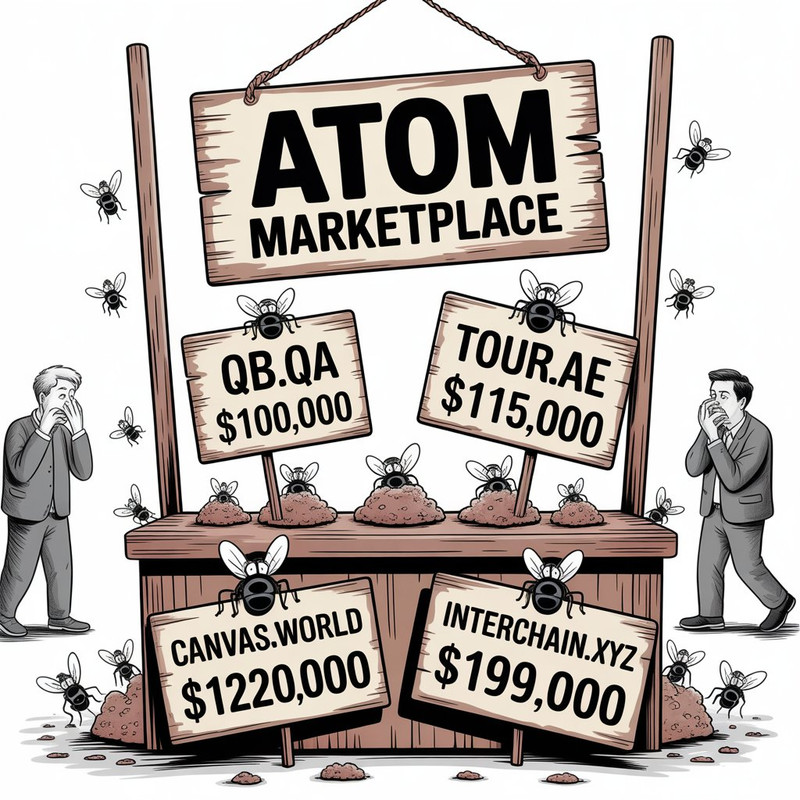
  • Payople.com: The $10,000 Portmanteau That Forgot to Be Memorable

    Payople.com: The $10,000 Portmanteau That Forgot to Be Memorable

    The Contender

    MetricDetails
    DomainPayople.com
    SellerAdityya
    PlatformNamePros
    Asking Price$10,000
    The Pitch*“A classic ‘Portmanteau’ (a blend of words) that combines Pay + People. It’s the perfect name for the Social Finance (SocialFi) or P2P Payment era.”*
    The Hype“In a trillion‑dollar digital payment market, a name is your strongest currency. Payople.com is a high‑liquidity, 7‑letter brandable domain that perfectly captures the P2P and Payroll sectors.”

    Introduction: When Portmanteaus Go Wrong

    There’s a special kind of domain optimism reserved for the person who discovers the concept of a portmanteau and thinks they’ve found the cheat code to domain riches.

    “Pay” + “People” = Payople. It’s math. It’s clever. It’s… unpronounceable.

    Let’s say the name out loud. Pay‑op‑ul. Pay‑oh‑ple. Pay‑op‑lee. There’s no consensus because the blend doesn’t flow. A good portmanteau melts into something natural: “Brunch” (breakfast + lunch), “Motel” (motor + hotel), “Podcast” (iPod + broadcast). You hear them once and you know how to say them.

    Payople sounds like someone started to say “people” and got distracted halfway through. It’s not a natural blend—it’s a collision.

    And the seller wants $10,000 for it.


    The Defequer Analysis: Why Payople.com Isn’t Worth $10,000

    Factor 1: The Portmanteau Problem – Does It Actually Work?

    Let’s break down the math.

    ComponentPayPeople
    ContributionFull word “pay”First three letters “peo” (with a twist)
    ResultPay + ople

    Here’s the issue: “Payople” isn’t a smooth blend. It keeps the hard “ay” from “pay” and crashes it into “ople,” which is not the natural start of “people.” A better blend would be something like “Peepay” or “Payple”—but those are either taken or equally awkward.

    The seller calls it a “classic” portmanteau. Classic portmanteaus are seamless. This one has a visible seam that catches your mental tongue every time.

    Factor 2: The Pronunciation Crisis – Can You Say It?

    Try saying “Payople” to a friend and ask them to spell it. Record the results.

    Likely outcomes:

    • “Payople? Is that P‑A‑Y‑O‑P‑L‑E?”
    • “P‑A‑Y‑O‑P‑P‑L‑E? Wait, is it people with a Y?”
    • “Oh, you mean ‘people’ with a ‘pay’ in front? That’s… Payople? Weird.”

    A domain that requires explanation is a domain that loses traffic. Word‑of‑mouth marketing is the cheapest and most effective form of promotion—and Payople.com kills it dead.

    Factor 3: The SocialFi/P2P Market – Who Would Actually Use This?

    Let’s imagine the potential buyers in the “trillion‑dollar digital payment market” the seller mentions.

    Potential BuyerWhy It Won’t Happen
    A Venmo competitorThey’d choose something short, memorable, and natural. “Payople” sounds like a typo.
    A payroll startupThey’d want something professional, like “PayrollHub.com” or a brandable that conveys trust. “Payople” sounds like a children’s app.
    A SocialFi platformThe crypto/SocialFi space loves brandable names, but they tend toward short, edgy, or abstract. “Payople” is none of these.
    A domain investorNot at $10,000. Maybe at $500 as a speculative play, but not at five figures.

    The seller is banking on the “trillion‑dollar market” to justify the price. But a rising tide doesn’t float every boat—especially one that leaks credibility.

    Factor 4: The Price – $10,000 for a Made‑Up Word

    Let’s talk about the number.

    $10,000 is not a fantasy like $500,000 for a hand‑reg. But it’s serious money for a domain that:

    • Has no history or traffic
    • Is a made‑up word
    • Has pronunciation ambiguity
    • Has no clear end‑user industry
    • Has no comparable sales to back it up

    What does $10,000 buy in the domain market?

    • A strong two‑word .com with commercial intent
    • A premium one‑word .io or .co
    • A portfolio of 5‑10 quality brandables
    • A developed website with actual traffic

    What it doesn’t buy is “Payople.com.”

    Factor 5: The “High‑Liquidity” Buzzword

    The seller describes the domain as a “high‑liquidity, 7‑letter brandable domain.”

    “High‑liquidity” is a financial term meaning easily convertible to cash. In domain investing, high‑liquidity domains are things like one‑word .coms, short numeric .coms, or established categories like insurance.com. They sell quickly when priced right.

    Payople.com is the opposite of high‑liquidity. It’s a made‑up word with no natural buyers. It could sit for years at $10,000 without a single inquiry. That’s the definition of illiquid.


    The Seller’s Pitch: Marketing Speak vs. Reality

    Let’s translate the seller’s description from Marketing‑Speak to English.

    What They SaidWhat It Means
    “Classic portmanteau”I put two words together.
    “Perfect name for SocialFi or P2P Payment era”I’m hoping the crypto/payment trend lifts this name.
    “In a trillion‑dollar market, a name is your strongest currency”The market is big, so my domain must be valuable. (Non sequitur.)
    “High‑liquidity, 7‑letter brandable domain”It’s short. That’s the only fact here.
    “Perfectly captures the P2P and Payroll sectors”It has “pay” in it.

    The pitch is designed to sound sophisticated, but it’s all surface. There’s no data, no comparable sales, no end‑user analysis—just buzzwords wrapped around a domain that doesn’t quite work.


    The “Payople” Test: Would You Trust This With Your Money?

    Let’s run a simple test.

    Imagine you’re building a peer‑to‑peer payment app. You need a name that conveys:

    • Trust
    • Speed
    • Simplicity
    • Security

    You’re choosing between:

    • Venmo – short, catchy, established
    • PayPal – clear, trusted, decades old
    • CashApp – direct, functional
    • Payople – ???

    Which one inspires confidence? Which one would you trust with your bank account?

    Payople doesn’t pass the test. It sounds like a project name, not a product name. It’s the kind of domain you register as a placeholder while you think of something better—not something you pay $10,000 for.


    The Delusion Index: 7/10

    FactorRatingExplanation
    Portmanteau Quality3/10The blend is awkward and doesn’t flow.
    Pronunciation2/10No consensus on how to say it.
    Commercial Relevance3/10It has “pay” in it, but the rest is noise.
    Price Sanity2/10$10,000 for a made‑up word with no history is wildly optimistic.
    Seller Hype4/10The pitch is well‑written, but it’s dressing up a weak name.

    Overall Delusion Index: 7/10

    This isn’t a 9+ because the price isn’t completely insane—$10,000 is a stretch, not a fantasy. But the domain itself is weak, and the seller is trying to dress it up in buzzwords that don’t fit.


    What Payople.com Is Actually Worth

    Let’s do the math the seller should have done.

    Factors to consider:

    • Made‑up word with weak portmanteau
    • No history or traffic
    • Unclear pronunciation
    • No established end‑user market
    • 7 letters (short, which is a plus)

    Realistic price range: $200 – $800

    At the high end, to a domain investor who sees potential in the “pay” angle and wants to take a flyer. At the low end, to someone who likes the idea but isn’t willing to pay a premium.

    $10,000 is not just optimistic—it’s 12‑50x the actual value.


    The NamePros Context

    The seller posted this in the “Domain Names” section with a “priced” prefix. No replies as of this writing. That’s not unusual—many listings go unanswered—but it’s worth noting that the NamePros community, which is generally supportive of brandable domains, hasn’t engaged with this one.

    Sometimes silence is the market speaking.


    The Defequer Verdict

    CategoryRating
    Portmanteau Quality⭐⭐☆☆☆ (2/5)
    Pronunciation⭐⭐☆☆☆ (2/5)
    Commercial Relevance⭐⭐☆☆☆ (2/5)
    Price Sanity⭐⭐☆☆☆ (2/5)
    Seller Pitch⭐⭐⭐☆☆ (3/5 – well‑written, but doesn’t match the domain)

    Final Word:

    *“Payople.com is a portmanteau that forgot to be memorable. Pay + People sounds good on paper, but say it out loud. Pay‑op‑ul. Pay‑oh‑ple. Pay‑op‑lee. There’s no natural flow because the blend is forced. The seller is banking on the trillion‑dollar payment market to carry a name that doesn’t inspire trust or confidence. At $10,000, they’re asking for a premium price on a domain that doesn’t pass the pronunciation test. The pitch is well‑written. The math is clever. The domain itself? It’s a collision, not a blend.”*


    What Should Actually Happen

    If the seller is reading this (and we hope Adityya is):

    1. Drop the price to $495. Test the market at a level where a curious buyer might take a chance.
    2. Reconsider the portmanteau. If you’re going to blend “pay” and “people,” make it smoother. “Payple” would be better. (It’s taken, but that’s the point.)
    3. Lose the “high‑liquidity” buzzword. It doesn’t mean what you think it means in this context.
    4. Target a specific niche. Who actually wants this? Children’s finance app? Pocket money tracker? Be specific.
    5. Be patient but realistic. A made‑up word domain can sell—but it needs the right buyer at the right price.

    For buyers: If you see potential in “Payople” (maybe for a kids’ finance app or a playful payment tool), make an offer at $200. The seller might be ready to deal.


    The Bottom Line

    Payople.com joins the Defequer Hall of Shame as a case study in portmanteau optimism.

    The math is there. The market is big. The pitch is polished. But the domain itself doesn’t deliver. It’s awkward to say, hard to remember, and priced like it’s already a success.

    A good portmanteau disappears into the language. Payople.com doesn’t disappear—it sticks out, and not in a good way.

    Defequer Rating: 💩💩💩 (3/5 shits – a solid effort, but the name doesn’t carry the price.)

  • SaaS.gl & datacentre.gl: The 48‑Hour‑Old Domains Priced Like They’ve Been Building Value for a Decade

    SaaS.gl & datacentre.gl: The 48‑Hour‑Old Domains Priced Like They’ve Been Building Value for a Decade

    The Contenders

    MetricSaaS.gldatacentre.gl
    Registration DateMarch 23, 2026March 24, 2026
    Age at Listing~2–3 days~1–2 days
    TLD.gl (Greenland ccTLD).gl (Greenland ccTLD)
    Asking Price$42,000$24,900
    Combined Asking$66,900
    Marketing PagesFull, detailed, data‑richFull, detailed, data‑rich
    The Pitch“Exact‑match domain for a $400B industry. Extreme scarcity. Built‑in brand recall.”“Single‑word infrastructure category. Commonwealth reach. AI supercycle tailwind.”
    The ProblemRegistered this week. Zero history. Zero traffic. Priced like a premium asset.Registered this week. Zero history. Zero traffic. Priced like a premium asset.

    Saas.gl

    saas-landing-page

    Datacentre.gl

    Data-Centre-landing-page

    Introduction: The Fastest Fantasy in Domaining History

    We’ve roasted a lot of domains with unrealistic pricing. Hand‑regs from 2025 priced at $500,000. Domains registered during news cycles and listed at six figures. Sellers who joined Sedo last year and think they’ve struck gold.

    But SaaS.gl and Datacentre.gl are something new.

    They were registered on March 23 and 24, 2026. As of this writing, they are two and three days old. The seller (or sellers—the marketing pages are nearly identical) has already built full, professional landing pages with industry statistics, scarcity arguments, valuation methodologies, and “ideal use” sections.

    The domains are priced at $42,000 and $24,900.

    Let’s be clear: these domains are not “premium assets.” They are hand‑regs from this week. The seller is not selling value they’ve built—they’re selling a vision board with a domain attached.

    This is the fastest fantasy pricing we’ve ever seen. And it deserves a roast.


    The Seller: Professional Marketers, Zero Patience

    The landing pages are impressive. They’re well‑designed, data‑rich, and professionally written. The seller clearly knows how to build a sales pitch. They’ve included:

    • Industry size statistics ($400B SaaS market, $383B data centre market)
    • Growth projections (CAGRs, AI supercycle)
    • Scarcity claims (~1,800 active .gl domains globally)
    • Valuation methodologies (anchoring to a 2011 .com sale)
    • “Ideal for” sections with six use cases each

    This is not the work of a novice throwing up a Sedo listing. This is someone who understands marketing, branding, and how to present an asset.

    But here’s the problem: they registered the domains this week.

    All that marketing effort is being applied to domains that have zero history, zero traffic, zero backlinks, and zero demonstrated value. It’s like buying a blank canvas, putting it in a gallery with a $42,000 price tag, and writing a 2,000‑word essay about why it’s the next Picasso. The frame is beautiful. The canvas is empty.


    The .gl Problem: Greenland’s ccTLD Is Not a Premium Asset

    Let’s talk about the .gl extension.

    .gl is the country code top‑level domain (ccTLD) for Greenland. Greenland has a population of about 56,000 people. Its economy is roughly $3 billion. It’s a beautiful country, but it’s not a global commercial powerhouse.

    The seller’s landing pages try to spin this:

    • “Globally unrestricted” – true, but so are most ccTLDs.
    • “Google’s goo.gl shortener gave the extension mainstream recognition” – goo.gl was shut down in 2018. It’s been gone for eight years.
    • “Extreme scarcity — only 1,400–1,800 active .gl domains” – that’s not a sign of premium value. It’s a sign that almost no one wants .gl domains.

    Compare .gl to .io. .io was also a small ccTLD (British Indian Ocean Territory) but became a tech hub because “IO” stands for input/output—a geeky tech reference that resonated. .gl doesn’t have that. “GL” could stand for “graphics library” (OpenGL), which the SaaS.gl page mentions, but that’s a stretch. Most people don’t make that association.

    The scarcity argument is particularly misleading. A domain extension can be “scarce” because it’s exclusive and desirable (like .ai today), or it can be scarce because nobody wants it. .gl falls into the second category.


    The “Registered This Week” Problem

    Let’s look at the registration dates:

    These domains are not “aged.” They have no history. No Way back machine entries. No backlinks. No traffic. No Google rankings. No established trust.

    The seller is asking prices that would be high for a domain with 10 years of history and proven traffic. For a 48‑hour‑old hand‑reg, the prices are not just optimistic—they’re detached from reality.

    Here’s what the seller’s marketing pages don’t mention:

    • No traffic data
    • No backlink profile
    • No search volume for “saas.gl” or “datacentre.gl”
    • No comparable sales of .gl domains at anywhere near these prices

    Because those data points don’t exist. The domains are too new.


    The Valuation Methodology: Anchoring to a 2011 .com Sale

    The datacentre.gl page includes a “domain valuation anchors” section:

    *“DataCenter.com — sold USD $352,500 (Sedo/Great Domains, 2011). .gl‑to‑.com discount — empirically observed range of 88–93%, yielding an implied .gl comparable of $24,000–$42,000+ from the anchor alone.”*

    This is creative, we’ll give them that.

    But let’s break it down:

    1. DataCenter.com sold in 2011. That’s 15 years ago. The .com market has changed dramatically. Using a 15‑year‑old sale as a valuation anchor for a 2‑day‑old .gl domain is like using the 2008 housing market to price a shed you built yesterday.

    2. The .gl‑to‑.com discount is made up. There’s no “empirically observed range” for .gl because there are almost no .gl sales to observe. The seller is inventing a methodology to justify their price.

    3. Even if the discount were real, it applies to comparable assets. DataCenter.com was a one‑word .com with a clean dictionary term. datacentre.gl is a two‑word .gl domain with a Commonwealth spelling. These are not comparable assets.

    The SaaS.gl page doesn’t include a similar valuation anchor, because there’s no SaaS.com sale to anchor to. Instead, they rely on industry size and scarcity claims—which sound impressive but don’t translate to domain value.


    The Marketing Pages: Beautifully Designed, Completely Misleading

    Let’s appreciate the effort. Both landing pages are:

    • Well‑designed (clean typography, good layout, icons)
    • Data‑rich (industry statistics, growth projections)
    • Structured (clear sections, logical flow)
    • Professional (no typos, coherent arguments)

    The seller clearly spent time and probably money on these pages. They look like the kind of landing page you’d expect for a genuine premium domain.

    But here’s the disconnect: the domains themselves are not premium. The marketing is doing all the heavy lifting, trying to create value where none exists.

    A good landing page doesn’t make a bad domain good. It just makes the overpricing look more professional.


    The Defequer Analysis: Why SaaS.gl & datacentre.gl Are Worth Far Less

    Factor 1: The TLD – .gl Has No Market

    Let’s look at the reality of .gl sales.

    • NameBio shows almost no .gl sales of significance.
    • The extension is not used by any major tech companies or brands.
    • The “scarcity” argument (1,800 registrations) is a red flag, not a selling point. It means almost no one wants .gl domains.

    A domain is only as valuable as the market for its TLD. And the market for .gl is essentially non‑existent.

    Factor 2: The Registration Date – Zero History, Zero Value

    These domains are days old. They have:

    • No traffic
    • No backlinks
    • No Google rankings
    • No trust
    • No history

    In domain investing, age matters. A 10‑year‑old domain with clean history has inherent value. A 2‑day‑old domain has none. The seller is asking prices that assume years of built authority—but they haven’t done the work.

    Factor 3: The Price – $42,000 and $24,900 for Hand‑Regs

    Let’s put these prices in perspective.

    $42,000 buys:

    • A strong two‑word .com
    • A portfolio of 20–30 quality domains
    • A developed website with actual traffic
    • A year of college tuition

    What it doesn’t buy is a 2‑day‑old .gl domain that someone registered for $12.

    $24,900 is slightly less absurd, but still absurd. For that money, you could buy a genuine premium .com in a secondary market. Instead, the seller is offering a .gl domain that was registered yesterday.

    Factor 4: The Industry Data – Relevance ≠ Value

    The seller includes impressive statistics:

    • $400B SaaS market
    • $383B data centre market
    • 11.3% CAGR
    • 23.9% AI data centre growth

    These are real numbers. The SaaS and data centre industries are huge and growing.

    But industry size does not equal domain value. Owning “saas.gl” doesn’t give you a piece of that $400B market. It gives you a domain name that almost no one will type, in an extension almost no one trusts.

    This is the same logic we see with new gTLD sellers: “The industry is big, so my domain must be valuable.” It doesn’t work that way.

    Factor 5: The “Exact‑Match Acronym” Argument

    SaaS.gl’s page calls it an “exact‑match acronym.” That’s true. “SaaS” is the industry term.

    But here’s the problem: people don’t type “SaaS” into browsers. They search for “SaaS” on Google. The domain itself doesn’t capture traffic; it’s just an address.

    An exact‑match domain had SEO value 10 years ago. Google devalued exact‑match domains years ago. The SEO advantage is minimal at best.


    The “SaaS.gl” Pitch Deconstructed

    Let’s translate the SaaS.gl landing page from Marketing‑Speak to English.

    What They SaidWhat It Means
    “Exact‑match domain for a $400B global industry”It has the word “SaaS” in it.
    “Extreme scarcity — only 1,800 .gl domains exist”No one wants .gl domains.
    “Google’s goo.gl shortener gave the extension mainstream recognition”A service that shut down in 2018 once used this extension.
    “Built‑in brand recall — seven characters total”It’s short. That’s the only fact here.
    “Infinite verticals — suits media, marketplace, developer hub, etc.”We don’t have a specific buyer in mind.

    The page is a masterclass in making a 2‑day‑old .gl domain sound like a generational asset. But it’s all smoke. No mirrors—just smoke.


    The “datacentre.gl” Pitch Deconstructed

    What They SaidWhat It Means
    “Single‑word infrastructure category”It’s one word.
    “Commonwealth reach — UK, Australia, India, South Africa”It uses the Commonwealth spelling, which appeals to about 2 billion people (none of whom are buying .gl domains).
    “.gl scarcity premium — 1,400–1,800 active domains”Again, no one wants .gl.
    “AI supercycle tailwind”AI is hot right now, so we’re mentioning it.
    “No trademark risk”It’s a generic word, so at least that’s true.
    “DataCenter.com sold $352,500 in 2011 — our .gl comparable”A 15‑year‑old .com sale has nothing to do with a 2‑day‑old .gl domain.

    The valuation anchor is particularly egregious. It’s the kind of logic that would get you laughed out of a real estate appraisal: “A house in Beverly Hills sold for $10 million in 2011, so my shed in Greenland must be worth $500,000.”


    The Delusion Index

    FactorSaaS.gldatacentre.gl
    Domain Age1/101/10
    TLD Quality2/10 (.gl has no market)2/10
    Word Quality7/10 (SaaS is a strong term)6/10 (datacentre is good, but Commonwealth spelling limits US appeal)
    Marketing Effort8/10 (impressive pages)8/10
    Price Sanity1/101/10
    Valuation Methodology2/10 (industry size ≠ domain value)2/10 (2011 .com anchor is irrelevant)
    Overall Delusion6/106/10

    Combined Delusion: 6/10 – Not the highest score, but notable because the domains are days old. The seller has put extraordinary effort into marketing assets that have zero history. It’s delusion with a professional gloss.


    What These Domains Are Actually Worth

    Let’s do the math the seller should have done.

    SaaS.gl:

    • .gl TLD with no market
    • Registered days ago
    • “SaaS” is a strong term, but in the wrong TLD
    • No traffic, no history

    Realistic value: $100 – $500

    datacentre.gl:

    • Same TLD problem
    • Registered days ago
    • “Datacentre” is a good term, but Commonwealth spelling limits appeal in the US (the largest domain market)
    • No traffic, no history

    Realistic value: $100 – $400

    Combined realistic value: $200 – $900

    Combined asking price: $66,900

    That’s a 74x to 334x markup. The seller is asking prices that assume these domains have been building authority for a decade. They were registered this week.


    The Defequer Verdict

    CategorySaaS.gldatacentre.gl
    Domain Age⭐☆☆☆☆ (1/5)⭐☆☆☆☆ (1/5)
    TLD Quality⭐⭐☆☆☆ (2/5)⭐⭐☆☆☆ (2/5)
    Word Quality⭐⭐⭐⭐☆ (4/5)⭐⭐⭐☆☆ (3/5)
    Marketing Effort⭐⭐⭐⭐☆ (4/5)⭐⭐⭐⭐☆ (4/5)
    Price Sanity⭐☆☆☆☆ (1/5)⭐☆☆☆☆ (1/5)

    Final Word:

    “SaaS.gl and datacentre.gl were registered this week. This week. The seller built full, professional landing pages, complete with industry data, scarcity claims, and a valuation methodology that anchors to a 2011 .com sale. The domains are priced at $42,000 and $24,900. They have zero history, zero traffic, zero backlinks, and zero demonstrated value. The marketing is impressive. The timing is not. This isn’t domain investing—it’s a marketing exercise wrapped around a 48‑hour‑old hand‑reg, priced like it’s been building value for a decade. The .gl extension is not a premium asset. The scarcity argument is a red flag. And the 2011 DataCenter.com comp is irrelevant. These domains are worth a few hundred dollars at most. The seller knows how to build a landing page. They don’t know how to value a domain.”


    What Should Actually Happen

    If the seller is reading this (and they probably are—they’re clearly monitoring their landing pages):

    1. Let the domains age. You can’t create history overnight. If you believe in these names, hold them for 5–10 years, build traffic, develop content, and create actual value. Then maybe you can ask five‑figure prices.
    2. Drop the prices by 95%. List them at $2,000 and $1,500. Even that might be optimistic, but at least it’s in the conversation.
    3. Remove the 2011 DataCenter.com anchor. It’s embarrassing. A 15‑year‑old .com sale has nothing to do with a 2‑day‑old .gl domain.
    4. Acknowledge the .gl problem. The extension has no market. Price accordingly.
    5. Stop marketing 2‑day‑old domains as “premium assets.” Premium assets have history, traffic, and proven value. These don’t.

    For buyers: If you’re interested in SaaS.gl or datacentre.gl, wait. They’re not selling at these prices. The seller will eventually realize that a 48‑hour‑old .gl domain is not a six‑figure asset. Make an offer at $200–$300 in a few months.


    The Bottom Line

    SaaS.gl and datacentre.gl join the Defequer Hall of Shame as a case study in premature marketing meets unrealistic pricing.

    Two domains registered this week. Full, professional landing pages. Industry data. Scarcity claims. A 2011 .com sale as a valuation anchor. Asking prices of $42,000 and $24,900.

    The seller has done everything right—except for the part where they waited for the domains to actually have value before trying to sell them.

    Defequer Rating: 💩💩💩💩 (4/5 shits – the marketing effort is impressive, which makes the delusion more frustrating.)


    Have a domain you registered this week and priced like a premium asset? Submit it here. We’ll tell you why it’s not worth what you think.

    Defequer.com – because someone had to flush.
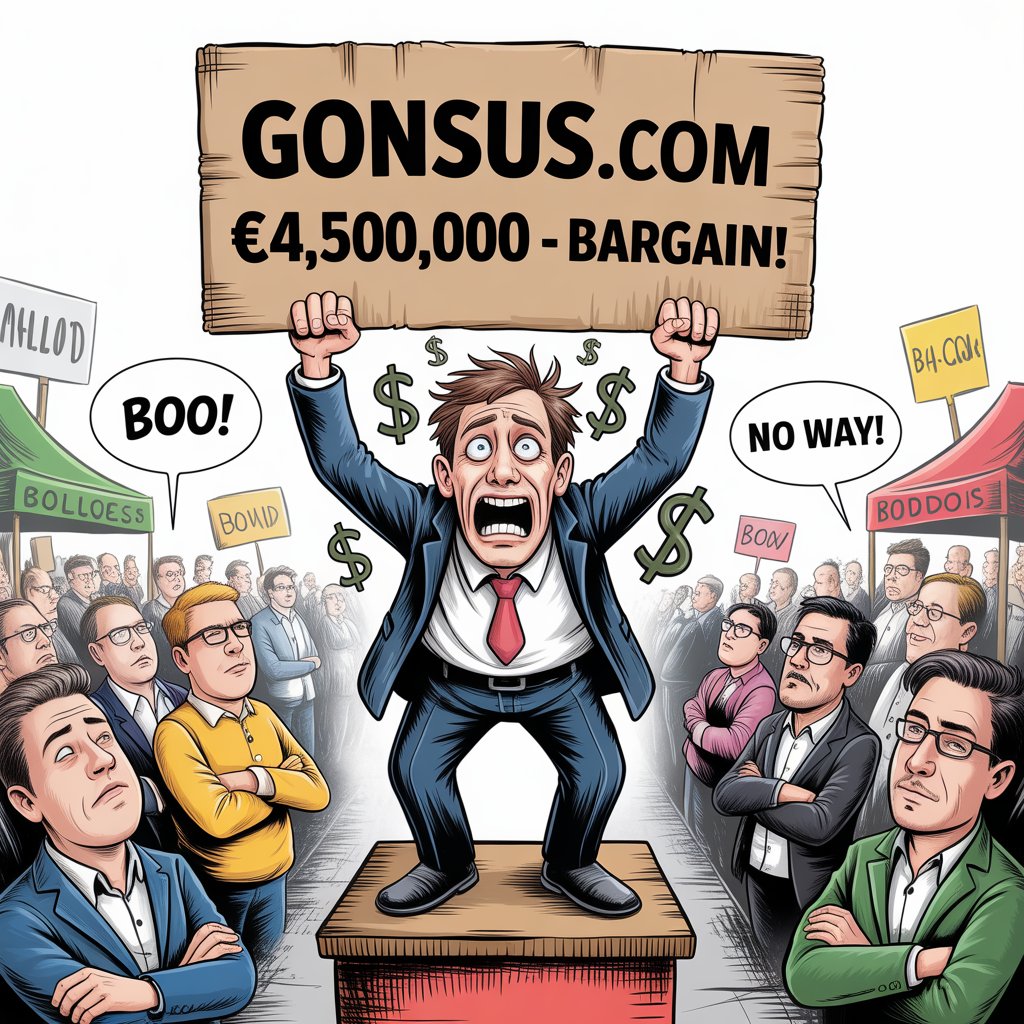
error: Content is protected !!