Blog

  • A Public Response to Philipp Redeker, Esq. (Self‑Styled)

    A Public Response to Philipp Redeker, Esq. (Self‑Styled)

    Published: 24 April 2026

    Status: No lawsuit received. No injunction served. No legal costs recovered.


    Original threatening email from Philipp Redeker of OneOutOfHundred.com

    Received on 2026-04-22

    Dear Editorial Team,

    We refer to our formal notice dated 22 April 2026 concerning your article
    “saudinationalteam.com – A $16 Million Bet on Infringement and National Pride”, published on defequer.com.

    To date, no response has been received, nor has any corrective action been taken.

    This email constitutes a final notice (“last call”).

    You are hereby given a strict and final deadline, expiring on:

    23 April 2026, 6 PM CET

    by which time you must either:

    1. Remove the article in its entirety, or
    2. Substantially revise it, fully remedying the legal and factual defects expressly identified in our prior correspondence, including but not limited to:
      – the false legal characterization of the UDRP,
      – unsupported and undocumented trademark assertions,
      – the presentation of speculative outcomes as factual certainties, and
      – the use of defamatory labels such as “cybersquatting” stated as fact.

    Failure to do so will be regarded as willful continuation of unlawful publication.

    Should you fail to comply within the deadline stated above, we are instructed to proceed without further notice with the following steps:

    1. Immediate engagement of our partner external legal counsel to pursue all available civil remedies.
    2. Initiation of formal proceedings aimed at:
      – obtaining a court‑ordered cease‑and‑desist injunction, and
      – asserting claims for unlawful interference, reputational harm, and dissemination of legally misleading and defamatory statements.
    3. Compulsory disclosure of personal and identifying data of the operator(s) of defequer.com through:
      – your hosting provider(s),
      – domain registrar,
      – and content management platform(s), including WordPress and GoDaddy,
      by way of judicial or regulatory information requests and preservation orders.
    4. Full recovery of costs, including attorneys’ fees, court fees, and ancillary expenses, for which the site operator(s) will be held personally liable.

    This matter is no longer a request for dialogue.
    It is a formal pre‑litigation notice.

    Your continued silence, after having been clearly informed of the inaccuracies and legal risks inherent in the publication, will be relied upon as evidence of negligent or willful misconduct.

    This email affords you a last and final opportunity to resolve the matter swiftly, discreetly, and without judicial involvement.

    If corrective action is taken within the stated deadline, the matter may be considered closed.
    Absent such action, legal escalation will commence immediately.

    Beste Grüße


    Philipp Redeker
    Managing Partner


    Our reply:

    Dear Herr Redeker,

    Thank you for your email of 22 April 2026, your “final notice” of 23 April 2026, and the sheer entertainment value you have provided to the Defequer editorial team.

    We have read your letter carefully. We have consulted our own legal counsel (who worked for far less than €450 per hour and did not threaten to sue us for asking questions). And we have arrived at a unanimous decision:

    We are not removing the article.

    We are not revising it.

    We are, however, publishing your email in full – because nothing says “I definitely have a legal case” like a frantic last‑call notice sent at 5:45 PM on a Thursday.

    Before we proceed with our satirical rebuttal, let us address your threats point by point. Then we will explain why you are not going to sue, why you cannot sue, and why the only thing you have successfully demonstrated is that you do not understand the difference between satire and defamation – or the difference between €15 million and zero.


    Your “Legal” Threats – A Point‑by‑Point Roast

    You wrote a very long letter. It contained many big words. We were almost impressed. Then we read it again and realised it was mostly hot air with a German postmark.

    Let us examine your claims.

    “False legal characterization of the UDRP”

    You allege that our article mischaracterised the Uniform Domain‑Name Dispute Resolution Policy (UDRP). Specifically, you take issue with our statement that the seller “will almost certainly lose the domain” if the Saudi authorities file a complaint.

    Herr Redeker, we invite you – nay, we dare you – to explain to our readers how a respondent in a UDRP proceeding would succeed in defending saudinationalteam.com. Show us the legitimate interest. Show us the good faith. Show us the clean hands.

    The domain was registered on 15 March 2025, over a decade after the Saudi national football team first competed in the World Cup. The asking price is $15,975,025 – a number that bears no relation to any conceivable business model except “hoping the trademark owner panics and pays.”

    Under UDRP paragraph 4(b)(i), “circumstances indicating that you have registered or acquired the domain name primarily for the purpose of selling, renting, or otherwise transferring the domain name registration to the complainant who is the owner of the trademark or service mark or to a competitor of that complainant, for valuable consideration in excess of your documented out‑of‑pocket costs directly related to the domain name” is evidence of bad faith.

    The seller‘s out‑of‑pocket costs: approximately $30 for registration and renewal. Their asking price: $15,975,025. That is a 532,500x markup. If that is not prima facie evidence of bad faith, we do not know what is.

    So no, Herr Redeker, our characterization was not “false.” It was accurate. And if you believe otherwise, we encourage you to represent the seller in a UDRP proceeding. We will bring popcorn.

    “Unsupported and undocumented trademark assertions”

    You claim we provided no evidence that the Saudi Arabian Football Federation (SAFF) holds trademarks in the phrase “Saudi National Team.”

    You are correct that we did not link to a specific trademark registration. Why? Because the article is a satirical blog post, not a legal brief. But since you insist on pedantry, let us educate you:

    • The Saudi Arabian Football Federation (SAFF) is the governing body for football in Saudi Arabia. It operates under the authority of the Saudi Olympic Committee and the Ministry of Sport.
    • While “Saudi National Team” may not be a registered word mark in every jurisdiction, the combination of “Saudi” + “National” + “Team” – especially in the context of sports merchandising, broadcasting, and commercial sponsorship – is protected under common law trademark rights, passing off, and unfair competition laws in most civil law jurisdictions (including Germany, Herr Redeker).
    • More importantly, UDRP panels do not require a registered trademark. They require proof of unregistered or common law trademark rights. See WIPO Overview 3.0, section 1.3: “A complainant may rely on unregistered or common law trademark rights… Evidence of such rights includes … use of the mark in connection with goods or services that have acquired distinctiveness.”

    The Saudi national football team has been competing internationally since 1957. They have played in six World Cups. Their merchandise is sold globally. Their matches are broadcast to millions. That constitutes “acquired distinctiveness” by any reasonable standard.

    So your “unsupported” objection is not just wrong – it is embarrassingly wrong. We suggest you read the WIPO Overview before your next threatening email.

    “Presentation of speculative outcomes as factual certainties”

    You object to our statement that the seller “will almost certainly lose the domain” if a UDRP complaint is filed. You claim we presented a speculative outcome as a factual certainty.

    Herr Redeker, we said “almost certainly.” That is not a certainty. It is a probability. And it is a very high probability – approaching 100% – given the overwhelming evidence of bad faith.

    If you have examples of UDRP respondents winning cases where they registered a domain containing a national team‘s name, offered it for sale at a 500,000x markup, and had no legitimate use, we invite you to share them. We will wait.

    (We are still waiting.)

    “Use of defamatory labels such as ‘cybersquatting’ stated as fact”

    This is our favourite objection. You claim that calling the seller a “cybersquatter” is defamatory.

    The term “cybersquatting” is defined in the Anticyberspace Piracy Act (15 U.S.C. § 1125(d)) as “registering, trafficking in, or using a domain name with bad faith intent to profit from the goodwill of a trademark belonging to someone else.”

    Let us apply that definition to our seller:

    • Registering a domain with bad faith intent? Yes – the domain was registered after the Saudi national team became globally known, with no legitimate use.
    • Trafficking in a domain? Yes – it is listed for sale on Sedo for $15.9 million.
    • Profit from goodwill of a trademark belonging to someone else? Yes – the only conceivable value of the domain comes from confusion with the Saudi national team.

    That is the textbook definition of cybersquatting. Calling it anything else would be inaccurate. So no, Herr Redeker, it is not defamation. It is a factual description supported by U.S. federal law, UDRP precedents, and common sense.

    If you believe otherwise, we again invite you to sue. Discovery would be delightful.


    The “Deadline” That Came and Went

    Your final notice gave us until 23 April 2026, 6 PM CET to comply.

    As of this writing (24 April 2026, approximately 9 AM CET), we have received:

    • No court order
    • No injunction
    • No lawsuit
    • No communication from your “partner external legal counsel”
    • No compulsory disclosure requests to our hosting provider, registrar, or content management platform
    • No recovery of costs
    • No attorneys‘ fees
    • Nothing except silence

    We checked our spam folder. We checked our mail. We even asked our hosting provider if anyone had contacted them. They laughed.

    So either your legal threats were hollow, or your lawyers work very, very slowly. We suspect the former.


    Who Is Philipp Redeker? A Brief Investigation

    You signed your email as “Managing Partner” of OneOutOfHundred.com. So we visited your website. (It is linked in your email signature – not us trying to find you)

    Your company, according to your own site, offers:

    • “Success Based Recruiting Solutions”
    • “Professional Search”
    • “Executive Search”
    • “Research Services”
    • “Kununu & Glassdoor Management”
    • “Rejection Management Service”

    That is a recruitment agency, Herr Redeker. You are not a law firm. You are not a UDRP specialist. You are not a trademark attorney. You are a headhunter who apparently spends his free time sending threatening emails to satirical websites on behalf of anonymous domain sellers.

    We have a question: Who is your client?

    Your email does not say. You did not disclose whether you are representing the domain seller, the Saudi Arabian Football Federation, or some other interested party. You simply sent a legal threat on letterhead that has nothing to do with intellectual property law.

    So let us ask directly: Herr Redeker, who paid you to write that email? Or did you write it pro bono, out of the goodness of your heart, to defend a stranger‘s right to list saudinationalteam.com for $16 million?

    We suspect the answer is either:

    1. You are the domain seller yourself (or a friend/associate), and you are using your recruitment agency letterhead to pretend you have legal authority; or
    2. You genuinely believe that a recruitment agency‘s “managing partner” has standing to send cease‑and‑desist letters about domain trademark disputes.

    Either way, it is hilarious. And we are publishing your email in full so our readers can enjoy it too.


    Why You Are Not Going to Sue (And Never Were)

    Let us be practical, Herr Redeker. Lawsuits cost money. They require standing (the legal right to sue). They require evidence. And they require a plaintiff who is willing to be deposed, cross‑examined, and publicly associated with a domain that begins with “saudi,” ends with “team.com,” and was registered one year ago for the purpose of selling it at a 500,000x markup.

    If you represent the domain seller, ask yourself: does he really want his name attached to a UDRP proceeding that he will lose? Does he want the public record to show that he registered saudinationalteam.com in bad faith? Does he want to pay your legal fees and his own and potentially the complainant‘s?

    If you represent the Saudi Arabian Football Federation: why would they hire a German recruitment agency to send legal threats instead of their own in‑house counsel or a reputable IP firm? (Answer: they did not. You wrote this letter on your own.)

    If you represent neither: you have no standing. Any court would dismiss your claim immediately. And you might be liable for abuse of process.

    So go ahead, Herr Redeker. Sue us. File your injunction. Initiate your “formal proceedings.” We will be here. We will countersue for harassment. And we will enjoy every minute of discovery when we ask you to produce your “client’s” identity, your retainer agreement, and your qualifications to practice intellectual property law.

    Tick tock.


    Our Counter‑Offer (Since You Like Deadlines)

    You gave us a deadline. Now we give you one.

    You have until 1 May 2026, 6 PM CET to:

    1. File a lawsuit against Defequer in a competent court of law;
    2. Provide us with the case number and court information; or
    3. Publish a public retraction of your legal threats on your company website and LinkedIn profile.

    If you do none of the above, we will assume that your letter was a bluff – a pathetic, transparent, legally illiterate bluff – and we will update this article accordingly.


    The Bottom Line – Satire Is Not Defamation, and Threats Are Not Law

    The Defequer editorial team stands by every word of our original article. saudinationalteam.com is a classic example of bad‑faith domain registration. The price is delusional. The trademark risks are real. And our “roast” was firmly within the bounds of protected opinion, satire, and criticism.

    Your legal threats, Herr Redeker, are not protected. They are an attempt to intimidate a small publication into removing content you dislike. That is not how free speech works. That is not how domain law works. And that is certainly not how “Success Based Recruiting Solutions” works.

    We would offer you advice, but you did not pay for it. Instead, we offer you this: next time, do not send a final notice unless you are prepared to follow through. Bluffs are easily called. And we are holding all the cards.


    Defequer Rating for Philipp Redeker’s Legal Threat: 💩💩💩💩💩 (5/5 shits)

    Five shits. Not for the domain seller this time, but for the “managing partner” who wrote 1,500 words of legally illiterate threats on recruitment agency letterhead. The combination of no standing, no lawsuit, no understanding of UDRP, and a hilarious overestimation of his own importance earns top marks in the Delusion Olympics – Legal Division.

    Roast served. Bluff called. Next frivolous legal threat, please.


    Post‑Script to Our Readers

    Dear Defequer community,

    We promised you honest, brutal, satirical roasts of overpriced domains. We never promised to back down from legal threats written by people who do not understand the difference between a satirical blog and a legal brief.

    If you receive a threatening email from a “managing partner” who thinks UDRP stands for “You Definitely Regret Posting” – forward it to us. We will publish it. We will roast it. And we will not remove a single word.

    Thank you for your continued support. Defequer is here to stay.

    Roast served. Freedom of speech defended. Next domain, please.

  • Response to Cease-and-Desist Request from oneoutofhundred GmbH Regarding Our Article on saudinationalteam.com

    Response to Cease-and-Desist Request from oneoutofhundred GmbH Regarding Our Article on saudinationalteam.com

    On 21 April 2026, Defequer received an email from Philipp Redeker, Managing Partner of oneoutofhundred GmbH (Aachen, Germany), demanding the correction or complete removal of our article titled “saudinationalteam.com – A $16 Million Bet on Infringement and National Pride.”

    After thorough internal review against the principles set out in our cornerstone pages — Our Manifesto, Why We Do It, How We Roast, No Bribes, No Bull, and Why Defequer — we have decided to retain the original article in its entirety and publish this detailed public response.

    Defequer exists to provide independent, satirical commentary and consumer education on publicly offered domain names. Our work is explicitly opinion-based and protected under principles of free expression. We take legal correspondence seriously and have therefore prepared this comprehensive reply.

    The Original Email – Full Transparency

    For complete context, here is the full text of the email we received (reproduced verbatim, with only formatting adjusted for readability):

    Subject: Correction or Removal of published Article

    Dear Editorial Team,

    We are writing in relation to your article entitled “saudinationalteam.com – A $16 Million Bet on Infringement and National Pride,” published on defequer.com.

    Following a careful review of the content, we respectfully request a prompt reassessment and correction—or, alternatively, removal—of the article, as it contains multiple factual inaccuracies, legally misleading statements, and unsupported assertions that collectively convey an incorrect impression of unlawful conduct.

    For clarity and transparency, we outline the principal issues below.

    1. Mischaracterization of the UDRP as “Applicable Law”

      The article repeatedly presents the Uniform Domain Name Dispute Resolution Policy (UDRP) as though it constituted binding law or statutory regulation. This is inaccurate. The UDRP is a private administrative dispute resolution framework administered under ICANN policy. It is not statutory law, does not create legal liability, and does not impose legal sanctions beyond domain transfer or cancellation. Presenting the UDRP as a form of “law” or treating an alleged UDRP risk as an inherent legal violation is materially misleading to readers.
    2. Overbroad Assertion Regarding Ownership of National Team Names

      he statement: “You cannot own a country’s team name” is presented as a categorical rule. Such a rule does not exist. Terms such as “Saudi National Team” are, in principle, descriptive expressions. Any exclusivity depends solely on specific, registered trademark rights, assessed on a jurisdiction-by-jurisdiction basis. Absent such registrations, there is no general prohibition on registering, holding, or offering domains containing descriptive national references. The article’s phrasing therefore overstates the legal position.
    3. Unsupported Claims of Trademark Ownership

      The article asserts that Saudi sporting or governmental bodies hold trademark rights in the term “Saudi National Team,” yet no specific trademark is identified. In particular, the article does not provide trademark registration numbers, the relevant trademark registry, the protected word mark itself, or the territorial scope of protection. Without this information, these statements remain unsubstantiated allegations, rather than verifiable facts.
    4. Incorrect Equating of Domain Registration with Legal Infringement

      The article suggests that the mere registration or offering for sale of the domain constitutes a legal violation. This is not correct. As a general matter: Domain registration is lawful, Passive holding of a domain is lawful, and Offering a domain for sale—even at a high price—is lawful. Any legal assessment depends on specific additional conduct, such as demonstrable intent to mislead, confuse consumers, or exploit established trademark rights. The article does not establish such conduct.
    5. Use of the Term “Cybersquatting” as a Stated Fact

      The repeated characterization of the domain holder as a “cybersquatter” appears in the article as a statement of fact, rather than as opinion. Absent a final UDRP decision or court judgment, this constitutes a premature and potentially defamatory characterization, as it asserts improper conduct without adjudication or proof.
    6. Presentation of Speculative Outcomes as Certainties

      Statements suggesting that the domain holder “will almost certainly lose the domain” or that litigation is inevitable present speculative legal outcomes as established fact. Such phrasing does not reflect the conditional and fact-specific nature of trademark or UDRP assessments and may therefore mislead readers regarding the actual legal risks involved.

    Request and Timeline

    In light of the above, we request that you no later than 23.04.2026 9am CET either:

    1. Remove the article in its entirety, or
    2. Substantially revise it, including:

      – Correcting the legal characterization of the UDRP,
      – Removing unsupported trademark claims,
      – Clearly distinguishing opinion from verifiable fact, and
      – Eliminating conclusory or stigmatizing labels such as “cybersquatting.”

    Should no action be taken within this timeframe, we reserve the right to consider additional steps.

    Beste Grüße

    Philipp Redeker

    Managing Partner
    https://www.oneoutofhundred.com/de/

    We appreciate the sender providing the full text and have reproduced it here so our readers can evaluate the request in full context.

    Our Legal and Editorial Position

    Defequer operates as a platform for satirical commentary and consumer education on the public domain aftermarket. Every article is clearly presented within an established satirical style that readers recognise and expect. This context is critical under free-speech protections in both German and international law.

    On the characterisation of UDRP

    The Uniform Domain-Name Dispute-Resolution Policy is exactly what the letter correctly describes: a private administrative framework created by ICANN. Our article referred to it in that precise context — as the primary mechanism used by trademark holders to challenge domain registrations they believe violate their rights. We did not describe UDRP as statutory criminal law. The article’s discussion of potential UDRP risk was framed as an assessment of commercial and practical outcomes, not as a declaration of statutory violation.

    On national-team names and trademark rights

    Our commentary focused on the commercial wisdom and public-interest implications of registering and offering for sale a domain that directly incorporates the name of a national sports team at a $16 million price point. Such opinion is protected. The article did not claim a universal legal prohibition; it expressed scepticism about the strategy and highlighted the well-documented risk that national sporting bodies frequently pursue UDRP or court action when their identifiers are used commercially. This is standard industry observation, not an unsupported legal assertion.

    On the term “cybersquatting”

    In the context of a clearly labelled satire blog, the word “cybersquatting” is rhetorical hyperbole and opinion, not a literal legal finding. Courts in Germany (under Article 5 of the Basic Law – freedom of expression and art) and in jurisdictions following similar principles routinely protect strong, hyperbolic language in opinion and parody pieces. Readers of Defequer understand the tone; the article was never presented as a formal legal judgment.

    On domain registration and offering for sale

    We fully agree that mere registration and offering of a domain for sale is not inherently illegal. The article did not claim otherwise. It criticised the specific commercial decision to ask $16 million for a name that closely mirrors a national team identifier — a strategy we view as high-risk and of questionable value to potential end-users. This is consumer-protection commentary, not a legal accusation.

    On speculative language

    Phrases such as “will almost certainly lose” are standard rhetorical devices in opinion writing. They reflect the author’s reasoned assessment based on publicly observable patterns in domain disputes involving similar names. They do not constitute legal advice or guarantees.

    Why the Article Remains Published

    Removing or substantially altering the piece would contradict the core mission stated across our cornerstone pages: to provide independent, uncompromised analysis of publicly listed domain offerings, no matter the price or the parties involved. As we state in No Bribes, No Bull, we do not accept external pressure that could compromise editorial independence. As we state in Why We Do It, our goal is public education and market transparency.

    We have archived the original email and this response for complete transparency and future reference.

    Invitation to Good-Faith Engagement

    Should the actual rights holder (or their authorised legal counsel) wish to provide verified evidence of specific trademark registrations or engage in substantive dialogue, we remain open to reviewing it. We do not, however, respond to arbitrary deadlines or veiled threats from third-party recruiting firms acting on unspecified instructions.

    Final Statement

    Defequer will continue its work of offering satirical yet fact-based commentary on the domain aftermarket. Our commitment to consumer education and independent analysis remains absolute. We stand by the original article as protected opinion and satire.

    The Defequer Team

    23 April 2026

  • GlobalOilShock.com: The 9-Day-Old Domain with a $100,000–$249,999 Reserve That Sedo Auction Completely Ignored

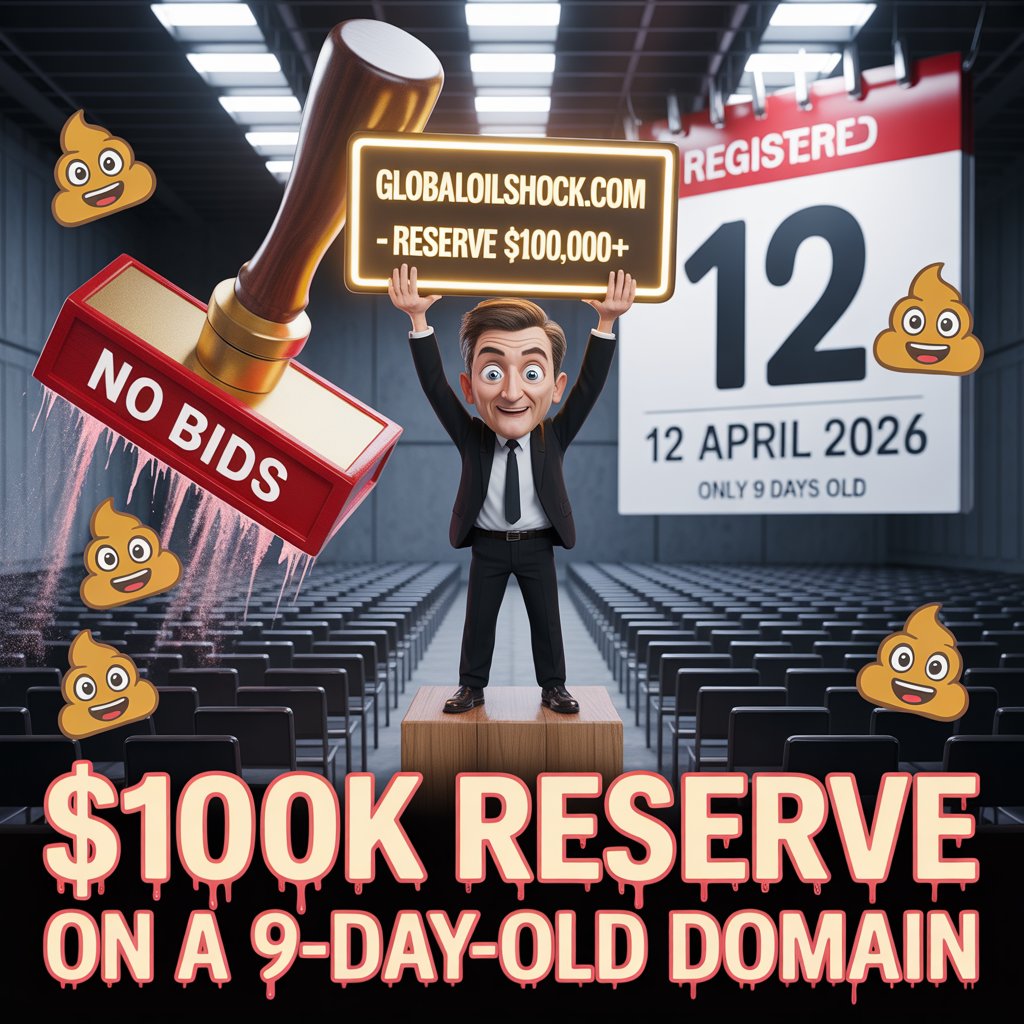
    GlobalOilShock.com: The 9-Day-Old Domain with a $100,000–$249,999 Reserve That Sedo Auction Completely Ignored

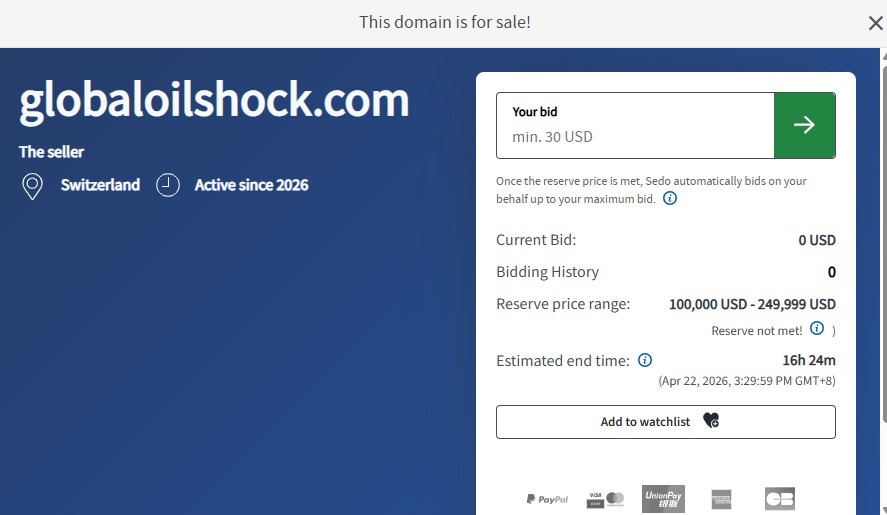
    In the domain aftermarket, where patience is supposedly a virtue, some sellers decide the best strategy is to register a name one week ago and immediately slap a six-figure reserve on it in a Sedo auction. Welcome to GlobalOilShock.com — a domain that is literally nine days old, registered on 12 April 2026, and already listed with a reserve price range of $100,000 to $249,999.

    The seller, based in Switzerland and apparently brand new to the platform in 2026, chose the Direct Auction route. That means they paid Sedo’s $59 starting fee, set an ambitious minimum, and waited for the market to validate their vision. The market’s response? Radio silence. Zero bids. Not even a lowball. Just the digital equivalent of crickets while the auction clock ticks.

    globaloilshock

    This isn’t just over-optimism. It’s a textbook case of registering first and thinking later.

    The Contender in the Spotlight

    GlobalOilShock.com is currently live in Sedo’s Direct Auction format. According to the listing details, the reserve is set somewhere between $100,000 and $249,999 — a range that guarantees the domain will not sell unless someone is willing to meet or exceed that floor. The auction page shows the domain as available for immediate purchase or bidding, with the standard Sedo buyer protections and free transfer service if a deal closes.

    The seller provided no additional description, no compelling story, no end-user vision — just the domain name and the massive reserve range. In Sedo’s Direct Auction system, sellers have full control over the minimum bid, and this one was set high enough to scare off every realistic buyer from day one.

    The Backstory: Nine Days Old and Already Dreaming in Six Figures

    The WHOIS record confirms the domain was created on 12 April 2026 — less than two weeks ago. The seller is listed in Switzerland and appears to be a new participant on Sedo this year. They chose the Direct Auction route, which costs a minimum of $59 upfront plus 15% commission only if the domain actually sells.

    This is not a hand-registered gem that sat in a portfolio for years gathering value. This is a fresh registration, likely inspired by current headlines about oil markets or geopolitical tensions, turned into an immediate high-stakes auction play. The seller paid the listing fee, set the reserve, and presumably hoped the Sedo audience would see “oil shock” and think “premium brand asset.”

    nstead, the auction sits at zero bids.

    Breaking Down the Domain Quality: Negative, Lengthy, and Instantly Forgettable

    Let’s be brutally honest about the name itself:

    • GlobalOilShock.com is 14 characters long (excluding the extension). That’s already pushing the upper limit for easy recall and typing.
    • The word “shock” carries an inherently negative connotation — economic crises, price spikes, supply disruptions. No company wants to brand itself around the idea of a “shock.”
    • “Global Oil Shock” is a descriptive phrase, not a brand. It sounds like a news headline or a research report title, not a memorable company or product name.
    • There is zero built-in positive emotion or aspirational quality. Compare that to strong energy-sector names that evoke power, flow, or innovation. This one evokes panic and volatility.

    Even if the oil market were in chaos right now, this domain doesn’t position the owner as a solution — it positions them as the problem. That is the opposite of effective branding.

    The Delusion Factor: Paying to List a Brand-New Domain at Six-Figure Reserve

    The real head-scratcher is the decision-making process. A new seller registers the domain on 12 April, waits a few days, pays Sedo $59 to launch a Direct Auction, and sets a reserve that starts at $100,000. That is not optimism — that is a complete disconnect from how the aftermarket actually works.

    Sedo’s own Direct Auction system is designed for exposure, but it still requires realistic pricing to attract bids. A nine-day-old domain with a negative keyword and no development history has zero track record, zero backlinks, and zero reason for anyone to pay six figures. The reserve range guarantees the auction will likely end with no sale, meaning the seller simply loses the $59 fee and the renewal cost while the domain continues to sit.

    This is the domain equivalent of buying a lottery ticket and demanding the jackpot before the numbers are even drawn.

    Realistic Valuation: What the Market Is Actually Saying

    In today’s aftermarket, brand-new, keyword-heavy .coms like this typically trade in the low hundreds to low thousands at best — and only if someone sees a very specific use case. Realistic resale value for GlobalOilShock.com sits closer to $500 on a good day, probably closer to the lower end given the negative tone of the name.

    The complete lack of bids in a Sedo auction — even at the reserve stage — is the market speaking loudly. No one is willing to meet the minimum, let alone approach the six-figure range.

    Lessons for Domainers: Fresh Registrations Are Not Instant Premium Assets

    Registering a domain today does not magically make it worth six figures tomorrow. The aftermarket rewards names that are short, positive, memorable, and versatile — not long, negative, descriptive phrases created in reaction to current events. If you’re going to pay Sedo’s auction fee, at least set a realistic reserve that invites participation instead of guaranteeing silence.

    H2: The Defequer Verdict

    CategoryRating
    Name Quality⭐☆☆☆☆ (1/5)
    Appraisal Sanity⭐☆☆☆☆ (1/5)
    Actual Market Value⭐☆☆☆☆ (1/5)
    Likelihood of $100K+ Sale0.00%

    Defequer Rating: 💩💩💩💩💩 (5/5 shits — a brand-new domain with a negative keyword, six-figure reserve, and zero bids is peak fresh-registration delusion.)

    GlobalOilShock.com isn’t just overpriced — it’s a perfect example of registering first and thinking never. The market has already spoken with its silence. Drop the reserve dramatically or accept that this one belongs in the liquidation bin, not a premium auction.

    Got more fresh registrations with laughable reserves, Sedo no-bid disasters, or any other over-hyped trash you want roasted? Send it to us. We’re always flushing the fluff — one nine-day-old delusion at a time.

  • tokonomythree.com – A €500,000 Web3 Word Salad That Nobody Is Eating

    tokonomythree.com – A €500,000 Web3 Word Salad That Nobody Is Eating

    The Web3 gold rush has produced some remarkable domain sales. It has also produced a staggering amount of garbage – domains that consist of random buzzwords glued together, priced as if the blockchain itself will magically transfer value into the seller’s wallet.

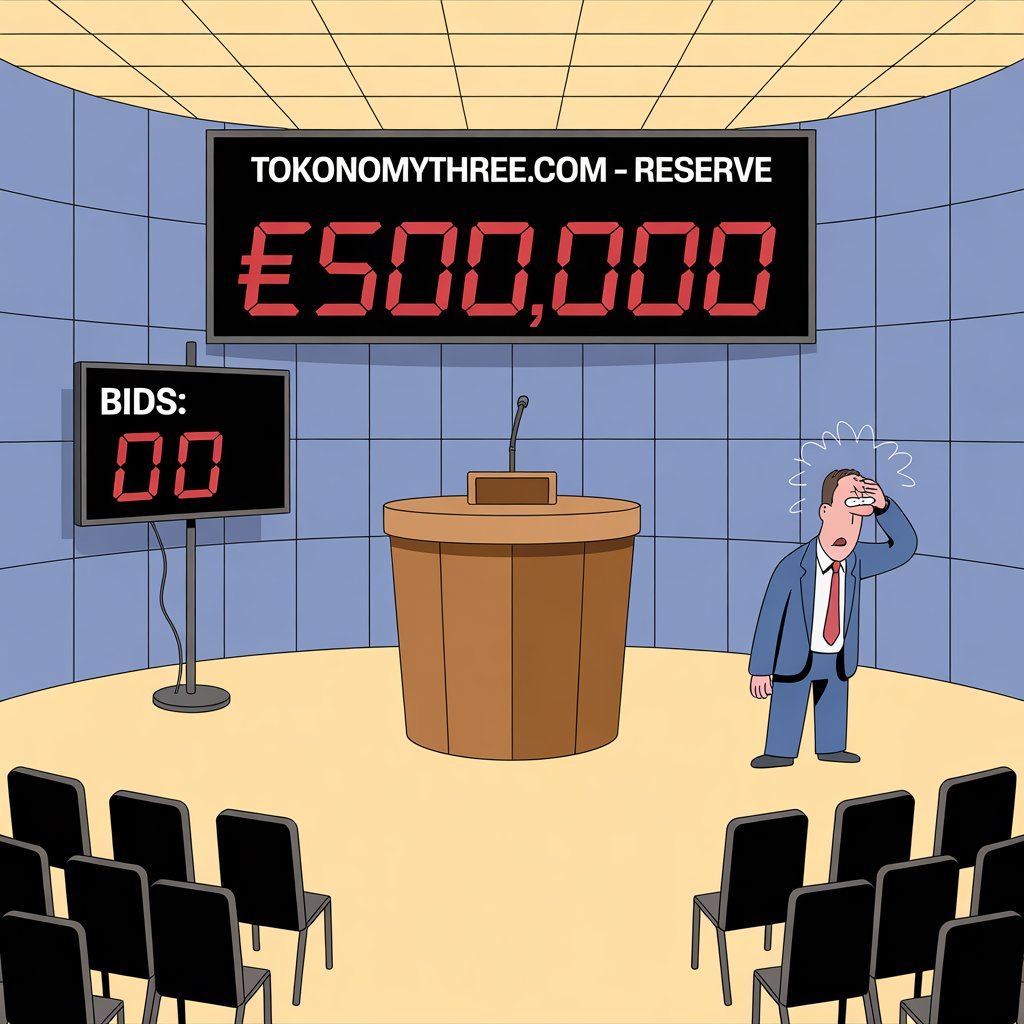
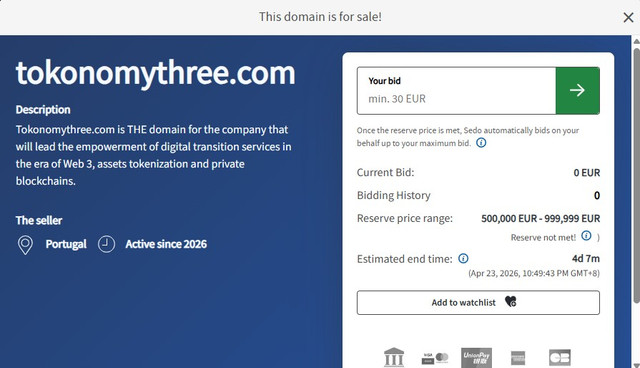
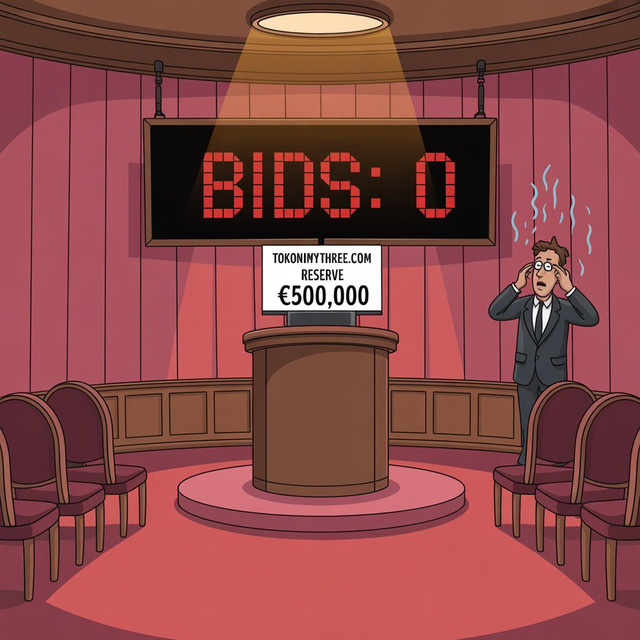
    This week, Defequer found a prime specimen on Sedo. The domain: tokonomythree.com. The format: a Direct Auction. The reserve price range: €500,000 – €999,999. The bids received: zero. The seller: based in Portugal, active in domaining since 2026 (that is this year). The registration date: 2024, renewed through 2027.

    And then there is the sales pitch, which we must quote in full because it is a masterpiece of meaningless hype:

    tokonomythree

    “Tokonomythree.com is THE domain for the company that will lead the empowerment of digital transition services in the era of Web 3, assets tokenization and private blockchains.”

    Let us translate that from Buzzword to English: “I registered a nonsense string that contains the words ‘token’ and ‘three’ and I am hoping some crypto bro with more money than sense will buy it.”

    Spoiler alert: they will not.

    Let us roast this overpriced word salad from every angle, starting with the domain itself, then the pitch, then the auction format, and finally the seller’s comically short experience.

    The Name – A Gibberish String That Means Absolutely Nothing

    Let us break down tokonomythree.com into its alleged components:

    • “Toko” – This could be a reference to “token” (Web3 buzzword #1) or “tokon” (a misspelling), or perhaps the seller was thinking of “Toko” as a brand. Toko is also a surname, a place name, and a word in various languages (in Swahili, it means “only”). But none of these meanings are obvious or commercial.
    • “Nomy” – This is not a word. It might be a mangled version of “economy” (as in “token economy”) or “nomy” as a suffix (e.g., “autonomy”). But tokonomy is not a recognized term in any industry. A quick search reveals no companies, no products, no services called “Tokonomy.” The seller invented it.
    • “Three” – The number 3. Why three? Perhaps because Web3 (the blockchain-based internet) is often stylized as “Web3”. But the seller already has “toko” (token) and “nomy” (economy?), so adding “three” is redundant and confusing. tokonomythree could be read as “token economy three” – but what happened to token economy one and two?

    The entire domain is a jumble. It is not memorable. It is not spellable (is it “tokonomy” or “toko-nomy”?). It is not brandable. It is the domain equivalent of a ransom note made from magazine clippings. A serious Web3 company would choose something like Tokenize.com (taken, obviously), BlockchainHub.com, or DigitalAsset.io. They would not pay five hundred thousand euros for a domain that looks like a typo of a typo.

    The Pitch – Buzzword Bingo at Its Finest

    The seller’s description deserves a closer reading, because it is a textbook example of using trendy jargon to mask the absence of value.

    “Tokonomythree.com is THE domain for the company that will lead the empowerment of digital transition services in the era of Web 3, assets tokenization and private blockchains.”

    Let us identify the empty calories in this sentence:

    • “Empowerment of digital transition services” – What does this mean? “Digital transition” usually refers to moving from analog to digital, or from Web2 to Web3. But “empowerment of services” is corporate fluff. It says nothing.
    • “Era of Web 3” – Web3 is a concept, not a time period. Adding “era” makes it sound grand, but it is just decoration.
    • “Assets tokenization” – This is a real thing (converting real-world assets into digital tokens). But the domain name does not help with tokenization. It just contains the syllable “toko.”
    • “Private blockchains” – Again, a real technology. But again, the domain adds nothing.

    The pitch is all signifiers and no substance. It is like saying BlueCar.com is “THE domain for the company that will lead the empowerment of automotive mobility solutions in the era of electric vehicles, autonomous driving and shared transport.” No. BlueCar.com is a domain. The rest is noise.

    If the seller genuinely believed in this domain, they would have built a landing page explaining the brand. They would have developed content. They would have done something – anything – to demonstrate value. Instead, they paid €59 for an auction listing and hoped for a miracle.

    The Auction – $59 Down the Drain

    According to Sedo’s auction page (which the seller clearly read), a Direct Auction costs $59 (roughly €55). For that fee, the seller gets a seven-day auction listing, exposure on Sedo’s homepage and search results, and the ability to set a minimum bid.

    The seller chose a reserve price range of €500,000–€999,999. That means the auction will not close unless someone bids at least half a million euros. And what has happened? Zero bids. Not one. Not even a lowball offer. The auction is a ghost town.

    Why? Because no rational buyer pays half a million euros for a domain that:

    • Is not a dictionary word
    • Is not a recognizable brand
    • Has no web presence or traffic
    • Is less than two years old (registered 2024)
    • Has a pitch that reads like a parody of Web3 hype

    The seller wasted $59. They could have spent that money on a nice dinner. Instead, they burned it on a fantasy auction that will expire with no bids, leaving them with a domain they will have to renew (again) and a bruised ego.

    The Seller – A 2026 Newcomer with Big Dreams and No Data

    Sedo shows that the seller started domaining in 2026. That means they have been in the business for approximately four months (assuming this is mid‑2026). Four months. And already they are running auctions with half‑million‑euro reserves.

    There is nothing wrong with being a beginner. Every expert was once a novice. But beginners who succeed in domain investing do their homework. They study comparable sales. They learn what makes a domain valuable (length, extension, keyword strength, brandability, age, traffic). And they price realistically.

    This seller appears to have skipped all of that. They registered a gibberish string in 2024 (perhaps before they even started domaining), renewed it through 2027, and then decided that Web3 hype would carry them to riches. That is not investing. That is gambling on ignorance.

    We would advise the seller to spend the next four months – and the four months after that – reading NameBio, following domain market reports, and learning what actual premiums look like. Voice.com sold for $30 million. Tokonomythree.com is not Voice.com. It is not even VoiceThree.com. It is a reminder that not all domains are created equal, and not all dreams are achievable.

    The Registration and Renewal – A Small Investment in a Large Delusion

    The domain was registered in 2024 and has been renewed through 2027. That means the seller has paid for three years of registration (2024–2027). At typical .com rates ($10–15 per year), that is an investment of roughly $30–45. Add the €59 auction fee, and the seller is out about $100.

    That is not a lot of money. But it is also not nothing. And it is a poor allocation of resources. For $100, the seller could have bought a genuinely decent hand‑reg domain – something like FastLend.com or CloudForge.io – and listed it at a realistic price ($500–2,000). Instead, they chose to throw good money after bad, renewing a nonsense domain and paying to auction it at a price that guarantees no sale.

    The seller will likely renew again in 2027. And again in 2028. Because that is what delusional domain investors do: they hold onto garbage, convinced that the world will eventually recognize its genius. Spoiler: it will not.

    The Bottom Line – A Domain That Should Be Left in the Web3 Graveyard

    tokonomythree.com is not a valuable domain. It is not even a mediocre domain. It is a randomly assembled string of syllables that happens to contain “token” and “three” – two words that are vaguely related to blockchain. That is its only claim to relevance. And that claim is worth approximately zero euros.

    The seller’s pitch is pure buzzword salad, designed to impress people who do not understand domain valuation but do understand that Web3 sounds futuristic. Unfortunately for the seller, the only people impressed by buzzwords are other beginners. Serious buyers look at the name itself. And the name itself is a mess.

    The auction has zero bids. It will likely close with zero bids. The domain will sit unsold, renewed year after year, until the seller finally gives up or the registrar deletes it for non‑payment. That is the future of tokonomythree.com. Not a €500,000 payday. Not a “digital transition” empire. Just a quiet, inglorious expiration.

    If the seller is reading this, we have a suggestion: drop the domain. Save your renewal fees. Use the money to buy a domain that actually means something. Or don’t. But do not say we did not warn you.

    Defequer Rating: 💩💩💩💩💩 (5/5 shits)

    Five shits. This domain earns the maximum rating for the perfect storm of gibberish name, meaningless buzzword pitch, delusional reserve price, zero bids, and a seller who started domaining in 2026. The Web3 gold rush has produced some legitimate successes, but tokonomythree.com is not one of them. It is a cautionary tale about what happens when hype replaces homework. The Delusion Olympics have a new medalist.

    Roast served. Auction mocked. Next delusion, please.

    Post‑Roast Note to the Seller

    Dear Portuguese domainer who joined in 2026,

    Welcome to domaining. We hope you are enjoying your first few months. But we need to have a serious conversation about tokonomythree.com.

    You paid $59 for an auction that has received zero bids. That $59 could have been spent on a domain market report, a NameBio subscription, or even a book about domain investing. Instead, you spent it on a listing that is currently being ignored by the entire internet.

    We are not saying this to be cruel. We are saying it because you are clearly enthusiastic, and enthusiasm is valuable – but only when paired with education.

    Here is what you should do next:

    1. Cancel the auction (if possible) or let it expire. Do not renew it.
    2. Do not renew tokonomythree.com in 2027. Let it drop.
    3. Spend the next three months studying domain sales. Look at what actually sells for €500,000 (hint: one‑word .coms, ultra‑premium brands, established traffic domains). Compare those to your domain. Note the differences.
    4. Start small. Register domains that are short, memorable, and commercially relevant. List them at prices between $500 and $5,000. Learn what works.
    5. Never write a pitch like that again. Buzzwords do not create value. They just make you look like you do not know what you are talking about.

    You have potential. But potential without data is just wishful thinking. Put in the work. The results will follow.

    We will be here. Watching. And hoping your next domain is better than this one.

    tokonomythree
  • cockyai.com – A Poultry‑Inspired .ai Domain or Something Much Worse?

    cockyai.com – A Poultry‑Inspired .ai Domain or Something Much Worse?

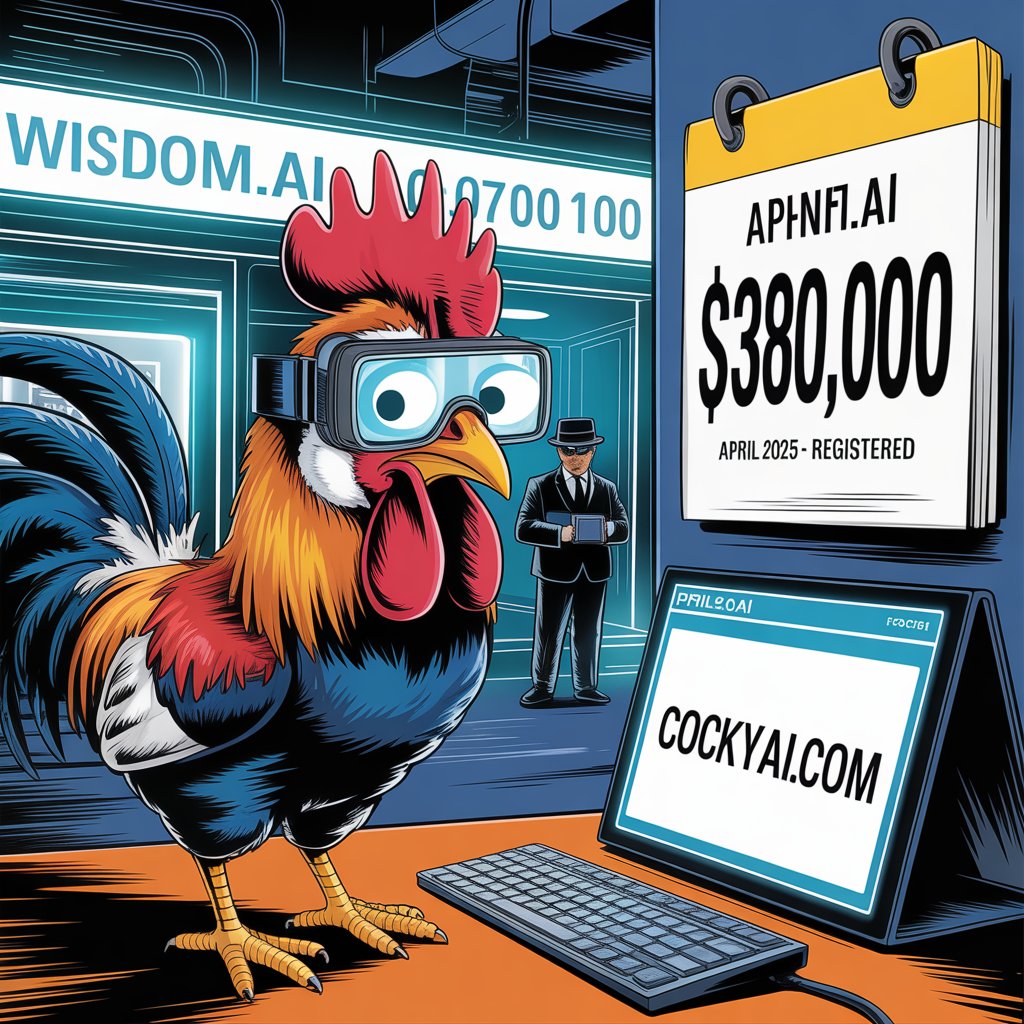
    The .ai extension has produced some legitimate seven‑figure success stories. Wisdom.ai sold for $750,000. Short, descriptive English words in the .ai space have commanded impressive prices, with average resale values reaching $6,525 in 2024. Atom.com alone has seen a staggering 4,700% growth in .ai‑related revenue since 2022.

    But for every Wisdom.ai, there are a hundred domains like cockyai.com.

    Listed on Sedo for $380,000, registered on 9 April 2025 (barely one year old as of this writing), and sporting a name that defies logical explanation, cockyai.com is not a premium AI asset. It is a branding catastrophe wrapped in a trendy extension, priced as if the seller accidentally added three extra zeros.

    Let us roast this feathered fiasco from every angle.

    The Name – A Linguistic Train Wreck

    Let us start with the obvious: cockyai.com is not a word. It is not a brand. It is not even a clever misspelling. It is a random assemblage of letters that happens to begin with a term that has multiple unfortunate connotations.

    The prefix “cock” is problematic in English. It can refer to a male chicken (the least offensive meaning), a faucet or valve (technical but obscure), or – let us be adults here – a vulgar slang term for male anatomy. In branding, this is a minefield. No serious company wants a domain that makes customers snicker or raises eyebrows in boardrooms. The only successful “cock” brands are either very old (Cock Brand foods, a Thai company) or very niche (adult entertainment). Neither category pays $380,000 for a .ai domain.

    The suffix “yai” is meaningless. It is not a common abbreviation, not a recognizable word in English, and not even a plausible brandable syllable like “ly” or “ix”. cockyai sounds like someone tried to spell “cocky” while having a stroke, or perhaps a Thai restaurant’s experimental AI chatbot. It has zero phonetic appeal, zero memorability, and zero commercial gravity.

    And then there is the .ai extension. Yes, .ai is hot. But .ai amplifies whatever precedes it. Wisdom.ai works because wisdom is a positive, aspirational concept. Cockyai.ai (or in this case, cockyai.com – the seller apparently could not even afford the actual .ai extension) would be laughed out of any pitch meeting. You cannot polish this turd with a trendy TLD.

    The Price – $380,000 of Pure Fantasy

    cockyai

    Let us talk numbers. The seller is asking $380,000. For that sum, a buyer could acquire:

    • A genuine one‑word .com in the mid‑five‑figure range
    • A portfolio of 10–20 solid brandable domains with actual resale potential
    • A small business franchise
    • A luxury car and a house down payment

    Instead, they would be buying a domain that has no web presence, no backlink profile, no historical content, and no intrinsic value. A quick search reveals that cockyai.com is essentially invisible online – no indexed pages, no archived history, no mentions in any reputable database. This is not an “aged domain with hidden potential.” This is a one‑year‑old hand‑reg that someone decided to price like a Manhattan penthouse.

    Even in the inflated .ai aftermarket, $380,000 is reserved for genuinely premium names. The average .ai resale price in 2024 was $6,525. The record‑breaking Wisdom.ai sold for $750,000 – and that domain is a single, meaningful English word that perfectly captures the AI industry’s value proposition. cockyai.com is not in the same universe. A realistic price for this domain, assuming anyone wanted it at all, would be $50–$200 reseller, maybe $500–$1,000 to an end‑user with a very specific (and questionable) brand idea. $380,000 is roughly 1,900 times the realistic ceiling.

    The Age – A One‑Year‑Old “Vintage” .com

    The domain was registered on 9 April 2025. As of this writing, it is approximately 12–13 months old. That is not aged. That is a toddler. The seller cannot claim any SEO benefits, historical authority, or legacy value. There is no backlink profile to speak of. There is no content archive. There is nothing except a registration receipt and a dream.

    Compare this to genuinely valuable .ai domains, which often have years of continuous registration, development, or at least a clear brand narrative. cockyai.com has none of that. It is a fresh registration with a nonsense name. The only thing “aged” about it is the seller’s delusion.

    The “Cocky” Problem – A Trademark Landmine

    Even if we ignore the pricing insanity, cockyai.com carries another risk: the word “cocky” is trademarked in certain contexts. In 2018, a romance novelist trademarked the word “cocky” for use in book titles, sparking a massive backlash known as #CockyGate, with over 17,000 people signing a petition against it. While that trademark is narrow (covering romance novels), it demonstrates that the “cocky” root is legally contested territory.

    More broadly, any domain that begins with “cock” and adds a suffix is skating on thin ice. If the seller ever tried to develop cockyai.com into a commercial brand, they would face immediate pushback from advertisers, payment processors, and potential partners who do not want to be associated with double entendres. This is not a “provocative brand.” It is a liability.

    The Bottom Line – A Domain That Should Be Put Out to Pasture

    cockyai.com is not a hidden gem. It is not a clever investment. It is a one‑year‑old .com (not even the trendy .ai extension) with a name that ranges from silly to offensive, zero web presence, and a price tag that belongs in a comedy sketch.

    The seller appears to have watched the .ai gold rush and thought, “I’ll just grab any random string that ends with ‘ai’ and ask for half a million dollars.” That is not domain investing. That is throwing darts blindfolded and hoping for a bullseye.

    If the seller genuinely wants to sell this domain, they should list it for $99 and pray. If they want to keep the $380,000 dream alive, they should also budget for many, many years of renewal fees – because this rooster is not going to crow.

    Defequer Rating: 💩💩💩💩💩 (5/5 shits)

    Five shits. This domain earns the maximum rating for the sheer audacity of combining a gibberish, potentially offensive name with a one‑year‑old registration and a $380,000 asking price. The seller has managed to hit every possible failure mode: bad branding, no age, no web presence, trademark risk, and a price that defies all market logic. The .ai gold rush has produced some winners, but cockyai.com is not one of them. It is a cautionary tale in a fancy extension.

    Roast served. Poultry priced. Next victim, please.

    Post‑Roast Note to the Seller

    Dear registrant of cockyai.com,

    We have a few questions, and we would appreciate honest answers:

    1. What were you thinking when you registered this domain? Were you aiming for “cocky AI” and missed the typo? Or did you genuinely believe that “cock” + “yai” is a valuable brand?
    2. Where did $380,000 come from? Did you see Wisdom.ai sell for $750,000 and think, “I’ll ask for half of that”? Because cockyai.com has about 0.001% of Wisdom.ai’s brand value.
    3. Have you considered that .ai domains work best with actual English words? Wisdom, Coach, Voice – these mean something. Cockyai means nothing, except perhaps a confused rooster.

    Here is some free advice: drop the price to three digits. Or two digits. Or just let the domain expire. The renewal fee is not worth the fantasy. Use the money to buy a domain that does not begin with “cock” unless you are specifically targeting the adult market – and even then, $380,000 is laughable.

    We will be here. Watching. And hoping you eventually discover the concept of “comparable sales.”

  • NameNugget’s Bare Appraisal Request: Eight Awkward AI Buzzword Domains That Scream “Portfolio Clutter”

    NameNugget’s Bare Appraisal Request: Eight Awkward AI Buzzword Domains That Scream “Portfolio Clutter”

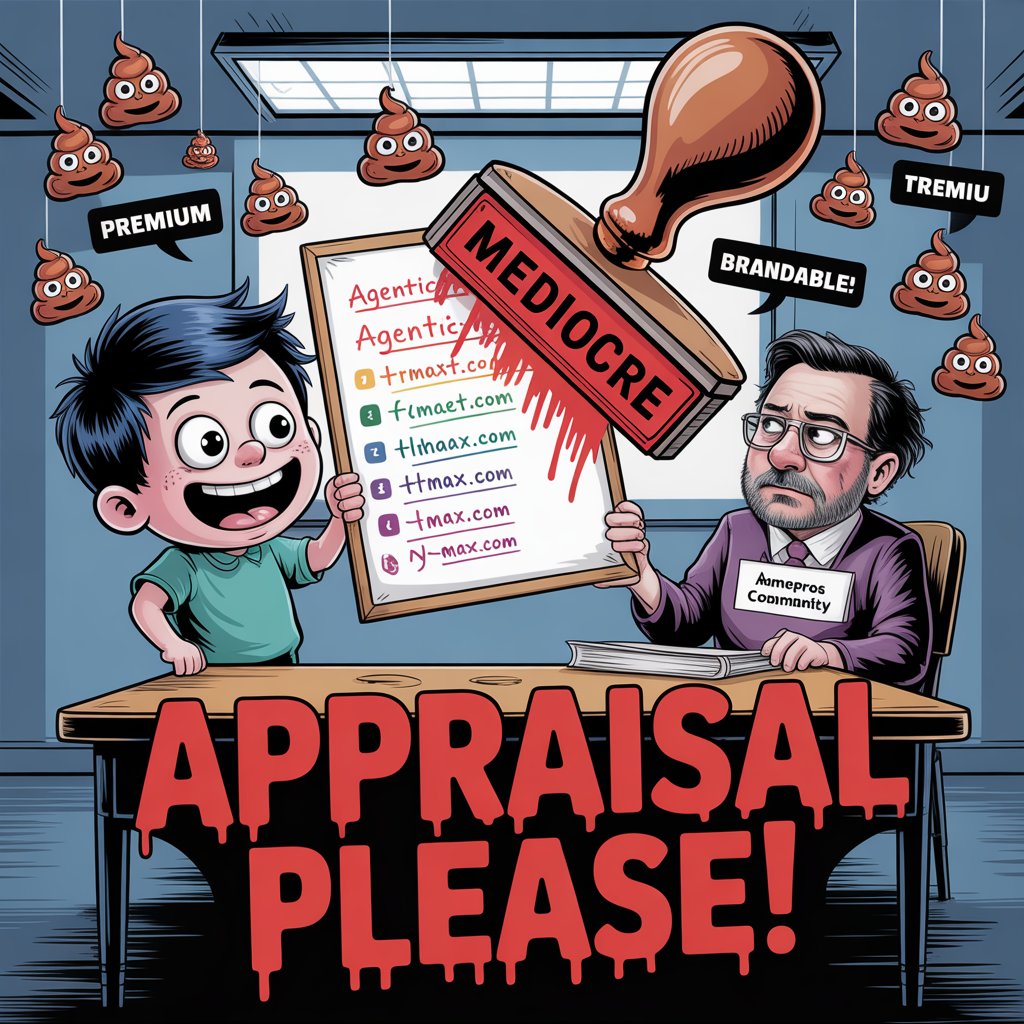
    In the NamePros appraisal section, most serious domainers at least try to sell their story. They give context, explain the vision, or at minimum show they’ve done some homework. Then there’s NameNugget, who strolled in with the digital equivalent of dumping a box of random toys on the teacher’s desk and saying “rate these please.”

    No prices. No explanations. No self-analysis. Just a clean numbered list of eight domains and a polite “Any feedback is appreciated!” It’s the domain version of showing up to a job interview in pajamas and asking the hiring manager to tell you how employable you are.

    This isn’t a roast about pricing. It’s a roast about pure quality — and these eight names are a masterclass in what happens when buzzwords meet zero editing.

    The Contender in the Spotlight

    Here’s the full original post for full second-hand embarrassment:

    Hi, I’d love to get your appraisal on the following domains:

    1. Jouleos.com
    2. Alixai.com
    3. Agentintranet.com
    4. Agenticintranet.com
    5. Y-max.com
    6. First-Gen.com
    7. DeepLooker.com
    8. Cognister.com

    Any feedback is appreciated!

    That’s it. Eight domains. Zero context. Zero vision. Just “appraise me, community.”

    The Backstory: A Classic Drive-By Appraisal Drop

    NameNugget didn’t hype them. Didn’t claim they’re “brandable” or “perfect for AI startups.” Didn’t even bother to explain why these specific names matter. Just dropped the list like it was obvious they deserved attention. In a forum full of people who spend hours crafting pitches, this bare-bones approach stands out for all the wrong reasons.

    Breaking Down the Domain Quality: When Buzzwords Go Wrong

    Let’s look at the collection with brutal honesty:

    • Jouleos.com — Sounds like a made-up energy-tech word (“Joule” + “os”). Invented, hard to spell, harder to remember. Feels like it was generated by an AI trying to sound scientific.
    • Alixai.com — “Alix” + “AI.” Typosquatting adjacent and painfully on-the-nose. The kind of name that makes people think “cheap AI tool that will be forgotten in six months.”
    • Agentintranet.com + Agenticintranet.com — Two painfully long, corporate-sounding variants. One has “Agentic” (the current AI buzzword) and both scream internal enterprise software that nobody wants to type twice. The duplicate with and without the extra “ic” just shows zero editing.
    • Y-max.com — Hyphenated, generic, and looks like a 2008 Yahoo spin-off. The hyphen kills brandability instantly.
    • First-Gen.com — Hyphenated generational term that feels dated the moment you say it. “First-gen” already sounds obsolete in tech.
    • DeepLooker.com — Two real words smashed together that sound like a creepy surveillance app or a low-budget data analytics tool. Not memorable, not premium.
    • Cognister.com — Another made-up word (“Cognitive” + “Register”?). Clever in a thesaurus kind of way, but still feels forced and unpronounceable at first glance.

    Collectively they share the same fatal flaws: most are too long, several are hyphenated, many are invented buzzword mashups, and none feel instantly brandable or memorable. They’re exactly the kind of names that look impressive in a spreadsheet but die the moment a real buyer tries to say them out loud.

    The Delusion Factor: Expecting the Community to Do Your Homework

    The real issue isn’t that these domains exist — everyone has a few clunkers. It’s the complete lack of self-awareness in simply dumping them on NamePros with zero context and expecting detailed appraisals. No attempt to explain the vision. No acknowledgment of the obvious flaws. Just “tell me what you think.”

    Serious domainers do their own analysis first. They check length, memorability, trademark risk, and typeability before asking the community to waste time on them. This post reads like someone who registered a bunch of AI-trend names and now wants the forum to validate the impulse.

    Lessons for Domainers: Do the Work Before You Ask

    If you’re going to request appraisals, at minimum give the community something to work with. Explain the intended use case. Acknowledge the obvious weaknesses. Show that you’ve already thought about the quality. Otherwise you’re just asking strangers to do the homework you should have done before registering the names.

    The Defequer Verdict

    CategoryRating
    Name Quality⭐⭐☆☆☆ (2/5)
    Appraisal Sanity⭐☆☆☆☆ (1/5)
    Actual Market Value⭐☆☆☆☆ (1/5)
    Likelihood of Strong End-User Pull0.00%

    Defequer Rating: 💩💩💩💩💩 (5/5 shits — not because any single name is the absolute worst we’ve seen, but because of the sheer volume of buzzword clutter presented with zero self-awareness or context.)

    NameNugget, if you’re reading this: next time you want real feedback, lead with some analysis of your own. These names aren’t hopeless — but the way they were presented definitely is.

    Got more bare appraisal dumps, buzzword collections, or questionable lists you want roasted? Drop the link in the comments or hit the contact form. We’re always flushing the fluff — one lazy post at a time.

  • CryptoVentureLabs.com + BitcoinEpicenter.com: The Defensive Crypto Hype That NamePros Shut Down Fast

    CryptoVentureLabs.com + BitcoinEpicenter.com: The Defensive Crypto Hype That NamePros Shut Down Fast

    In the post-2022 crypto winter, where even the most die-hard believers have learned to temper their enthusiasm, some domainers are still clinging to the glory days of 2021 hype. Enter YNSMTL, who dropped CryptoVentureLabs.com and BitcoinEpicenter.com on NamePros and immediately demanded “honest feedback and appraisal” — but only the kind that inflates their value. When the community gave blunt, realistic takes, the seller pushed back with comps, arguments about “epicenter” being more powerful than “products,” and repeated insistence on end-user pricing.

    This wasn’t a casual listing. It was a full-on defensive masterclass in domainer delusion, complete with age bragging, keyword stuffing, and rejection of any valuation below four figures. NamePros wasn’t impressed, and neither are we.

    The Contender in the Spotlight

    The original post (by New Member YNSMTL) reads like a crypto pitch deck from 2021:

    Hey NamePros Community,

    I’d be grateful for your honest Feedback and Appraisal these two Domains. (Blockchain & Crypto Niche)

    CryptoVentureLabs.com

    Perfect for a Crypto Venture Capital Firm, Startup Incubator, or Blockchain Investment Platform.

    Domain Name Age: Over 8 years

    Domain Expiration: 2026-11-26

    BitcoinEpicenter.com

    Ideal for a Crypto News Hub, Podcast, Media outlet, or Educational Platform around Bitcoin.

    Domain Name Age: Over 5 years

    Domain Expiration: 2026-11-26

    (Both are brandable, memorable, and rich with keywords in a growing industry)

    No price listed — just a plea for “end-user valuation from an expert perspective.” When Jordon M. suggested $10–$30 reseller value each, YNSMTL fired back with a table of comps (BitcoinProducts.com at $5,995) and argued that “Epicenter” is rarer and more powerful. Other replies called the names too long and advised cheap pricing or liquidation. The seller kept politely disagreeing, insisting on higher value. Classic.

    The Backstory: 2021 Vibes in a 2026 Market

    Both domains were registered years ago (8+ for CryptoVentureLabs.com, 5+ for BitcoinEpicenter.com) and are set to expire in November 2026. The seller registered them at Spacechip and clearly held them through the bull run, hoping the crypto narrative would carry the value forward. Now, with the market matured and buyers far more discerning, the pitch leans hard on age, keywords, and “growing industry” nostalgia instead of current demand.

    The thread quickly turned into a back-and-forth where YNSMTL rejected reseller numbers and doubled down on brandability. The community responses were short, blunt, and realistic — exactly what the seller claimed to want but clearly didn’t.

    Breaking Down the Domain Quality: Long, Keyword-Stuffed, and Dated

    Let’s cut through the hype:

    • CryptoVentureLabs.com — 21 characters. “Crypto” + “Venture” + “Labs” is a triple keyword mash that feels like it was generated by an AI in 2021. It’s descriptive, not brandable. In a world of sleek names like Paradigm or a16z, this reads like a corporate brochure.
    • BitcoinEpicenter.com — 19 characters. “Bitcoin” is still searchable, but “Epicenter” tries too hard to sound profound. It’s long, hard to remember, and screams “I bought this during the bull run.”

    oth are .coms with age, which is nice, but length kills memorability and typing ease. In crypto, buyers want short, punchy, or ultra-premium names — not compound phrases that sound like expired project whitepapers.

    The Delusion Factor: Demanding End-User Prices While Ignoring Reality

    The real comedy is the defensive loop. YNSMTL asked for “honest feedback,” got it, then immediately rejected anything under four figures by citing selective comps and claiming “NameBio only captures a fraction of private sales.” When told the names are long, the reply was essentially “but Epicenter is rarer!” This is textbook domainer syndrome: believing your own marketing copy while the market has moved on.

    The thread died quietly with a few blunt replies and the seller’s final polite “appreciate the input.” No offers, no bites — just another crypto domain listing collecting digital dust.

    Realistic Valuation: Crypto Winter Pricing in Full Effect

    In today’s aftermarket, aged but long crypto keyword domains like these typically trade in the low hundreds to low thousands at best — and only if someone falls in love with the exact story. Reseller value sits around $50–$300 each. End-user? Maybe $1k–$3k on a very good day for the right buyer. Anything higher is pure hope. The community’s $10–$30 take was harsh but directionally correct for wholesale. Pushing for four figures while the thread barely got traction? That’s how domains become expensive renewal obligations.

    Lessons for Domainers: When the Market Speaks, Listen

    If you list domains and specifically ask for feedback, be ready to hear it — even when it stings. Crypto hype from 2021 doesn’t automatically translate to 2026 value. Shorter, cleaner, or more creative names win. And if the entire thread is telling you the same thing, maybe the market is right and the pitch needs adjusting.

    The Defequer Verdict

    CategoryRating
    Name Quality⭐⭐☆☆☆ (2/5)
    Appraisal Sanity⭐☆☆☆☆ (1/5)
    Actual Market Value⭐☆☆☆☆ (1/5)
    Likelihood of Four-Figure Sale0.00%

    Defequer Rating: 💩💩💩💩💩 (5/5 shits — not just for the long, dated names, but for the full defensive masterclass in rejecting reality while demanding “honest feedback.”)

    YNSMTL, if you’re reading this: the crypto market has spoken. Drop the price dramatically, consider bundling them cheap, or accept that these are 2021 relics in a 2026 world. The community tried to tell you.

    Got more crypto hype threads, defensive sellers, or overpriced blockchain trash you want roasted? Email us please. We’re always flushing the fluff — one expired bull-run dream at a time.

  • sellsman.com’s Cringe Portfolio Dump in Brad Mugford’s AMA: “Do You Like My Domains?” – Peak Noob Energy in Front of a Legend

    sellsman.com’s Cringe Portfolio Dump in Brad Mugford’s AMA: “Do You Like My Domains?” – Peak Noob Energy in Front of a Legend

    In the domain world, there are lines you simply do not cross if you want to be taken seriously. One of those lines is treating a respected 15-year veteran’s AMA like a free appraisal booth at a garage sale. Step forward sellsman.com, who somehow thought the perfect contribution to Brad Mugford’s AMA thread was to dump a list of his domains and casually ask: “Do you like my domains? Which should I keep or liquidate?”

    Brad Mugford isn’t some random forum poster. He’s the owner of DataCube.com (the 68th oldest .com ever registered), a Top Member, VIP, ICA member, and someone who actually runs a 6,000+ domain portfolio while closing real end-user deals. His AMA was filled with thoughtful discussion about sell-through rates, pricing strategy, and whether beginners should even bother in 2026. And then sellsman.com showed up with show-and-tell energy.

    This wasn’t just awkward. It was a masterclass in blissful ignorance.

    The Contender in the Spotlight

    Here’s the full post (post #9596650) for anyone who needs the second-hand embarrassment:

    Hi Brad

    Do you like my domains? Which should I keep or liquidate?”

    • Cliccs.com Clicks. Leads. Profits. #CTR #CPC #PPC #SEM. Perfect for advertising / marketing tools or agency.
    • Shejh.com Alternative spelling of sheikh (Albanian)
    • iLavU.com #dating #wedding #gifts & #flowers
    • Bodyst.com #health & wellness
    • Akselerator.com #startups
    • Mickye.com
    • TopNotchSites.com
    • SellsMan.com

    No context. No strategic question. Just “rate my stuff, legend.” In a thread where others were asking about outbound sales tactics and market shifts, this reads like a kid shoving his Pokémon cards in the teacher’s face.

    The Backstory: Brad Mugford Is Not Your Free Appraiser

    Brad has been grinding since the late 90s. He’s seen every flavor of domainer delusion and still shows up to share real knowledge. His AMA was a rare opportunity to learn from someone who actually moves inventory at scale. Most participants respected that. sellsman.com treated it like a drive-thru valuation window.

    The cherry on top? His username is literally “sellsman.com” and one of the domains he listed is Sells Man .com. He’s out here trying to brand himself as a salesman while demonstrating zero sales awareness.

    Breaking Down the Portfolio: Why These Names Were Never Worth Asking About

    Let’s be brutally honest — these aren’t “keep or liquidate” decisions. They’re “why were these ever registered?” exhibits:

    Cliccs.com — Extra “c” for… emphasis? The hashtag salad about CTR/CPC doesn’t magically make it premium.

    Shejh.com — Albanian spelling of “sheikh.” Because nothing screams brandable like a niche transliteration almost nobody will spell right.

    iLavU.com — Leetspeak “I love you.” Adorable in 2008. Painful in 2026.

    Bodyst.com — Missing the “y” in body. Health & wellness domain that looks like a typo.

    Akselerator.com — Misspelled “accelerator.” Startups tend to prefer correct spelling.

    Mickye.com — Mickey with an extra “e.” Perfect for a mouse-themed daycare, maybe.

    TopnotchSites.com — Three words smashed together like a 2012 web design agency that already went bankrupt.

    SellsMan.com — The self-referential username domain. Somehow still generic.

    None of these have the snap, memorability, or end-user pull that moves in today’s market. They’re exactly the kind of marginal brandables that quietly bleed renewal fees year after year.

    The Delusion Factor: Treating an AMA Like a Free Appraisal Booth

    The real crime isn’t only the domains themselves — it’s the sheer audacity of dropping them in front of Brad Mugford and expecting him to do the homework. This is what happens when someone confuses a respected veteran’s AMA with a public appraisal service. Other users showed respect by asking strategic questions. sellsman.com showed up with a wishlist.

    In the world of serious domain investing, you do your own due diligence first. You run the names through appraisal tools, check comps, and only then ask smart, specific questions. You don’t treat a legend’s thread like a flea-market valuation stand.

    Realistic Valuation: These Names Belong in the Liquidation Bin Yesterday

    Observable aftermarket trends show these types of brandables rarely break low four figures — and most sit unsold for years. At best, a couple might fetch a few hundred bucks on a good day. The rest are portfolio clutter. Asking Brad which to keep versus liquidate is like asking a Michelin-star chef which gas-station snacks are worth saving.

    Lessons for Domainers: Respect the Room

    If you ever find yourself in an AMA with a veteran like Brad Mugford, lead with a real question that adds value to the discussion. Do your homework first. And for the love of everything digital, don’t treat the thread like a free portfolio review session.

    The Defequer Verdict

    CategoryRating
    Name Quality⭐⭐☆☆☆ (2/5)
    Appraisal Sanity⭐☆☆☆☆ (1/5)
    Actual Market Value⭐☆☆☆☆ (1/5)
    Likelihood of Sale0.00%

    Defequer Rating: 💩💩💩💩💩 (5/5 shits — not because the domains are the worst we’ve seen, but because of the breathtaking audacity of asking a legend “Do you like my domains?” in public.)

    sellsman.com, if you’re reading this: next time, maybe ask Brad something that actually moves the conversation forward. Or at least run your list through NameWorth.com before hitting “post.”

    Got more cringe AMA moments, portfolio dumps, or overpriced trash you want roasted? Drop the link in the comments or hit the contact form. We’re always flushing the fluff — one noob post at a time.

  • saudinationalteam.com – A $16 Million Bet on Infringement and National Pride

    saudinationalteam.com – A $16 Million Bet on Infringement and National Pride

    There are overpriced domains, and then there are domains that seem designed to attract a lawsuit. This week, Defequer found a listing on Sedo that manages to be both astronomically expensive and legally perilous.

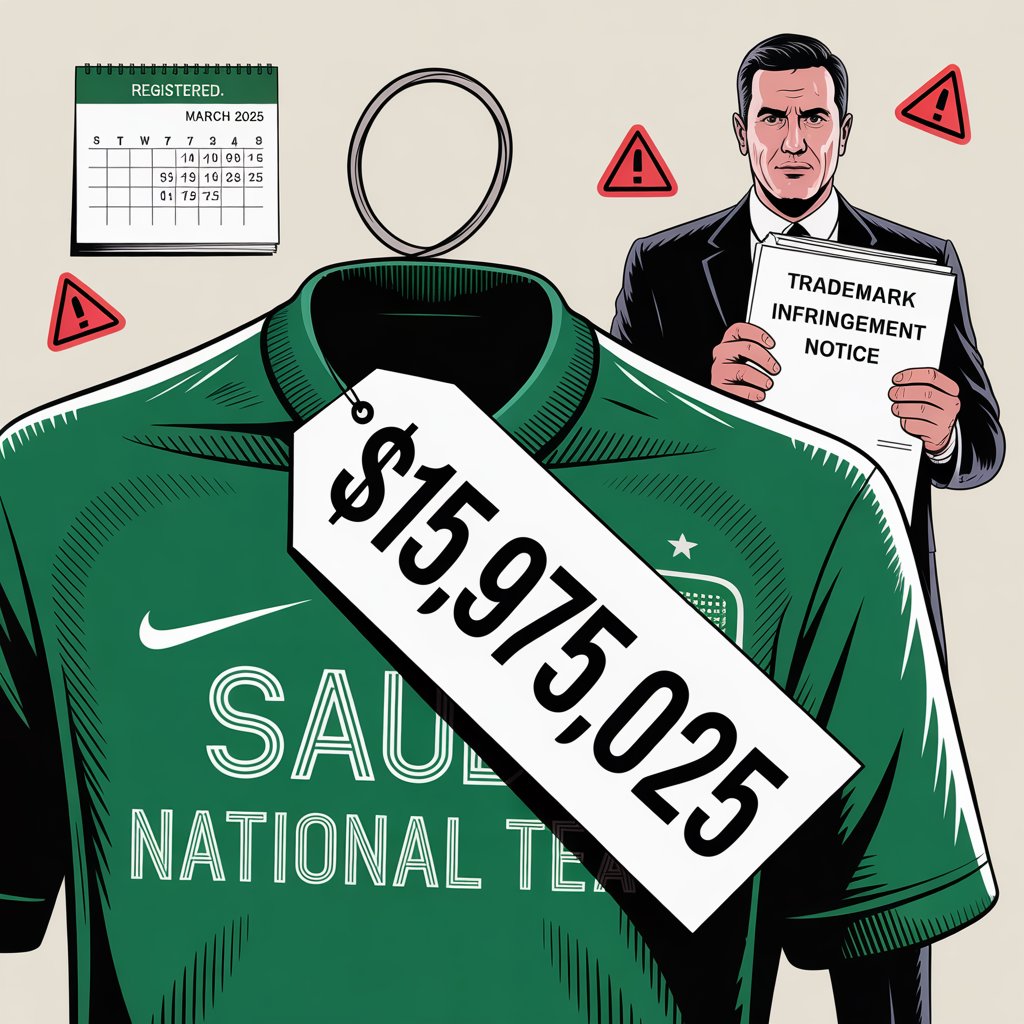
    The domain: saudinationalteam.com. The asking price: $15,975,025. The registration date: 15 March 2025. That means the seller has owned this domain for just over one year (as of April 2026). And they believe it is worth more than most people earn in a lifetime.

    saudinationalteam

    But the price is only part of the problem. The bigger issue is the domain itself. “Saudi National Team” refers to the official national sports teams of Saudi Arabia – most famously the football (soccer) team, but also basketball, handball, and others. These teams are owned and operated by the Saudi Arabian Football Federation (SAFF) and other government‑affiliated bodies. They hold trademarks, brand rights, and exclusive commercial licenses.

    The seller of saudinationalteam.com has no apparent connection to any Saudi official entity. They registered a domain that explicitly mimics a national institution. That is not domain investing. That is domain squatting – and it is a fast track to a Uniform Domain‑Name Dispute Resolution Policy (UDRP) complaint.

    Let us roast this mess from every angle.

    The Obvious Trademark Problem – You Cannot Own a Country’s Team Name

    The phrase “Saudi National Team” is not a random combination of words. It is a specific reference to a set of state‑sponsored athletic organisations. The Saudi Arabian Football Federation, for example, holds trademarks and exclusive rights to commercial use of its team’s name and branding. The same applies to the Saudi Olympic Committee and other national bodies.

    Registering saudinationalteam.com and then offering it for sale at a huge price is a textbook example of bad faith registration. Under UDRP rules, a complainant (the Saudi Football Federation) would need to show three things:

    1. The domain is identical or confusingly similar to a trademark in which they have rights.
    2. The registrant has no legitimate interest in the name.
    3. The domain was registered and is being used in bad faith.

    All three are easily proven. The seller has no legitimate interest – they are not the Saudi national team, nor are they authorised to represent it. The bad faith is evident from the $15.9 million asking price, which far exceeds any legitimate cost or value.

    If the Saudi authorities file a UDRP complaint, the seller will almost certainly lose the domain. They will receive nothing – not $15 million, not $15 thousand. They will be ordered to transfer the domain to the complainant, and they will eat the legal fees. That is the best‑case scenario for the trademark holder. The worst‑case for the seller? A lawsuit in a Saudi court or a claim under local cybersquatting laws, potentially with damages.

    The Price – $15,975,025 of Pure Fantasy

    Let us ignore the legal peril for a moment and focus on the number: $15,975,025. Where does this come from? It is oddly specific – perhaps the seller added their birthday to their phone number. But what does it actually buy?

    In the domain aftermarket, $15.9 million would put this domain in the top 10 highest public sales of all time. It would sit alongside Voice.com ($30M), 360.com ($17M), and NFTs.com ($15M). Those domains are one‑word, ultra‑premium, globally recognised brandable assets. saudinationalteam.com is a four‑word, country‑specific, trademark‑infringing mess.

    Even if we ignore the legal issues, the commercial value of saudinationalteam.com is near zero. Who would buy it? The Saudi national team itself? They would never pay a cent – they would file a UDRP and take it for free. A sponsor or broadcaster? They would also face legal resistance and would prefer a clean domain like SaudiTeam.com or KSAFootball.com. A fan site? Maybe – but fan sites do not pay $15 million. They pay $15.

    A realistic appraisal for this domain, assuming no trademark conflict, would be $0–$500. The name is too long, too specific, and too closely tied to a government entity. The seller’s asking price is roughly 32,000x the realistic ceiling.

    The Registration Date – March 2025, Still a Newborn

    The domain was registered on 15 March 2025. As of April 2026, it is approximately 13 months old. That is not an aged domain. It has no SEO history, no backlink profile, no content. The seller cannot claim “established authority” or “legacy asset.” They registered it after the 2022 World Cup (where Saudi Arabia famously beat Argentina) and before the 2026 World Cup qualifiers. The timing suggests opportunistic registration – another mark of bad faith.

    A domain that is barely a year old cannot command a seven‑figure price under any legitimate valuation model. The seller would have to demonstrate that the name has inherent commercial value – but that value is entirely derived from the Saudi national team’s trademark, not from any effort by the seller. That is the definition of cybersquatting.

    The Renewal Strategy – Two Years and Counting

    The WHOIS shows registration until 15 March 2027. The seller has paid for two years (2025–2027). That is a small investment – perhaps $20–30 total for a .com renewal. They are betting that someone will pay $15.9 million before the domain expires or before a UDRP complaint is filed.

    The problem is that the domain becomes more dangerous to hold with each passing month. The longer it sits with a for‑sale sign, the stronger the evidence of bad faith. UDRP panels often look at the asking price as a key indicator. A price that is grossly above the domain’s fair market value – and clearly targeting a trademark owner – is a red flag.

    The seller is not just losing money on renewal fees. They are building a legal case against themselves.

    The Bottom Line – A Lawsuit Waiting to Happen

    saudinationalteam.com is not a domain investment. It is a liability. The seller has registered a name that explicitly references a state‑owned sports institution, has no legitimate use for it, and is asking for a sum that no rational buyer would pay. If the Saudi authorities become aware of this listing – and they have legal teams that monitor such things – the seller will face a UDRP complaint. They will lose the domain. They will pay their own legal fees. And they will have nothing to show for it.

    The only sensible course of action is to drop the domain immediately – or transfer it to the rightful owner for free as a goodwill gesture. Continuing to hold it at a $15.9 million price is not just delusional. It is foolish.

    Defequer Rating: 💩💩💩💩💩 (5/5 shits)

    Five shits. Not just for the absurd price, but for the legal recklessness. This seller is not merely optimistic – they are actively inviting a lawsuit. The combination of trademark infringement, a $16 million asking price, a 1‑year‑old registration, and zero legitimate interest makes this one of the most clear‑cut cases of cybersquatting we have ever roasted. The Delusion Olympics have a new champion.

    Roast served. Legal warning issued. Next victim, please.

    Post‑Roast Note to the Seller

    Dear registrant of saudinationalteam.com,

    We have one question: did you consult a lawyer before listing this domain? Because if you did, that lawyer should be disbarred.

    The Saudi Arabian Football Federation, the Saudi Olympic Committee, and the Kingdom of Saudi Arabia itself have legal teams that actively protect their trademarks. You have registered a domain that is explicitly confusingly similar to their official names. You are offering it for $15.9 million. That is not a business strategy. It is a suicide note in WHOIS form.

    Here is our advice, offered free of charge (which is more than you will get for this domain):

    1. Remove the listing immediately. Do not wait for a UDRP complaint.
    2. Delete the domain or transfer it to the Saudi Football Federation for free. You might earn goodwill – and avoid legal fees.
    3. Learn about trademark law before your next registration. The internet is full of resources. Use them.

    If you ignore this advice, do not say we did not warn you. The Saudi authorities have deep pockets, and they do not appreciate cybersquatters.

    We will be here. Watching. And preparing a follow‑up roast when the UDRP decision is published.

  • final2026.com – $899,000 for a Domain That Expires (Thematically) in Nine Months

    final2026.com – $899,000 for a Domain That Expires (Thematically) in Nine Months

    There is a special kind of optimism that comes with registering a domain based on a future year. The thinking goes: “Something big will happen in 2026, and my domain will be the key to it all.” This week, Defequer found a prime example of that optimism – stretched to its breaking point.

    The domain: final2026.com. The asking price on Sedo: $899,000. The registration date: September 2024. That means the seller has owned this domain for roughly 19 months (as of April 2026). And they believe it is worth nearly a million dollars.

    But what does final2026 actually mean? Is it the final year of something? A countdown to an apocalypse? A product launch? A political deadline? The domain does not say. It is a vague, year‑specific string that will become increasingly irrelevant as 2026 progresses. By January 2027, final2026.com will be a digital tombstone – a reminder of a year that has passed.

    Let us roast this overpriced time bomb from every angle.

    The “Final” Problem – A Word That Signals Closure, Not Opportunity

    “Final” is a dangerous word in branding. It suggests an ending, a last chance, a conclusion. For a business, “final” evokes clearance sales, going‑out‑of‑business notices, and liquidation. Few companies want to associate themselves with finality – unless they are in the funeral industry or selling end‑of‑life services.

    final2026.com could theoretically be used for a New Year’s Eve event, a countdown to 2027, or a retrospective of the year. But those are one‑time uses. A domain that is tied to a specific year has a shelf life. After 2026, the name becomes a historical artifact – interesting only to archivists and domain collectors. No serious business builds a brand around a year that is constantly moving into the past.

    Compare this to evergreen domains like Future.com or Countdown.com. Those have perpetual relevance. final2026 has a relevance window of about 12 months – and we are already in April 2026. The seller is trying to sell a pumpkin on November 1st.

    H2: The $899,000 Price – What Does That Actually Buy?

    Let us put $899,000 into perspective. For that amount of money, a buyer could acquire:

    • A genuine one‑word .com
    • Multiple premium two‑word .com domains with established revenue
    • A small portfolio of high‑quality brandables that actually have resale value
    • A franchise license for a real business

    Or, they could spend it on final2026.com – a domain that will be functionally worthless in less than a year. The math does not work. Even if the buyer built a massive event around “Final 2026” and sold tickets, they would never recoup $899,000. The domain itself does not generate traffic or trust. It is a string of letters.

    The seller appears to have pulled the price from a dream – or from a misunderstanding of how domain valuation works. A realistic price for final2026.com is $100–$500 as a novelty domain, maybe $1,000–$2,000 if a marketer has a specific campaign in mind. $899,000 is off by a factor of nearly 1,000.

    The Registration Date – September 2024, Not a Vintage Asset

    The domain was registered in September 2024. That makes it roughly 19 months old as of April 2026. Nineteen months is not “aged.” It is barely out of infancy. There is no legacy backlink profile, no historical content, no SEO trust. The seller cannot claim “premium age” or “established history.” They registered it, parked it, and slapped a million‑dollar price tag on it.

    If the seller had registered final2026.com in 1999, held it continuously, and built content around it, then a high price might be arguable (though still not $899k). But a 2024 registration? That is a hand‑reg like millions of others. The only difference is the seller’s ambition – which is not a marketable asset.

    The 2026 Problem – Why Year‑Specific Domains Are a Terrible Investment

    Domain investors who buy year‑specific names (e.g., SuperBowl2025.com, Olympics2028.com, Election2024.com) are almost always disappointed. Why? Because the value peaks during the event year and then crashes. After the event, the domain becomes a curiosity at best, a dead weight at worst.

    final2026.com is even worse because “final” is not a specific event. It is a vague modifier. Without a clear event or campaign attached, the domain has no inherent pull. A buyer would need to invent an entire concept around “Final 2026” – and then market it heavily – just to make the domain relevant. That is backwards. Normally, the domain supports an existing brand. Here, the domain demands a brand be built around it. And that brand would die on January 1, 2027.

    The seller is effectively asking $899,000 for a nine‑month lease on a vague phrase. That is not investing. That is a landlord demanding penthouse rent for a storage closet.

    The Bottom Line – A Countdown to Irrelevance

    final2026.com is not the worst domain we have ever seen. It has a certain novelty appeal. A creative marketer could use it for a year‑end campaign, a countdown sale, or a “final days of 2026” promotion. But that campaign would be short‑lived, and the domain’s value would evaporate with the New Year’s Eve confetti.

    The seller’s $899,000 asking price is not just optimistic – it is disconnected from every known data point about year‑specific domains. The most comparable sales (e.g., 2020.com sold for $30,000 in 2019 – and that was a four‑digit numeric, far more valuable than a word+year combo). final2026.com would be lucky to fetch $1,000.

    The seller would be wise to drop the price to something reasonable – or simply let the domain expire after 2026. Because after December 31, 2026, final2026.com becomes obsolete2026.com. And nobody pays $899,000 for obsolete.

    Defequer Rating: 💩💩💩💩 (4/5 shits)

    We reserve five shits for truly legendary delusions (like a $2 million .co or a fabricated 10‑year lie). final2026.com earns four shits for the sheer audacity of asking nearly a million dollars for a year‑specific domain that is already halfway through its relevance window. The combination of vague meaning, short shelf life, 2024 registration, and fantasy price makes this a solid roast. Not quite a hall‑of‑famer, but close.

    Roast served. Countdown to reality begins. Next victim, please.

    Post‑Roast Note to the Seller

    Dear owner of final2026.com,

    We have a question: what happens on January 1, 2027?

    Your domain will still exist, of course. But its entire premise – “final 2026” – will be a lie. The final year will have passed. You will be left with a digital reminder that you overpaid for a registration and overpriced a novelty.

    We are not saying you cannot sell it before 2027. You might find a marketer with a very specific campaign and a very small budget. But $899,000? That is not a price. It is a typo.

    Here is some free advice: list it for $899. Not $899,000. $899. That is still optimistic, but at least it is in the realm of possibility. Or keep dreaming. But know that every month you hold at this price, you are burning renewal fees and watching the calendar tick toward irrelevance.

    We will be here. Watching. And laughing.

error: Content is protected !!